EasyDMARC is a dedicated DMARC monitoring and email authentication platform — one of the more established players in the space.
The company claims to protect over 175,000 domains globally, offering tools for SPF, DKIM, DMARC, and BIMI management alongside aggregate reporting.
G2 ratings are impressive (4.8/5 across 165 reviews), and support consistently earns praise. The question: does the value hold up as your domain portfolio grows — or does pricing become a barrier?
In this guide, you’ll learn:
- How EasyDMARC’s pricing scales
- What users say about accuracy and support
- Where the platform falls short and doesn’t deliver
- Who benefits most, and who should look elsewhere
Quick skim — EasyDMARC overview
Here’s the snapshot before we dig deeper.
| Category | Verdict |
| Best for | MSPs and mid-market security teams |
| Starting price | $35.99/month (Plus, annual) |
| Free tier | 1,000 emails/month, 1 domain, 14-day history |
| Standout feature | EasySPF (solves the 10 DNS lookup limit) |
| Biggest weakness | Pricing at scale; short data retention |
| Best alternative | EmailWarmup.com free authentication tools |
| Overall rating | 3.8 / 5 |
How we evaluated EasyDMARC
This assessment reflects how deliverability consultants evaluate authentication platforms — focusing on practical utility, accuracy, and cost efficiency.
Our evaluation covered — dashboard usability, DMARC report accuracy, support responsiveness, pricing economics at scale, and public sentiment across G2, Capterra, and Trustpilot.
Is EasyDMARC worth the price?
EasyDMARC uses tiered pricing based on email volume, domain count, and data retention — a structure that rewards small deployments but punishes scale.
Pricing
There are three paid plans, on top of the free one:
| Plan | Monthly (Annual) | Emails | Domains | Data History |
| Free | $0 | 1,000 | 1 | 14 days |
| Plus | $35.99 | 100K–1M | 2 | 3 months |
| Premium | $71.99 | 100K–5M | 4 | 1 year |
| Enterprise | Custom | Unlimited | Unlimited | 3 years |
Value
The free tier is severely limited — 14-day data history makes it useful only for basic testing. Several Trustpilot reviewers noted that EasyDMARC eliminated its unlimited free plan and doubled its prices, causing frustration.
At $35.99/month for two domains with only three months of data retention, the Plus tier feels light. Premium unlocks 1-year retention at $71.99/month — reasonable for mid-market, expensive for startups. The real value appears at Enterprise, where managed services justify custom pricing.
What do real results show?
EasyDMARC carries strong ratings on G2 and Capterra — though Trustpilot’s sample is too small for firm conclusions.
Reviews
| Platform | Rating | Reviews |
| G2 | 4.8/5 | 165 |
| Capterra | 4.8/5 | 25 |
| Trustpilot | 3.1/5 | 5 |
The G2 and Capterra scores reflect genuine satisfaction — users praise dashboard clarity and support responsiveness. The low Trustpilot score includes complaints about pricing changes and a DKIM detection bug.
Strengths
- EasySPF solves the 10-lookup limit problem
- Support is described as “helpful and humble.”
- MSP portal manages client domains efficiently
- Dashboard converts complex XML into readable insights
Gaps
- UI can feel slow (Capterra feedback)
- Limited data retention on lower tiers
- Free tier reduction caused backlash
What are EasyDMARC’s strengths and weaknesses?
The platform hits the mark for usability and support — but cost concerns surface repeatedly in reviews.
Intuitive dashboard that makes DMARC data accessible to non-experts.
EasySPF solves the 10 DNS lookup limit — a genuine differentiator.
Support quality consistently praised across review platforms.
MSP portal enables multi-tenant domain management without friction.
Pricing escalates quickly — expensive for multi-domain environments.
Free tier severely limited (14-day history, 1,000 emails).
Plus plan offers only 3 months data retention — limiting for audits.
UI described as slow by some users.
Who should and should not use EasyDMARC?
Fit depends on domain volume, budget constraints, and how much you value guided support over self-service tooling.
Good fit
- Teams prioritizing support quality
- Organizations hitting SPF lookup limits
- MSPs managing client domain portfolios
- Mid-market security teams wanting guided enforcement
Poor fit
- Startups needing free long-term monitoring
- Technical teams comfortable with self-service tools
- Users wanting 1+ year history without premium pricing
- Multi-domain environments on tight budgets
Category scorecard
| Category | Score | Notes |
| Pricing | 3/5 | Expensive at scale; limited free tier |
| Ease of setup | 4.5/5 | Intuitive wizard; minimal technical knowledge needed |
| Core functionality | 4/5 | Strong DMARC/SPF/DKIM management |
| Deliverability impact | 4/5 | Clear path from monitoring to enforcement |
| Diagnostics depth | 3.5/5 | Good aggregate reports; forensic analysis limited on lower tiers |
| Reporting | 4/5 | Clean dashboards; XML-to-human conversion works well |
| Support | 4.5/5 | Consistently praised across platforms |
| Scalability | 3/5 | Pricing model discourages large domain portfolios |
| Provider compatibility | 4/5 | Works with major DNS providers; SIEM integrations |
| Overall value | 3.8/5 | Strong platform, steep curve |
How does EasyDMARC actually perform?
Day-to-day operations reveal a platform prioritizing usability over raw power — a trade-off that works for most users.
Setup
The onboarding wizard guides you through DNS record creation step by step. Many reviewers report quick initial setup, though full enforcement projects take longer. The platform auto-detects subdomains and automatically identifies sending sources.
Monitoring
Aggregate reports convert XML data into visual dashboards that show email sources, pass/fail rates, and geographic distribution. Failure reports are available from the Plus tier onward.
Management
EasySPF uses dynamic flattening to work around the SPF 10 DNS lookup limit. Managed DMARC allows policy changes directly from the dashboard.
Integrations
DNS integrations include Cloudflare, GoDaddy, AWS Route53, and Azure DNS. SIEM integrations (Splunk, Microsoft Sentinel) pipe data into existing workflows. SSO requires Enterprise.
What happens after you commit?
The platform creates some dependency — EasySPF and Managed DMARC continue functioning after subscription expiration, but you lose the ability to manage them through the platform.
EasyDMARC advises deactivating these features and reverting to manual records before canceling. Data exports (CSV, PDF) let you preserve historical reports.
A better alternative to EasyDMARC | EmailWarmup.com
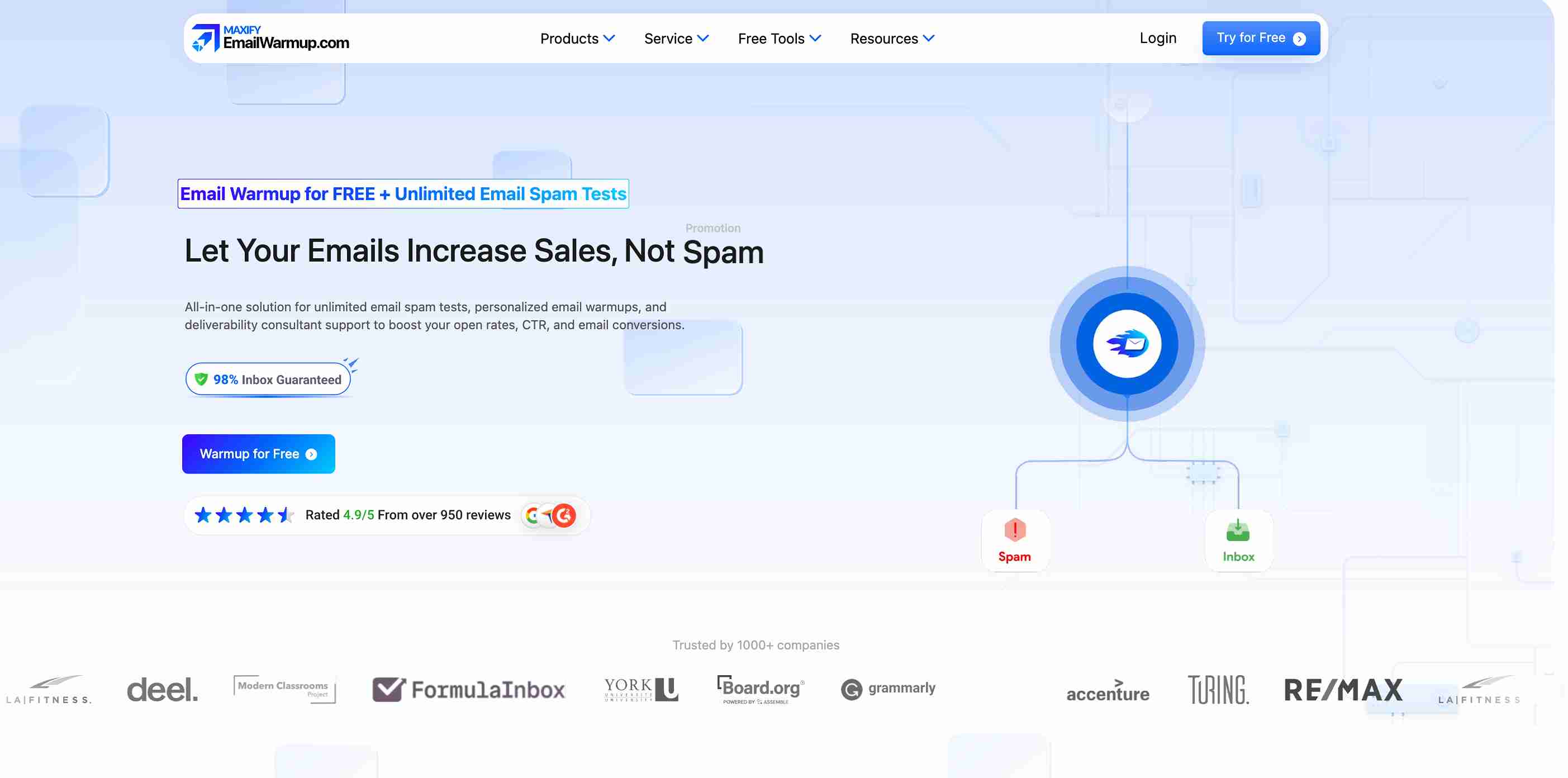
For teams wanting authentication tooling without subscription costs, EmailWarmup.com offers free SPF, DKIM, and DMARC lookup and generator tools.
Key advantages
- DMARC Lookup inspects policy settings
- DKIM Lookup checks selector configuration
- SPF Lookup validates records and identifies errors
- Free generators create records in under 60 seconds
- Pairs with email warmup and email deliverability tests
The tools provide diagnostic depth without subscription commitment. Email deliverability consultants are available to assist with authentication setup and sender reputation recovery.
Final verdict
EasyDMARC delivers a polished DMARC monitoring experience — intuitive dashboards, excellent support, and genuine utility for organizations navigating enforcement. EasySPF solves a real problem.
The limitations? Pricing scales steeply. The free tier is minimal. Data retention on lower plans feels restrictive.
For MSPs and mid-market teams prioritizing support quality, EasyDMARC justifies its cost. For budget-conscious teams comfortable with self-service tooling, free alternatives may cover basic diagnostic needs.
Frequently asked questions
Here are some frequently asked questions about EasyDMARC:
For MSPs and mid-market teams wanting guided DMARC enforcement with strong support, yes. For startups and budget-conscious users, the free tier’s limitations (14-day history, 1,000 emails) and scaling costs make alternatives more attractive.
EasySPF is a dynamic SPF flattening solution that works around the 10 DNS lookup limit — a common cause of SPF failures. It consolidates your SPF logic under a managed record that EasyDMARC maintains.
Both platforms offer DMARC monitoring and reporting. dmarcian has deeper roots in the DMARC specification (co-authored by its founder), while EasyDMARC emphasizes guided onboarding and visual dashboards. Pricing and feature fit vary by use case — compare tiers carefully.
Yes, but it’s severely limited: 1,000 emails/month, 1 domain, and only 14 days of data history. For ongoing monitoring, paid plans start at $35.99/month (annual billing).