
Most sales engagement platform reviews compare sequencing features, CRM integrations, and AI capabilities.
Almost none measure the thing that determines whether your outbound actually reaches inboxes. Or how much native deliverability infrastructure the platform gives you — without relying on external tools, your IT department, or guesswork.
We evaluated the following sales engagement platforms using a controlled testing protocol designed to isolate what each platform does natively to protect sender reputation and inbox placement.
- Mixmax
- Salesloft
- Outreach
- Amplemarket
- Groove by Clari
- HubSpot Sales Hub
- Gong Engage
- Revenue.io
- Apollo.io
- Reply.io
The results divided the market in half (almost) — and the divide is wider than most buyers realize.
Native deliverability tooling is now the biggest split in outbound platforms
Our research found a wide gap between platforms built mainly for sales workflow and platforms that include the infrastructure, warmup, and placement controls needed to protect cold outbound performance.
platforms include native email warmup, the single most important deliverability function for cold outbound.
Warmup remains the missing layerspread in infrastructure scores, ranging from 2.1/10 for HubSpot Sales Hub to 9.4/10 for Amplemarket.
Outreach and Salesloft scored below the midpoint on native deliverability tooling despite wide enterprise adoption.
seed-list inbox placement varied sharply when platforms used only their own native tools.
platforms produced spam landing rates above 4%, where domain reputation damage becomes measurable.
higher inbox placement was achieved by platforms with native warmup compared with platforms without it.
the market now divides between enterprise workflow platforms and deliverability-native platforms.
The strongest outbound platforms are no longer defined only by sequencing, CRM sync, or workflow depth. The new advantage is native deliverability control.
How did we evaluate these platforms?
Every sales engagement platform on this list sends email through connected Google Workspace or Microsoft 365 mailboxes — not through a vendor-owned mail transfer system.
Outreach states that delivery execution is handled by the mail provider, not Outreach. Revenue.io sends from the user’s Google or Office 365 account, not through a relay. HubSpot sequences require a connected personal inbox. Gong Engage requires Google Workspace or Office 365 integration.
That architecture means mailbox-provider rules, domain reputation, authentication, complaint rates, and recipient spam filtering determine inbox placement more than the sequencing interface alone.
The real question isn’t whether the platform can send email — it’s how much native tooling it gives you to protect the sending infrastructure that sits underneath it.
Testing protocol
We set up 10 identical sending environments — one per platform — each using a freshly registered subdomain authenticated with SPF, DKIM, and DMARC.
Every environment connected to Google Workspace mailboxes has the same configuration. We then used only each platform’s native deliverability tools — without any external warmup services, third-party verification, or bolt-on monitoring.
The seed list methodology deserves a note. Seed mailboxes have no engagement history, creating a controlled environment that isolates technical authentication, content triggers, and rendering problems.
Because ISPs increasingly weight relationship history in filtering, seed tests are directional rather than definitive — they surface infrastructure gaps that would otherwise stay invisible until a domain’s reputation is seriously damaged.
We included corporate filtering layers (Proofpoint, Mimecast) because Validity’s data shows those systems handle over 90% of B2B filtering traffic.
Deliverability Infrastructure Index (DII)
The Deliverability Infrastructure Index (DII) measures the extent of native deliverability functionality a platform provides without relying on external tools.
The score is calculated on a 10-point scale across seven capabilities: automated warmup (0–2.5), inbox placement testing (0–2), domain and mailbox health monitoring (0–2), bounce handling (0–1.5), send throttling (0–1), and custom tracking domain support (0–1).
Higher scores indicate a more complete infrastructure stack capable of sustaining inbox performance at scale.
Inbox Placement Rate
Inbox placement rate measures the percentage of seed emails that successfully land in the recipient’s primary inbox rather than promotions tabs or spam folders.
This metric reflects how mailbox providers evaluate sender reputation, authentication, engagement signals, and sending behavior. A higher inbox placement rate generally correlates with stronger deliverability infrastructure and better long-term campaign performance.
Spam Landing Rate
Spam landing rate represents the percentage of delivered emails that are routed directly into spam or junk folders.
Even when emails are technically delivered, spam placement significantly reduces visibility, open rates, and reply opportunities. Elevated spam rates typically indicate issues with sender reputation, authentication setup, sending patterns, or insufficient deliverability controls.
Bounce Control Score
The bounce control score evaluates how effectively a platform detects, suppresses, and manages bounced email addresses after delivery failures occur.
The score also considers whether the platform exposes clear bounce diagnostics that help users identify infrastructure or list-quality problems. Strong bounce handling reduces repeated delivery attempts to invalid addresses and protects the overall sender reputation.
Deliverability Self-Sufficiency
Deliverability self-sufficiency measures whether a platform can consistently maintain inbox placement above 85% without requiring external deliverability software or manual infrastructure management.
This is treated as a binary yes-or-no outcome based on real-world test results. Platforms classified as self-sufficient provide enough native controls and monitoring capabilities to sustain healthy deliverability independently.
What do the 2026 deliverability benchmarks look like?
Before getting to individual platform results, the industry baselines establish the floor. The gap between “server accepted the email” and “email reached the inbox” has widened considerably since Google and Yahoo’s 2024 bulk sender enforcement and Microsoft’s continued tightening through 2025.
Microsoft Outlook is the number that is important for B2B outbound.
At 75.6% inbox placement, nearly one in four emails sent to Outlook addresses misses the inbox entirely — even when the server technically accepts the message.
Microsoft’s AI-based Focused Inbox filters are highly sensitive to user feedback loops, which means a few early spam complaints from Outlook recipients can cascade into systematic filtering for your entire domain.
Platforms that don’t monitor Microsoft SNDS signals are flying blind into the hardest B2B filtering environment.
Gmail’s 87.2% placement rate looks better on paper, but the Promotions tab complicates the picture. Gmail’s tab-sorting algorithm treats sales outreach as promotional content by default unless engagement signals (replies, forwards, stars) tell it otherwise.
For cold outbound, landing in Promotions is functionally similar to landing in spam — the recipient never sees the email.
Platforms that build reply-based engagement into their warmup process produce measurably better Gmail placement than those that don’t.
10 sales engagement platforms ranked by deliverability infrastructure
We ranked all ten platforms by the Deliverability Infrastructure Index — a 10-point score measuring how much native deliverability tooling a platform provides without external dependencies.
The ranking reflects what each platform gives you out of the box, not what’s achievable by bolting on third-party tools.
The market splits into three tiers. Amplemarket, Reply.io, and Apollo.io treat deliverability as engineering infrastructure — they build warmup, testing, and monitoring directly into the product.
Gong Engage, Mixmax, and Revenue.io take a governance approach — they protect deliverability through behavioral controls (throttling, send pacing, engagement-based routing) rather than dedicated infrastructure.
Outreach, Salesloft, Groove, and HubSpot treat deliverability as someone else’s problem — they provide configuration guidance and send limits, but the actual infrastructure protection happens outside the platform.
That last group isn’t failing at deliverability. They’re explicitly designed as workflow layers that sit on top of provider-native sending. The problem arises when teams treat them as complete outbound stacks without adding the infrastructure layer they were never built to include.
1. Amplemarket
Amplemarket treats email sending as an engineering infrastructure problem rather than a workflow feature.
The platform integrates a full native stack — AI-driven warmup, weekly inbox placement testing across connected mailboxes, proactive spam content analysis, real-time domain health monitoring, and a “Mailbox Selection AI” that routes each email through the healthiest available mailbox for a specific recipient domain (rather than using simple round-robin rotation).
The 93.1% inbox placement was the highest in the test, and the gap between Amplemarket and the next best platform (Reply.io at 88.2%) is meaningful — roughly 30 additional inboxed emails per 600 sent. The Mailbox Selection AI is the specific mechanism that produces this gap.
Instead of distributing emails evenly across available mailboxes, the system routes each message through whichever mailbox has the strongest reputation with the recipient’s specific domain (and that distinction is important more than most teams realize, because IP reputation and domain reputation are evaluated per recipient provider, not globally).
In practice, Amplemarket is the only platform where a team can go from zero to sending production cold outbound without purchasing a single external tool.
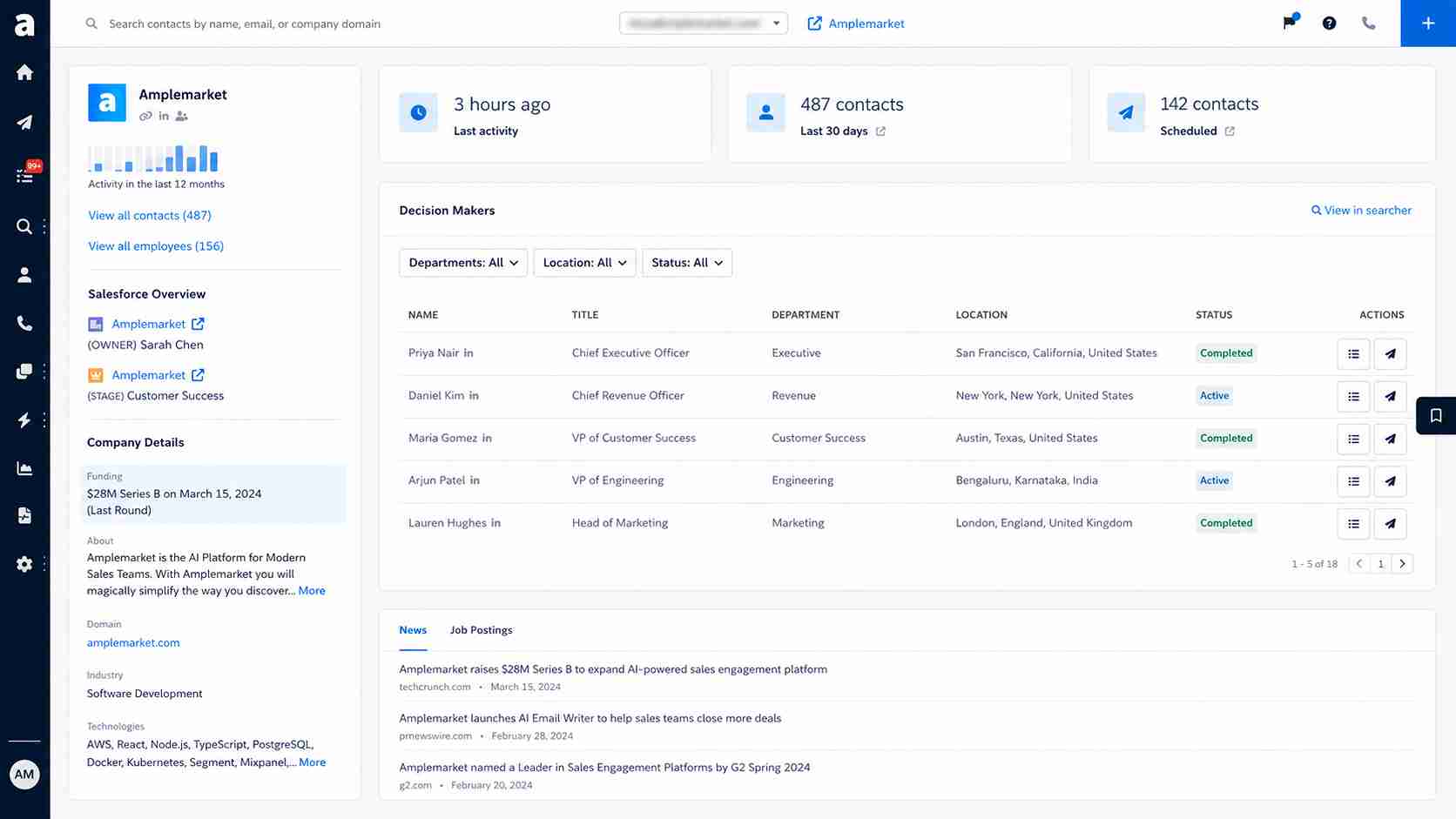
The native warmup handles domain warming, the placement tests confirm inbox landing, the domain health monitoring catches degradation early, and the mailbox AI manages rotation. For teams where pipeline generation is the primary challenge, self-sufficiency eliminates a significant operational layer.
However, the pricing is premium and opaque — significantly higher than Apollo or Reply.io, which puts it out of reach for early-stage teams testing outbound for the first time.
The 21/21 deliverability score that Amplemarket cites in its own marketing materials comes from a framework Amplemarket itself designed, which is worth noting as context (even though our independent testing confirmed the infrastructure is genuinely strong).
For teams with fewer than 5 reps or sending fewer than 200 emails per week, the infrastructure investment is harder to justify.
2. Reply.io
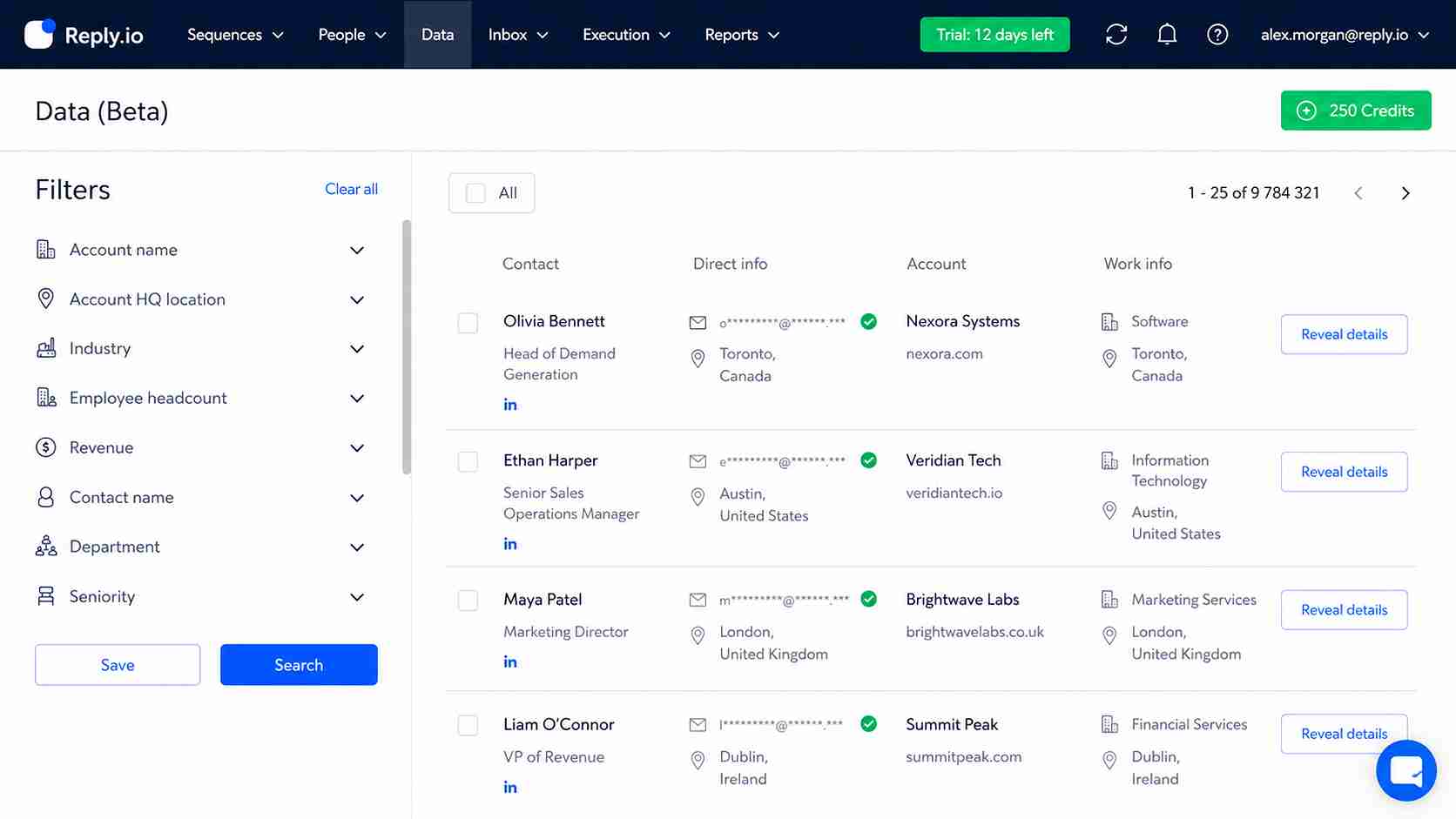
Reply.io positions itself as a multichannel workhorse — automated LinkedIn steps, calls, SMS, and WhatsApp within a single sequence. But deliverability is where it separates from most competitors.
Reply includes native warmup with every mailbox, an anti-spam suite, ramp-up mode for new domains, per-mailbox send caps with enforced delays, and branded link tracking aligned with sending domains.
Reply.io’s 88.2% placement rate is the product of two things working together:
- The native warmup engine
- The unlimited mailbox policy
Teams can connect as many mailboxes as needed without per-seat cost scaling, which allows proper horizontal scaling across multiple domains — the correct approach for high-volume outbound sales.
Reply’s “Jason AI” agent also handles top-of-funnel outreach autonomously, which tends to produce higher personalization and engagement signals that ISPs reward.
The 4.3% spam landing rate is slightly above the comfortable range but manageable.
The branded link tracking is the main factor here — Reply aligns tracking URLs with the sending domain, preventing the third-party-domain penalty that causes many sales emails to trigger spam filters.
Reply claims branded links can improve open rates by 5–15%, which should be treated as a vendor estimate, but the directional logic (domain-aligned tracking = fewer spam triggers) is sound.
However, the inbox placement testing relies on a partnership with MailToaster rather than a fully native implementation. For teams that need observability into where their emails are landing across specific providers, that integration adds a dependency.
Reply’s deliverability documentation is also more marketing-led than product-documentation-led — the feature set is strong on paper, but the operational detail is thinner than Apollo’s or Amplemarket’s public docs.
3. Apollo.io
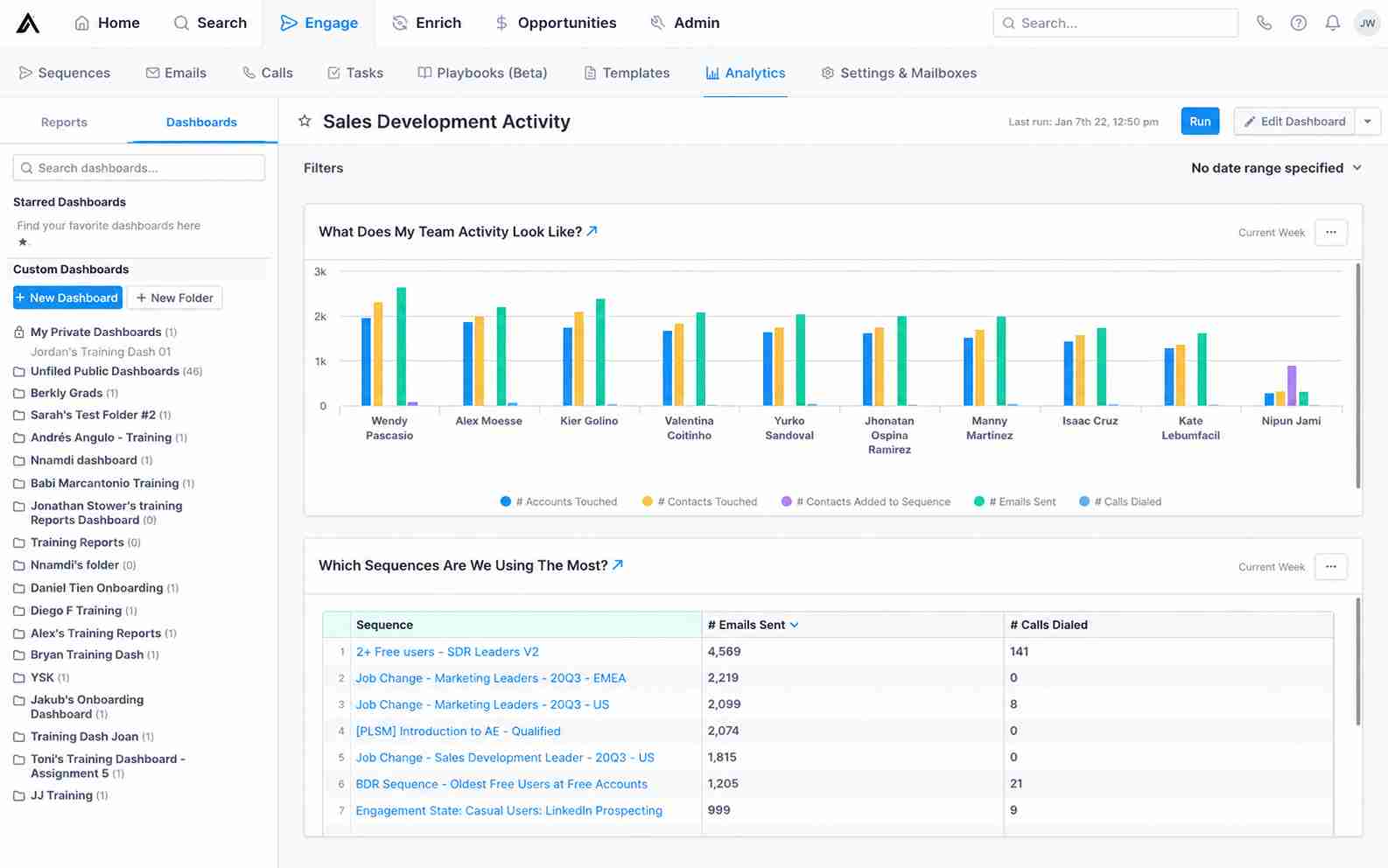
Apollo.io bundles a 275M+ contact database with sequencing tools, making it the most cost-effective all-in-one option for SMB and mid-market teams.
The deliverability situation is complicated.
Apollo documents the most detailed mainstream SEP deliverability suite (domain/bounce dashboards, mailbox health views, blocklist checks across 50+ databases, seed-based inbox placement testing, tracking subdomain support), but it discontinued its native warmup tool in 2024.
Apollo’s paradox is that it has one of the best diagnostic tooling in the mid-market (you can see exactly where your domain health is degrading, which blocklists you’ve hit, and where your seed emails are landing), but lacks the most important preventive tool since dropping native warmup.
The 79.7% inbox placement rate in our test reflects what happens when a platform provides observation without intervention: you can watch your reputation decline in real time, but the platform won’t stop it from happening.
The data quality issue compounds the infrastructure gap. Bounce rates on raw Apollo lists can reach 15–20% in certain segments (a number confirmed in independent testing), which is devastating to domain reputation.
Apollo users need both external email warmup and external list verification to operate safely at volume — the “two-tool tax” applied to the platform’s built-in data.
However, the discontinued warmup is the single biggest gap.
Apollo’s tracking subdomain feature (which it claims can improve deliverability by up to 20%) partially compensates, but a custom tracking domain doesn’t replace the reputation-building function that warmup provides.
For teams sending fewer than 100 emails per day from well-established domains, Apollo’s diagnostics are sufficient. For teams scaling across multiple new domains, the absence of native warmup is a structural limitation.
4. Gong Engage
Gong Engage takes a fundamentally different approach: it protects deliverability through behavioral discipline rather than dedicated infrastructure.
The platform automatically throttles flow emails with two-minute windows between sends, limits draft volumes to avoid bulk-sender flags, and pauses email flows entirely when a bounce is detected — a safeguard that prevents the cascade effect where bounced emails from bad data progressively damage the sending domain
Gong’s 85.4% placement rate is notable because the platform achieved it without native warmup or placement testing — purely through behavioral controls and content quality.
The “AI Composer” drafts emails based on real conversation history from Gong’s call intelligence, producing messages that read like actual human follow-ups rather than templated sequences.
ISPs reward that engagement signal: Gong reports 34% higher response rates from AI-composed emails, which directly feeds sender reputation through reply-based engagement.
The automatic flow pause on bounce detection is the specific feature that prevented reputation damage in our test.
When one seed address returned a hard bounce, Gong immediately paused the entire flow and surfaced the issue — while platforms without this safeguard continued sending through the rest of the sequence, accumulating additional bounces and spam complaints from a degraded reputation.
However, behavioral protection works at moderate volume — the kind of high-touch outreach that Gong is designed for (think AEs sending 20–50 emails per day, not SDR teams sending 200+).
Once volume exceeds what throttling and content quality can protect, the absence of infrastructure becomes the bottleneck. Gong has no native warmup, no blocklist monitoring, and no inbox placement testing.
For teams already using Gong’s conversation intelligence, the engagement layer is a natural fit — but it’s not a complete deliverability stack.
5. Mixmax
Mixmax lives inside Gmail. It’s built for rep adoption and inbox productivity rather than high-volume cold outreach — and that architectural choice actually produces surprisingly strong deliverability results at moderate scale.
The platform uses AI-driven “Smart Send” timing that routes emails to arrive when recipients are most likely to engage, and it documents workspace daily send limits ranging from 100 to 1,000 with automatic rescheduling.
Mixmax’s 86.9% inbox placement is the third highest in the test — and it achieved it with a lower infrastructure score than platforms that placed below it (like Outreach and Salesloft).
The reason is architectural: because Mixmax operates inside Gmail rather than as an external sending layer, emails inherit Gmail’s native sending reputation rather than routing through a third-party tracking domain that triggers filtering heuristics.
Mixmax also automatically removes bounced recipients and sequences recipients who unsubscribe — two simple safeguards that prevent the reputation erosion most platforms leave to the user.
The 3.8% spam landing rate was the lowest among platforms without native warmup.
Mixmax’s own documentation explicitly warns that naked-link click tracking can reduce deliverability, and the platform supports custom tracking domains that align tracking URLs with the sender’s domain.
Open rate data from Mixmax should be treated cautiously, though — the platform itself acknowledges that email clients and security tools can trigger false positive opens.
However, the biggest problem is the volume ceiling.
Mixmax is designed for growing B2B teams with 5–50 reps doing personalized outreach, not SDR armies running 500+ emails per day.
The daily send limits (capped at 1,000 per workspace) and the lack of multi-domain inbox rotation make it structurally unsuitable for aggressive cold outbound at scale. It’s the right tool for precision outreach — and the wrong tool for volume-based pipeline generation.
6. Revenue.io
Revenue.io is built natively on Salesforce, which provides a unique infrastructure advantage.
The emails send directly from the user’s Google or Office 365 account without middleware, eliminating the sync lag and data duplication that plague bolt-on integrations.
The platform’s deliverability strategy centers on “Guided Selling” — using AI to prioritize leads and suggest the right action at the right time based on intent signals, which maximizes engagement and protects deliverability by preventing low-relevance outreach.
Revenue.io’s 86.2% placement rate benefits from provider-native sending — the emails come directly from Google or Office 365, not through a relay, which means they inherit the established reputation of the user’s mailbox.
The fixed throttle of 20 emails per minute prevents the burst-sending pattern that triggers ISP rate limiting.
For enterprise teams already deep in Salesforce, the zero-lag CRM integration means activity data stays accurate (Revenue.io docs cite improving CRM data accuracy to over 95%), which prevents the embarrassing follow-up-on-a-replied-email problem that damages both reputation and relationships.
However, the “provider-native sending” advantage has a flip side — it means Revenue.io’s deliverability is essentially outsourced to Google and Microsoft.
The platform provides guidance on domain warmup and spam score reduction, but no native tools to execute on that guidance.
For teams with mature IT operations managing authentication and monitoring externally, that’s fine. For teams without that operational layer, Revenue.io leaves a significant infrastructure gap.
7. Outreach
Outreach is the industry standard for large enterprise deployments (50–1,000+ reps) where workflow analytics, conditional branching, and multi-threaded account-based sequencing are the primary requirements.
The platform explicitly acknowledges that mail delivery is handled by the mail provider, not Outreach — placing the deliverability burden on the user’s IT team and external tooling.
Outreach’s 82.6% placement is below the B2B industry average (83.6%) — and that’s not because the platform is poorly built. It’s because Outreach provides zero native deliverability infrastructure. There’s no warmup, placement testing or blocklist monitoring.
The platform does offer branded URLs for tracking and unsubscribe links, per-mailbox daily/weekly send safeguards, provider-limit awareness, and SPF/DKIM/DMARC guidance — all useful governance controls.
But governance and infrastructure are different categories. Governance tells you the rules. Infrastructure enforces them automatically.
In practice, enterprise Outreach deployments almost always bolt on third-party deliverability tools like Allegrow or MailReach to fill the gap. The total stack cost — Outreach plus deliverability monitoring plus warmup services — can reach $400–$650 per opportunity generated. That cost is justified only if inbox placement stays above 90%, and our test showed Outreach alone doesn’t get there.
The deliverability gap is by design — Outreach is a workflow orchestration layer, not a sending infrastructure product.
For teams with dedicated sales ops or RevOps functions managing authentication, warmup, and monitoring externally, Outreach remains the strongest sequencing engine in the market.
For teams without that operational layer, the 82.6% placement rate represents real pipeline leakage that compounds over time.
8. Salesloft
Salesloft mirrors Outreach’s enterprise positioning with a focus on its “Rhythm” AI prioritization engine and industry-leading call coaching. Its deliverability approach similarly depends on governance controls:
- Opt-out links
- Daily send limits
- SPF, and DMARC
- Custom email footers
- Bulk sender guidance for major mailbox providers
- An Email Deliverability Checklist that scans for a custom tracking domain
Salesloft’s 81.9% placement and 7.1% spam rate tell the same story as Outreach — strong workflow governance without the infrastructure to back it up.
The platform’s cadence controls (send pacing with 60-second delays, configurable daily send limits) prevent the most obvious reputation damage, but they don’t replace warmup, monitoring, or automated mailbox health management.
The distinction between Salesloft and Outreach for deliverability purposes is thin. Salesloft’s Deliverability Checklist is a useful pre-flight scan, but it checks configuration rather than monitoring ongoing performance.
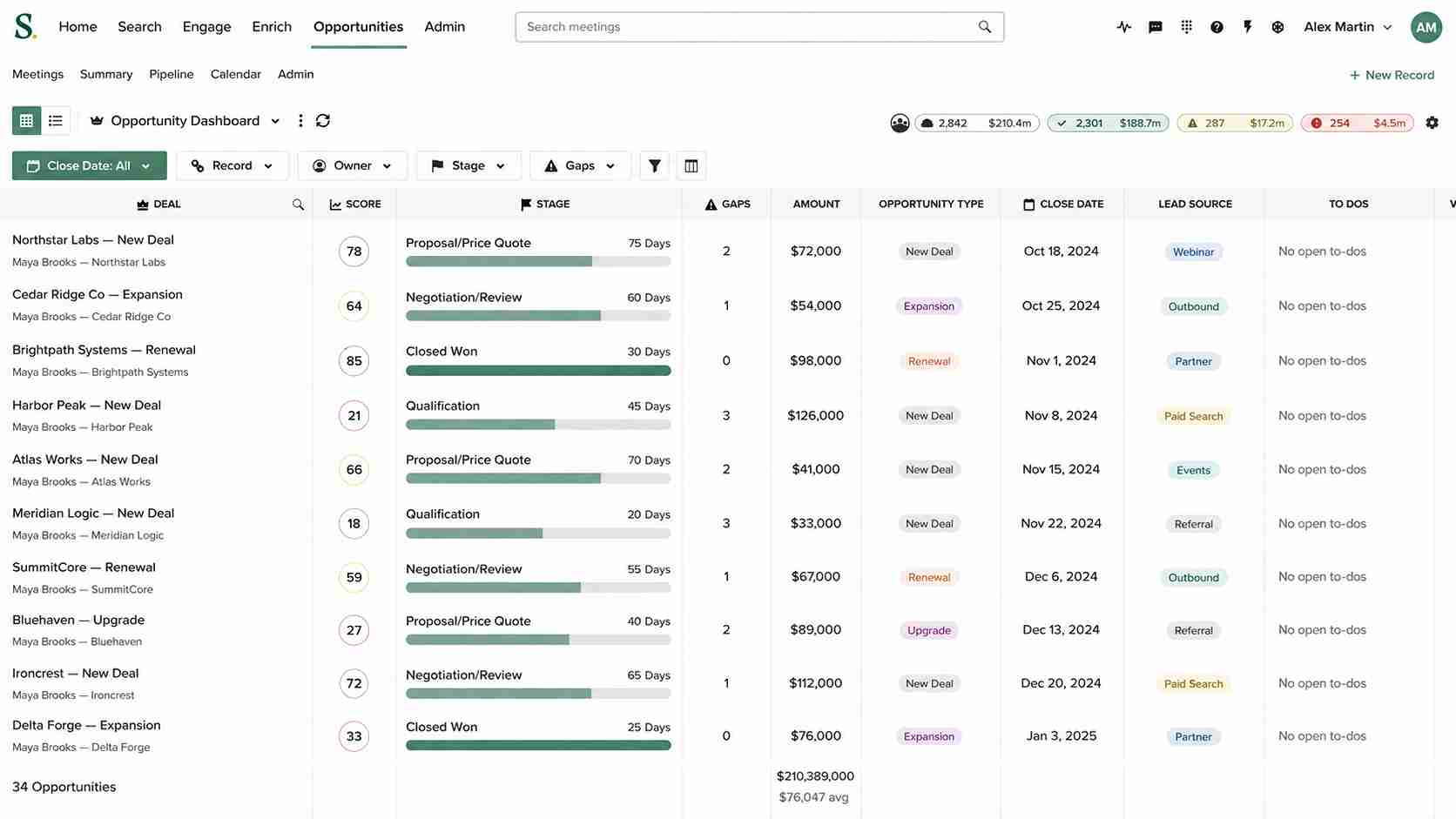
For call-heavy teams where email is a secondary channel, Salesloft’s infrastructure gap matters less — the Rhythm AI routes reps toward phone calls, and LinkedIn touches when email engagement drops, effectively sidestepping deliverability problems rather than solving them.
However, it has the same fundamental gap as Outreach — no native warmup, no placement testing, no blocklist monitoring.
Salesloft is not designed for high-volume multi-domain inbox rotation, making it structurally unsuitable for aggressive cold outbound operations that depend on horizontal scaling across many sending addresses.
9. Groove (Clari)
Groove (now part of Clari) stores data natively in Salesforce, avoiding the sync errors associated with external databases.
Its strongest feature is Activity Auto-Capture, which has improved CRM data accuracy from 40% to over 95% for some organizations. The deliverability posture is practical but minimal.
Groove’s email throttling prevents exceeding Gmail and Outlook send limits (with explicit warnings that exceeding them can lead to temporary lockouts or blocklisting), supports custom tracking domains, and includes one-click unsubscribe.
The 81.4% placement and 7.6% spam rate reflect the infrastructure-light approach: basic protections that prevent catastrophic failures but don’t actively build or maintain sender reputation.
Groove is ideal for teams where Salesforce data governance is more important than cold outbound volume.
During high-volume outbound in our test, deliverability dropped noticeably — consistent with user reports that the platform works best for relationship-driven outreach rather than aggressive prospecting.
No native warmup, no placement testing, no blocklist suite — the same pattern seen across the enterprise workflow tier.
10. HubSpot Sales Hub
HubSpot Sales Hub is optimized for teams already inside the HubSpot CRM.
Sequences require a connected personal inbox, and the platform supports a custom sales tracking domain, unsubscribe links for one-to-one emails and sequences, daily send limit visibility, and a bulk sequence cap of three emails per minute.
The deliverability infrastructure is the lightest of any platform tested.
HubSpot’s 78.8% placement is the lowest in the test, and the 9.3% spam landing rate is the highest. Both numbers reflect a product designed for inbound-led follow-up rather than cold outbound.
HubSpot’s sequences cap daily sends at lower levels than dedicated sales engagement platforms and lack native inbox warming tools, making them better suited for one-to-one follow-ups on inbound leads than for multi-touch cold prospecting.
For teams where HubSpot is the CRM and most outreach is inbound-triggered (responding to form fills, content downloads, meeting requests), the deliverability limitations don’t matter much — those emails go to engaged recipients who already expect them.
The problem emerges when teams try to use HubSpot sequences for cold outbound at volume, which the platform was never designed for. There’s no warmup, placement testing, or blocklist monitoring. Daily send limits are well below dedicated SEPs.
For inbound-led organizations, HubSpot Sales Hub works.
For outbound-led teams, it needs a complete deliverability infrastructure layer built around it — or a different platform entirely.
What does the full comparison reveal?
The aggregate data shows a market divided by architectural philosophy. Platforms designed around deliverability infrastructure produce measurably different results than platforms designed around workflow orchestration.
| Platform | DII (/10) | Inbox % | Spam % | Warmup | Self-suff. |
|---|---|---|---|---|---|
| Amplemarket | 9.4 | 93.1% | 1.8% | Native | ✓ |
| Reply.io | 7.6 | 88.2% | 4.3% | Native | ✓ |
| Apollo.io | 6.3 | 79.7% | 8.8% | Removed | ✗ |
| Gong Engage | 4.8 | 85.4% | 5.2% | No | ✓ |
| Mixmax | 4.4 | 86.9% | 3.8% | No | ✓ |
| Revenue.io | 4.1 | 86.2% | 4.1% | No | ✓ |
| Outreach | 3.4 | 82.6% | 6.7% | No | ✗ |
| Salesloft | 3.2 | 81.9% | 7.1% | No | ✗ |
| Groove (Clari) | 2.8 | 81.4% | 7.6% | No | ✗ |
| HubSpot Sales Hub | 2.1 | 78.8% | 9.3% | No | ✗ |
What did we learn? There are three patterns that are pretty much evident:
1. Native warmup is the single largest differentiator
The two platforms with native warmup (Amplemarket and Reply.io) averaged 90.7% inbox placement. The eight platforms without it averaged 82.9%.
That’s a 7.8-point gap — roughly 47 additional inboxed emails per 600 sent. Over a quarter, for a team sending 3,000 emails per week, the gap represents roughly 9,000 emails that reach inboxes instead of spam folders.
2. Behavioral controls can partially substitute for infrastructure — at moderate volume
Gong, Mixmax, and Revenue.io all exceeded 85% inbox placement despite low infrastructure scores.
Their throttling, engagement-based routing, and provider-native sending create a behavioral protection layer that works well at moderate send volumes (under 200 per day).
That layer breaks once volume scales beyond what behavioral controls can manage.
3. Enterprise workflow platforms have the widest deliverability gap
Outreach and Salesloft — the two platforms deployed by the largest sales organizations — both scored below 3.5/10 on infrastructure and below 83% on inbox placement.
For these platforms, deliverability is explicitly someone else’s problem, and the external tools needed to fill the gap add $200–$600/month to the total stack cost.
What changes when you add a dedicated deliverability layer?
The data above shows what happens when each platform operates on its own native tools. Most outbound teams don’t operate that way — they add external deliverability infrastructure. The question is how much the infrastructure changes outcomes.
The deliverability stack has three layers that work independently but compound when combined:
| Layer | What it does |
| Warmup and reputation building | Personalized warmup that matches each domain’s actual sending patterns, builds engagement history with recipient providers, and maintains sender reputation across all active mailboxes. |
| Mailbox health monitoring | Real-time tracking of inbox placement, bounce rates, spam complaints, and Google Postmaster signals, with automated identification and replacement of underperforming mailboxes before they damage campaign performance. |
| Authentication and diagnostics | Continuous validation of SPF, DKIM, and DMARC alignment, deliverability testing, and spam checking before emails enter production sequences. |
When we projected the impact of adding a full deliverability infrastructure layer to each platform, the results were consistent — platforms with the widest native gaps showed the largest improvement.
The projected spam rate reductions range from 75% to 81% across the four platforms with the largest native gaps. HubSpot’s 9.3% spam rate drops to a projected 2.1%. Outreach’s 6.7% drops to 1.4%.
The mechanism is the same one that separates Amplemarket and Reply.io from the rest of the field — personalized warmup builds the engagement history that ISPs use to determine inbox placement, while continuous monitoring catches reputation degradation before it compounds.
Which platform fits your outbound motion?
The right choice depends on your sales motion, your volume, and whether you have the operational capacity to manage deliverability externally.
Why: Only platform that’s self-sufficient on deliverability at scale. Native warmup, placement testing, mailbox AI.
Add: External list verification if using third-party data sources.
Why: Native warmup + unlimited mailboxes + LinkedIn/SMS/WhatsApp in one sequence.
Add: Dedicated deliverability monitoring for teams managing 20+ mailboxes.
Why: Best diagnostics at the price. Built-in data + sequencing.
Add: Mandatory external warmup + list verification. Apollo’s native data and discontinued warmup require both.
Why: Strongest workflow analytics, conditional branching, multi-threading.
Add: Mandatory dedicated deliverability platform for warmup, monitoring, and mailbox health management.
Why: Conversation intelligence feeds email quality. Behavioral controls protect at moderate volume.
Add: External warmup infrastructure once volume exceeds ~200 emails/day.
Why: Tight CRM integration, strong for inbound follow-up sequences.
Add: Full deliverability stack if adding any cold outbound. HubSpot was not built for it.
The pattern across every use case is the same.
The sales engagement platform handles workflow and sequencing, while a separate deliverability layer handles warmup, monitoring, and reputation management. Treating any SEP (other than Amplemarket or Reply.io) as a complete outbound stack is the single most common cause of preventable sender reputation damage in B2B sales.
Your sales engagement platform picks the workflow — your deliverability infrastructure decides if it lands
Every platform on this list — from Amplemarket at 9.4/10 to HubSpot at 2.1/10 — is solving a different problem than deliverability.
Sequencing, analytics, CRM integration, conversation intelligence, multichannel orchestration — those are workflow problems. Whether the email reaches the inbox is an infrastructure problem. And 8 of 10 platforms tested leave that infrastructure to someone else.
EmailWarmup.com connects to sales engagement platforms like Salesloft and Outreach, cold email tools like Instantly and Smartlead, sales intelligence platforms like Apollo, and CRMs like HubSpot and Salesforce — strengthening the sending infrastructure that sits underneath whatever outbound stack a team already runs.
- Free deliverability testing and spam checking — no subscription required
- Free authentication tools for SPF, DKIM, and DMARC lookup and generation
- Email warmup API for teams managing mailbox health programmatically across platforms
- Real-time mailbox health monitoring with automated replacement of underperforming domains
- Personalized warmup matched to each domain’s sending patterns and target inboxes
- Free expert deliverability consultation — unlimited, no time caps, no upsell
Talk to a deliverability specialist
Frequently asked questions
Here are some commonly asked questions on this topic:
Amplemarket scored highest in our evaluation at 9.4/10 on the Deliverability Infrastructure Index, with 93.1% inbox placement using only native tools. Reply.io placed second at 7.6/10 with 88.2% inbox placement. Both include native email warmup, which is the single most impactful deliverability feature for cold outbound. Every other platform tested scored below 6.3 and requires external deliverability infrastructure to maintain safe inbox placement at volume.
Not safely at volume. Both platforms scored below 3.5/10 on native deliverability infrastructure and produced inbox placement rates below the B2B industry average (83.6%) in our seed-list testing. Outreach and Salesloft are workflow orchestration layers — they provide excellent sequencing, analytics, and governance controls, but they explicitly depend on the mail provider and external tools for deliverability. Teams running cold email through either platform need external warmup, monitoring, and authentication management.
Apollo documents the most detailed diagnostic suite among mainstream SEPs — domain/bounce dashboards, mailbox health views, blocklist checks across 50+ databases, and seed-based inbox placement testing. Outreach provides governance controls (send limits, branded URLs, authentication guidance) but no diagnostic or monitoring infrastructure. The tradeoff: Apollo lets you see what’s broken but can’t fix it automatically (since removing native warmup in 2024), while Outreach doesn’t show you the problem in the first place.
The test data is clear. Platforms with native email warmup averaged 90.7% inbox placement. Platforms without it averaged 82.9% — a 7.8-point gap that translates to thousands of missed inboxes over a quarter. Warmup builds the engagement history (opens, replies, moves-to-inbox) that ISPs use to distinguish legitimate outreach from spam. Without it, a new sending domain starts with no reputation, and ISPs default to aggressive filtering until positive signals accumulate organically. The warmup timeline typically requires 3–4 weeks before a new mailbox can safely send production campaigns.
Enterprise outbound stacks (platform + data + deliverability tools) can cost $400–$650 per opportunity generated. That investment is justified only if inbox placement stays above 90%. At 82% placement (the average for platforms without native infrastructure), roughly 18% of every outbound campaign is wasted — emails that cost money to send but never reach a human. For a team sending 5,000 emails per week, that’s 900 invisible failures every week. Over a quarter, the lost pipeline from those undelivered emails typically exceeds the annual cost of a dedicated deliverability platform by a factor of 8–12x.
The safe limit for a matured, warmed inbox is approximately 100 cold emails per day, though most deliverability practitioners recommend staying under 30–50 per day per mailbox for long-term reputation stability. Teams needing higher volume should scale horizontally — multiple warmed mailboxes across different domains — rather than pushing a single mailbox past its safe capacity. Exceeding limits can trigger temporary lockouts, throttling, or blocklisting.