
InboxAlly positions itself as more than a warmup tool — it trains mailbox providers to want your emails by simulating genuine engagement behaviors.
Opens, clicks, replies, and inbox moves all work together to build sender reputation signals that Gmail and Outlook recognize as legitimate activity.
The approach works. Users consistently report measurable improvements — InboxAlly claims some see doubled open rates within two weeks.
But the pricing creates a significant barrier: $149/month for a single sender profile, jumping to $645/month if you need five. For teams managing multiple domains, costs escalate quickly.
In this review, we’ll be exploring:
- How InboxAlly’s pricing compares to alternatives
- Whether engagement-based warmup delivers real results
- Who benefits most from this platform (and who should skip it)
- What options exist for teams needing warmup without premium pricing
TLDR — InboxAlly at a glance
| Category | Verdict |
| Best for | High-volume senders needing reputation repair |
| Starting price | $149/month (Starter, 1 sender profile) |
| Free trial | 10 days, no credit card required |
| Standout feature | Engagement-based warmup (opens, clicks, replies, moves) |
| Biggest weakness | Expensive — $149 for one profile, $645 for five |
| Best alternative | EmailWarmup.com personalized email warmup |
| Overall rating | 3.7 / 5 |
How did we evaluate this tool?
Evaluation followed the process used by a deliverability consultant to assess warmup platforms for client engagements. Key factors included:
- Support quality and onboarding guidance
- How results compare against lower-cost alternatives
- Pricing economics at scale (single domain vs. multi-domain setups)
- Whether engagement signals translate to measurable placement gains
- User feedback across Trustpilot (4.7/5, 55 reviews), G2 (4.6/5, 47 reviews), and Capterra
Is InboxAlly worth the price?
InboxAlly’s pricing reflects its premium positioning — and creates friction for smaller teams. The Starter plan at $149/month covers just one sender profile with 100 daily seed emails. If you need multiple domains, costs escalate quickly.
| Plan | Monthly Cost | Seed Emails/Day | Sender Profiles | Support |
| Starter | $149 | 100 | 1 | |
| Plus | $645 | 500 | 5 | Email + Live Chat |
| Premium | $1,190 | 1,000 | 10 | Full + Weekly Sessions |
| Enterprise | Contact | Thousands | Unlimited | Custom |
Volume recommendations from InboxAlly:
- Starter: up to 2,000 daily sends
- Plus: up to 10,000 daily sends
- Premium: up to 20,000 daily sends
The math matters here. At $149/month for one profile, you’re paying nearly $1,800/year for single-domain warmup. Competitors offer unlimited account warmup at a fraction of that cost — TrulyInbox charges $22/month for unlimited accounts, for context.
One reviewer captured the sentiment well: “$150 should be for at least 2 or 3 profiles. Big jump from $150 to $650.” InboxAlly does offer custom plans between tiers, but you need to request them.
What do deliverability results show?
The engagement approach works — that’s the consistent feedback. InboxAlly’s seed network performs actions that mailbox providers interpret as genuine interest:
- Replies (where appropriate)
- Clicks on links within emails
- Opens with simulated read time
- Marking messages as “Important.”
- Moving emails from spam to the inbox
Users report meaningful improvements. InboxAlly’s marketing claims customers see doubled open rates within 4–14 days — and while individual results vary, user reviews generally support noticeable gains. The 4.7/5 Trustpilot rating (55 reviews) reflects genuine satisfaction with results.
InboxAlly also includes placement testing — send to their seed list and see exactly where emails land across Gmail, Outlook, Yahoo, and corporate filters. DMARC reporting, domain audits, and a warmup planner round out the diagnostic toolkit.
Where feedback turns critical is pricing versus value. Reviews repeatedly mention that the platform works but costs more than alternatives offering similar functionality. For teams where deliverability directly impacts revenue, the investment makes sense. For others, cheaper options may suffice.
What are the pros and cons?
Every deliverability platform has tradeoffs. Here’s what is important for InboxAlly based on user feedback and hands-on evaluation.
Who should and shouldn’t use InboxAlly?
The platform’s premium pricing shapes who benefits most. Here’s how to determine if InboxAlly aligns with your needs and budget.
Recommended if
- You need reputation repair for damaged domains
- You’re an agency managing client deliverability at scale
- Does support quality and onboarding guidance matter to you
- Deliverability directly impacts revenue (and justifies the cost)
- You manage high-volume marketing campaigns (2,000+ daily sends)
Not recommended if
- Budget is constrained, or you’re price-sensitive
- You prioritize cost-efficiency over premium features
- You want an unlimited account warmup without per-profile pricing
- Your send volumes are modest (under 1,000/day)
- You manage only one or two sending domains
Category scorecard
| Category | Score | Notes |
| Pricing | 2.5 | Premium pricing; steep tier jumps |
| Ease of setup | 4.5 | 5-minute setup; intuitive interface |
| Core functionality | 4.0 | Engagement warmup works well |
| Deliverability impact | 4.0 | Users report measurable improvements |
| Diagnostics depth | 3.5 | Placement testing + DMARC (some gaps) |
| Reporting | 3.5 | Clean dashboard; could be more detailed |
| Support | 4.5 | Consistently praised; responsive team |
| Scalability | 3.0 | Multi-domain costs escalate quickly |
| Provider compatibility | 4.0 | Works with any ESP; major ISPs covered |
| Overall value | 3.7 | Results justify the cost for high-volume only |
How does InboxAlly actually perform in practice?
Setup takes about five minutes — connect your sending platform, configure engagement settings, and InboxAlly handles the rest. No DNS access required, or account credentials needed for your ESP.
The workflow is straightforward:
- Add seed emails to your campaigns
- InboxAlly’s network engages with those messages
- Dashboard tracks placement and reputation progress
- Warmup Planner suggests ramp-up schedules based on your domain history
Customization options include preset engagement profiles (new domain, reputation repair) or custom configurations where you control open timing, click behavior, and reply frequency.
Inbox placement testing works similarly to competitors — send to seed addresses and receive reports showing where emails landed across providers. The domain audit checks SPF, DKIM, and DMARC configuration, flagging issues before they hurt inbox placement.
What happens after you stop using InboxAlly?
Stopping doesn’t erase gains you’ve built — sender reputation improvements persist as long as you maintain healthy sending practices. But warmup effects fade without ongoing engagement signals.
The risk is regression. Without continued warmup activity, new domains lose momentum and damaged domains may slip back. InboxAlly (like most warmup tools) works best as ongoing infrastructure, not a one-time fix.
A better alternative to InboxAlly | EmailWarmup.com
For teams wanting deliverability improvement without premium per-profile pricing, EmailWarmup.com offers a more accessible path.
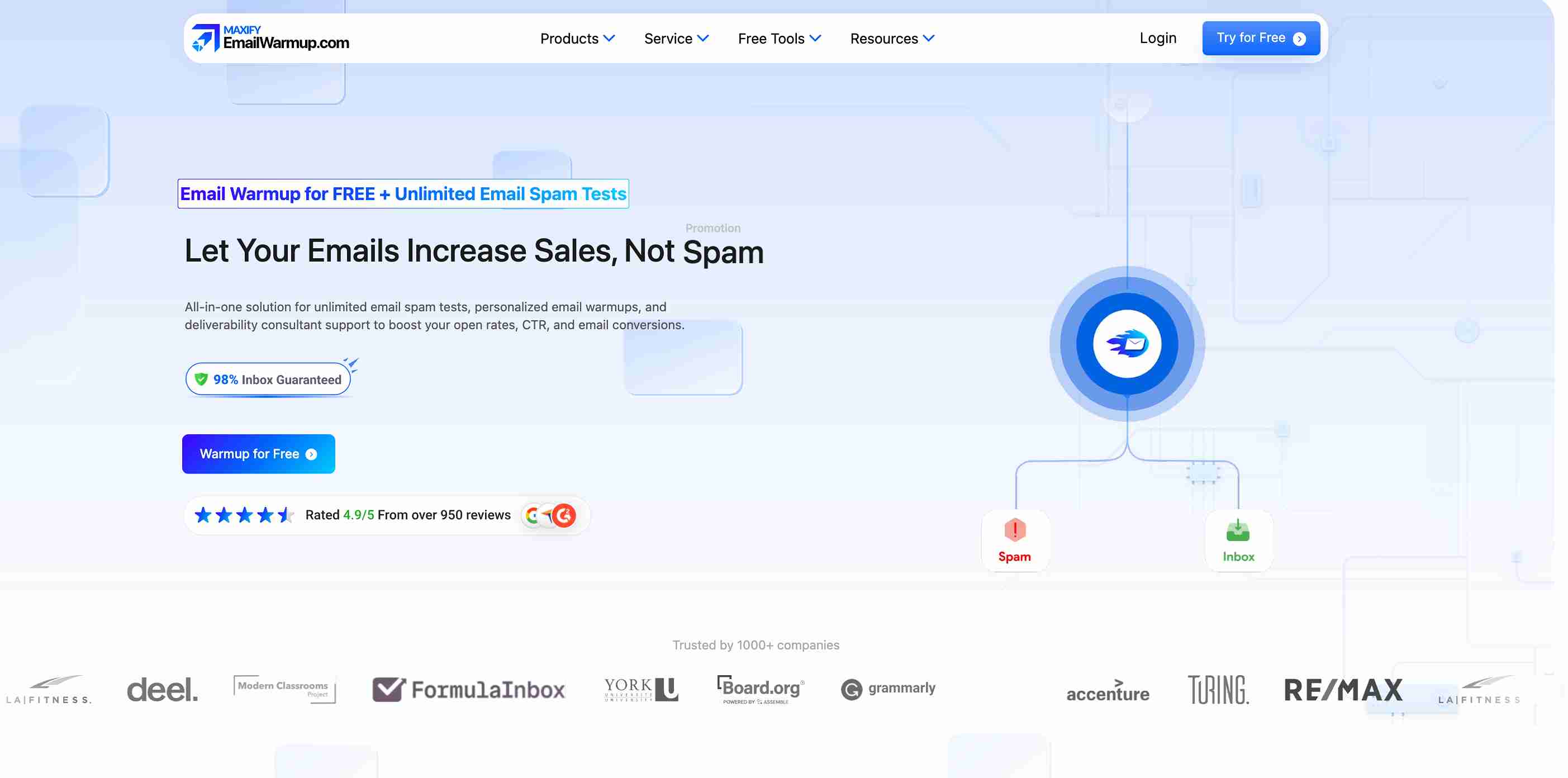
The platform runs a 360° deliverability audit that surfaces every issue hurting inbox placement — then provides tools and unlimited expert consultation to fix them.
Key advantages over InboxAlly:
- Personalized warmup that mirrors your actual sending patterns
- Part of a complete deliverability platform (not just warmup)
- Integrated authentication tools (SPF, DKIM, DMARC)
- More accessible pricing for multi-domain setups
- Unlimited deliverability consultation included
Start your free deliverability consultant
Final verdict
InboxAlly delivers on its promise — an engagement-based warmup that genuinely improves inbox placement. Support is excellent, the dashboard is intuitive, and users consistently report measurable gains. The 4.7/5 Trustpilot rating reflects real satisfaction.
The pricing creates the friction. At $149/month for one sender profile, costs add up quickly for multi-domain setups. The $645 jump to five profiles puts InboxAlly out of reach for smaller teams.
If deliverability directly impacts your revenue and you need premium support with proven results, InboxAlly justifies the investment. If budget matters and you’re managing multiple domains, alternatives deliver similar warmup functionality at a fraction of the cost.
Frequently asked questions
Here are some commonly asked questions about InboxAlly:
For high-volume senders where deliverability directly impacts revenue, yes — the engagement-based warmup delivers measurable results, and support is excellent. For smaller teams or those managing multiple domains on a budget, the $149/month per-profile pricing may be hard to justify when cheaper alternatives exist.
Plans start at $149/month (Starter) for 100 daily seed emails and one sender profile. Plus costs $645/month for five profiles, Premium runs $1,190/month for ten profiles. Enterprise pricing is custom. A 10-day free trial requires no credit card.
Most users report noticeable improvements within 4–14 days. Reputation repair scenarios may take longer (2–3 weeks or more). InboxAlly recommends maintaining warmup consistently rather than treating it as a one-time fix.
Yes — InboxAlly works with any email sending platform, including Gmail, Outlook, Yahoo, Google Workspace, and all major ESPs. No DNS access or account credentials required for your sending platform.
InboxAlly focuses on engagement signals — not just opens but clicks, replies, and inbox moves that train providers to trust your domain. The approach is more comprehensive than basic open-only warmup but comes at a premium price.