

SendGrid has been the default choice for transactional email since Twilio acquired the platform in 2019. The API documentation is thorough, the infrastructure handles serious volume, and the brand name carries weight with engineering teams. But the reputation has deteriorated — badly — in the years since the acquisition.
Trustpilot tells the story clearly. A 1.2/5 rating across 597 reviews, with 84% of reviewers giving one star. Complaints range from accounts suspended without explanation to billing issues, broken login flows, and support that takes days (or never arrives).
Reddit threads across r/SaaS, r/webdev, and r/sysadmin echo the same frustration — accounts disabled minutes after signup, no explanation offered, and no avenue for resolution.
The platform still works for teams that are already embedded in it. But for anyone evaluating SendGrid in 2026, the warning signs are hard to ignore.
This review covers:
- The account suspension and support crisis
- Pricing across tiers and where value breaks down
- SendGrid’s current deliverability and API capabilities
- Who should still consider SendGrid (and who should walk away)
TLDR: SendGrid at a glance
Here is a quick snapshot of where SendGrid stands in 2026.
| Category | Detail |
| What it is | Email API and cloud sending platform for transactional and marketing emails |
| Best for | Enterprise teams are already locked into SendGrid with dedicated IPs and Premier support |
| Deliverability impact | Direct — 95.5% delivery rate, 91.3% inbox placement (per third-party testing) |
| Main limitation | Widespread account suspensions, poor support, and deteriorating post-Twilio experience |
| Best-fit user | Engineering teams are comfortable with API-first email delivery at scale |
| Best alternative | Email API for deliverability-focused sending at scale |
Is SendGrid’s pricing worth it in 2026?
SendGrid’s pricing looks competitive on paper. The Essentials plan starts at $19.95/month for up to 50,000 emails, while the Pro plan costs $89.95/month for up to 2.5 million emails with dedicated IPs. A free trial offers 100 emails/day for 60 days — enough for basic testing.
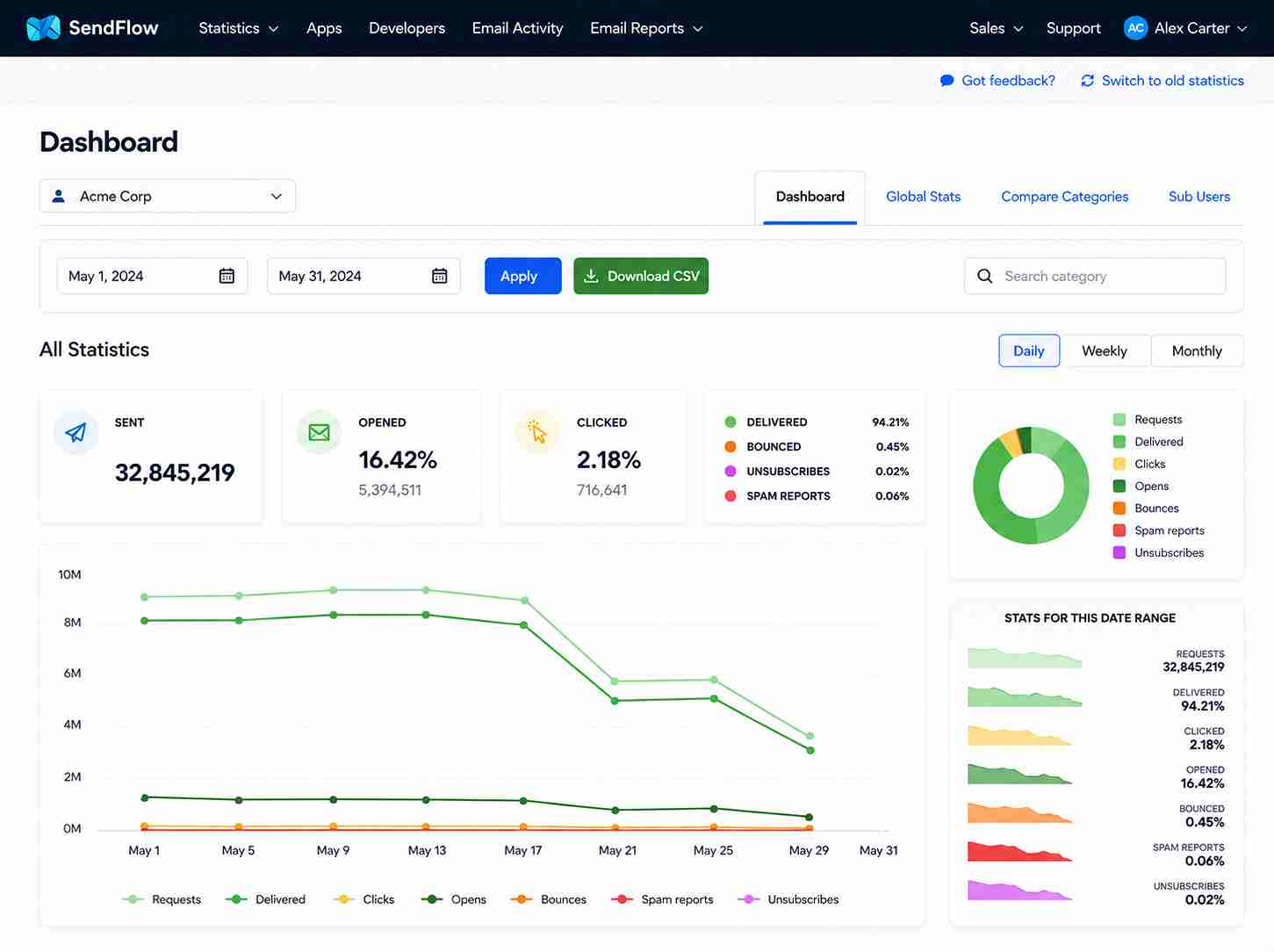
The problem is what the lower plans do not include.
Essentials uses shared IP addresses, and multiple users report those IPs being blacklisted (a complaint confirmed in both Trustpilot reviews and Reddit threads). Shared IPs mean your deliverability depends on other senders’ behavior — a risk that undermines the reason you are paying for an email API in the first place.
Dedicated IPs require the Pro plan ($89.95/month minimum), and meaningful support requires Premier (custom pricing).
Compared to Amazon SES at roughly $0.10 per 1,000 emails, SendGrid costs 3-4x more at equivalent volumes. The premium is justified only if you get reliable deliverability and responsive support. In 2026, many users are getting neither.
What SendGrid’s reputation reveals about its current state
The volume of negative feedback around SendGrid has reached a level that cannot be dismissed as isolated incidents.
Account suspensions
The most damaging pattern is accounts being disabled without explanation — often minutes after signup. Multiple Reddit users across r/SaaS, r/webdev, and r/Ghost describe identical experiences.
Users create accounts, complete verification, and receive suspension emails before sending a single message. SendGrid’s standard response references security and compliance but provides no specifics.
For production applications, the risk is severe. Several users reported their apps going down for days because SendGrid suspended accounts mid-operation, with support taking five or more days to respond.
Support quality
Trustpilot’s 1.2/5 rating reflects a consistent support failure. Users on Essentials plans report multi-day response times for production outages.
Support agents reportedly copy-paste generic responses without reading ticket details. Phone support requires Premier plans, and live chat is unavailable on lower tiers.
The irony is sharp. A platform that helps businesses send email cannot reliably deliver its own verification codes during signup (a complaint noted in both Trustpilot and Reddit threads from 2026).
Deliverability performance
When SendGrid works, the deliverability numbers are strong. Third-party testing shows 95.5% average delivery and 91.3% inbox placement — among the highest in the transactional email category.
The email validation API, event webhooks, and analytics suite are well-built. Shopify’s use of SendGrid with 99.99% uptime demonstrates that the infrastructure itself is capable.
The disconnect between platform capability and operational experience is what makes SendGrid difficult to recommend in 2026.
Pros and cons of SendGrid
SendGrid remains technically capable, but the operational experience has degraded to a point where technical merit alone cannot justify the recommendation.
- Strong deliverability when operational (95.5% delivery rate)
- Comprehensive API documentation in 7+ languages
- Event webhooks for real-time bounce, open, and click tracking
- Email validation API for list hygiene
- Dedicated IPs available on Pro plans
- Accounts suspended without explanation — often minutes after creation
- Trustpilot rating of 1.2/5 with 84% one-star reviews
- Support response times of days for production-critical issues
- Shared IPs on lower plans frequently blacklisted
- Cancellation and account deletion processes are deliberately difficult
Who should and shouldn’t use SendGrid
SendGrid’s fit has narrowed considerably. The platform still makes sense for a specific type of user, but the warning signs have made alternatives more attractive for most teams.
Who should use SendGrid
- Engineering teams with Twilio ecosystem investments who need API consistency
- Organizations with in-house deliverability expertise to manage reputation independently
- Enterprise teams already integrated with dedicated IPs, Premier support, and stable accounts
Who shouldn’t use SendGrid
- Teams without budget for dedicated IPs and Premier-tier support
- Startups or new businesses setting up email infrastructure for the first time
- Any sender who cannot afford multi-day downtime from an account suspension
- Small businesses without technical resources to manage API integrations and DNS configurations
SendGrid scorecard for email delivery teams
Here is how SendGrid rates on the categories that matter for teams evaluating email infrastructure.
| Category | Rating | Notes |
| Deliverability | ★★★★☆ | Strong when operational — 95.5% delivery, 91.3% inbox placement |
| API quality | ★★★★★ | Comprehensive SDKs, documentation, and webhook architecture |
| Support | ★☆☆☆☆ | Near-nonexistent on lower plans; slow and generic even on paid tiers |
| Account stability | ★☆☆☆☆ | Random suspensions without explanation remain widespread |
| Pricing value | ★★★☆☆ | Competitive on paper; hidden costs from shared IPs and required upgrades |
| Ease of setup | ★★★☆☆ | Developer-friendly API; steep learning curve for non-technical users |
How SendGrid fits into an email operations workflow
SendGrid is an API-first platform built for teams that integrate email programmatically. The fit depends entirely on whether you have the technical depth to manage it and the budget to avoid its weakest tiers.
Integration
SDKs in Node.js, Python, PHP, Ruby, Java, C#, and Go make integration straightforward for development teams. SMTP relay is available as a simpler alternative. Most integrations take 2-5 hours for experienced developers.
Template creation
The drag-and-drop editor handles transactional templates adequately, though it is more basic than marketing-focused tools. Template versioning through the API supports A/B testing without third-party tools.
Monitoring
Event webhooks track delivery events in real time — opens, clicks, bounces, spam reports, and unsubscribes. The analytics dashboard provides geographic data, engagement metrics, and deliverability breakdowns. The monitoring capabilities are genuinely strong.
Operational risk
The account suspension pattern is the critical risk. Teams running production email through SendGrid face the possibility (however small per individual account) of sudden, unexplained suspension with no fast resolution path. For mission-critical transactional email, that risk warrants a contingency plan at a minimum.
What happens after you stop using SendGrid?
Migration away from SendGrid is relatively straightforward because of the API-first architecture. SMTP credentials can be swapped, and API-based integrations typically require only endpoint and key changes.
However, IP reputation built on SendGrid’s dedicated IPs does not transfer. Teams migrating to a new provider start with a fresh IP reputation, which means a warmup period is required.
DNS records (SPF, DKIM, DMARC) need updating to authorize the new sending source. For high-volume senders, the migration window can take 4-8 weeks to complete safely.
A better alternative to SendGrid | EmailWarmup.com
SendGrid offers email delivery infrastructure. EmailWarmup.com offers email delivery infrastructure with the deliverability support that makes the infrastructure reliable.
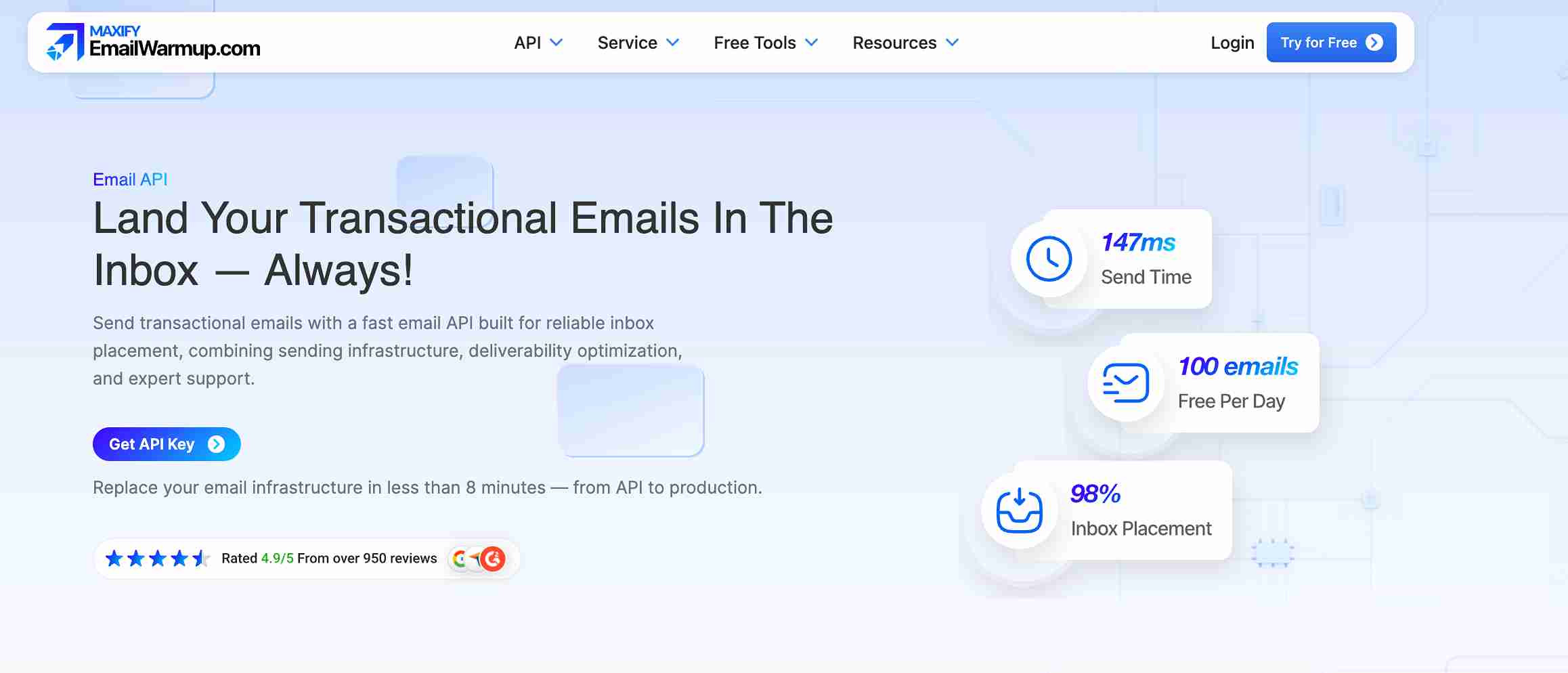
EmailWarmup.com’s email API provides deliverability-focused sending at scale, backed by:
- Reputation monitoring and blacklist remediation
- Authentication setup for SPF, DKIM, and DMARC
- A full deliverability audit before you start sending at volume
- Unlimited deliverability consultation so problems get diagnosed and fixed — not just flagged
SendGrid gives you pipes. EmailWarmup.com gives you pipes, plus the expertise to make sure what flows through them actually reaches the inbox — the perfect SendGrid alternative.
Final verdict on SendGrid
SendGrid’s email API and deliverability infrastructure remain technically sound. But the post-Twilio operational experience — account suspensions, support failures, and billing confusion — has turned a once-reliable platform into a risk.
The core issues:
- Support on lower tiers is effectively non-functional
- Shared IP plans carry a deliverability risk from other senders’ behavior
- Account suspensions without explanation or recourse remain widespread
- The platform has lost trust across Trustpilot, G2, and Reddit communities
For teams already embedded in SendGrid with Premier support and dedicated IPs, the platform still works. For everyone else evaluating email infrastructure in 2026, the alternatives are safer bets.
Frequently asked questions about SendGrid
Here are the most common questions buyers ask before choosing SendGrid.
The infrastructure is reliable — Shopify and other large customers maintain 99.99% uptime. But account-level reliability (suspensions, billing, and support responsiveness) is a separate problem. Many users report accounts being disabled without warning, sometimes before a single email is sent.
SendGrid’s automated vetting process flags new accounts for undefined security concerns. The platform provides no specific explanation and offers no fast resolution path. Multiple users report being permanently banned within minutes of registration, with no appeal process.
SES is cheaper (roughly $0.10 per 1,000 emails) but requires more setup and offers less managed deliverability tooling. SendGrid provides better documentation, templates, and analytics — but at 3-4x the cost. SES is the better fit for technically capable teams optimizing for cost. SendGrid suits teams that want a more managed experience (though “managed” has become a stretch given support quality).
Yes. SendGrid supports both transactional and marketing email with templates, contact segmentation, and campaign tools. However, the marketing features are less developed than dedicated platforms like Klaviyo, Mailchimp, or HubSpot. Our email API can work for both transactional and marketing uses.