
ListKit is a B2B lead-generation and sales-intelligence platform built for outbound prospecting. It offers a 731M+ contact database, an AI-powered company search, triple-verified email addresses, intent data, and a done-for-you cold email service — pitched as a single place to find contacts and get campaigns running.
The deliverability angle here is narrower than the marketing implies. ListKit verifies whether an email address is reachable before you download it. That helps with email bounce rate control.
What it doesn’t do is diagnose your sending infrastructure, monitor your domain health, test inbox placement, or surface authentication failures.
From a consultant’s standpoint, this is a data quality tool that does one deliverability-adjacent job well — and leaves everything else for you to figure out separately.
In this review, we’ll be evaluating ListKit on what it claims to deliver:
- Pricing logic
- Contact accuracy
- Real-world campaign performance
- Who genuinely benefits from using it
ListKit is a B2B lead generation platform with a genuinely useful verification engine — but it is not a deliverability tool. Triple-verified contacts reduce bounce risk at export. They do not diagnose your infrastructure, monitor your domain, or fix your sending reputation. You still need a full deliverability layer on top.
High-volume outbound teams that already have warmup, authentication, and domain monitoring in place — and need cleaner contact data at scale.
You need inbox placement testing, domain reputation monitoring, or a deliverability system that goes beyond a verified list. ListKit does none of that.
TLDR — ListKit at a glance
Here’s an overview of everything ListKit offers:
| Category | Verdict |
| Best for | High-volume B2B outbound teams |
| Starting price | $97/month |
| Free trial | 100 free lead credits |
| Standout feature | Triple-verification engine (98% deliverability claim) |
| Biggest weakness | No deliverability diagnostics or domain monitoring |
| Best alternative | EmailWarmup.com’s email validation API |
| Overall rating | 3.0 / 5 |
How we evaluated ListKit
This review approaches ListKit from a deliverability consultant’s perspective, not as a sales tool comparison. The evaluation covered:
- The triple-verification methodology
- What ListKit prevents (in terms of validation)
- Pricing structure relative to the value delivered
- Public user sentiment across G2 (390 reviews, 4.7/5), Trustpilot (224 reviews, 4.1/5), and Reddit
DFY service outcomes were weighted heavily — patterns of zero replies across large send volumes were treated as a signal, not an outlier. Deliverability-specific factors examined include the impact of bounce rate and the gap between what ListKit handles and what still requires separate infrastructure.
Is ListKit worth the price?
ListKit’s pricing is aggressive for what remains a data platform. Three plans:
| Plan | Price | Features |
| Professional | $97/month | 2,000 triple-verified email credits, unlimited email verifier credits, 100 mobile number credits, CRM integrations, unlimited users |
| Scale | $297/month | 8,000 email credits, 400 mobile number credits, intent filters, cold email coaching, done-for-you cold email program |
| Enterprise | Custom | DFY CRM integrations, custom intent data, dedicated account manager |
At $97 for 2,000 verified contacts, the per-lead cost is roughly $0.05 — reasonable for verified data. The Scale plan adds intent filters and the DFY service, but at $297/month, the intent data layer has drawn consistent criticism (more on that in the evidence section).
The DFY service is where value collapses under scrutiny. Multiple users across G2 and Trustpilot paid $1,500+ in onboarding fees on top of monthly subscriptions and reported effectively zero positive replies from 30,000-45,000 emails sent.
One G2 reviewer sent 45,000 emails and received a single legitimate response — from a company entirely outside their target. That’s not a deliverability failure. It’s a targeting-and-copy problem that no verification engine can solve. You’re paying for contacts. Results are not guaranteed, regardless of what sales calls imply.
What do the results show in practical application?
Verification quality is ListKit’s genuine strength, and a narrow one at that. The triple-check process — format, domain, mailbox existence — aims for ~98% deliverability on exported contacts.
Many users confirm lower email bounce rate outcomes compared to unverified lists.
Bad addresses accumulate reputation damage quickly (a 2% hard-bounce threshold triggers filtering at most providers), so starting with cleaner data does matter.
The harder patterns from user data:
Data freshness
Several G2 reviewers flagged leads outside their stated criteria — wrong geographies, non-functional websites, and companies irrelevant to their ICP. Triple verification catches invalid email addresses, but it doesn’t guarantee relevance.
Intent data
Described as hit-or-miss by multiple users. Better as a secondary filter than a primary targeting layer, per r/coldemail feedback.
DFY campaign outcomes
The pattern across negative reviews is consistent — large send volumes with near-zero positive replies. This signals ICP misalignment and copy issues, not list quality failures per se. Yet ListKit markets DFY as a pipeline-building service, creating expectations that raw contact data alone cannot fulfill.
For raw data sourcing — pulling clean, verifiable contacts — ListKit performs. For sender reputation protection and inbox placement visibility, it contributes nothing directly.
Pros and cons of using ListKit
ListKit does one job well and leaves a large gap everywhere else. Here’s how it breaks down in practice.
- +Triple-verified contacts reduce bounce risk at the point of export — no separate verification tool needed for most use cases
- +AI company search builds targeted lists fast without hours of manual filtering; plain-English prompts return usable results
- +Clean UI with fast onboarding; free setup call included and multiple reviewers cite responsive initial support
- +CRM integrations with HubSpot, Close, and Instantly work reliably — no CSV exports or manual mapping required
- −No deliverability diagnostics, domain reputation monitoring, or inbox placement testing of any kind
- −DFY service results are highly inconsistent — multiple users report zero replies from 30,000-45,000 emails sent
- −Intent data filters at $297/month described as hit-or-miss; works better as a secondary filter, not a primary targeting layer
- −Data can drift off-target — wrong geographies, irrelevant verticals, and outdated companies appear in outputs despite verification
- −Steep entry price ($97/month for 2,000 contacts) with a $1,500+ onboarding fee for DFY — poor risk-to-reward without existing infrastructure
Who should and should not use ListKit?
ListKit works well when your outbound system is already dialed in — otherwise, it can feel expensive for what you get.
You should use ListKit if…
- You run high-volume outbound with a solid deliverability setup
- You manage multiple client campaigns and need fresh data often
- You have a clear ICP and want fast, targeted list building
- You send consistently and benefit from credit rollover
You should not use ListKit if…
- You’re just starting cold email without a proper setup
- You don’t have a proven offer or clear positioning
- You’re still figuring out your ICP
- You rely on relationship-driven, non-scalable sales
Teams without email list hygiene workflows already in place should consider verifying existing lists before spending on new data acquisition.
Category scorecard
| Category | Score | Notes |
| Pricing | 3/5 | Expensive for data-only value; DFY ROI is inconsistent |
| Ease of setup | 4/5 | Fast onboarding, clean UI, good initial support |
| Core functionality | 3.5/5 | Strong contact data; intent layer underwhelms |
| Deliverability impact | 2/5 | Reduces bounces at export; no infrastructure layer |
| Diagnostics depth | 1/5 | No domain, IP, or inbox monitoring whatsoever |
| Reporting | 3/5 | Basic campaign stats in DFY tier only |
| Support | 3.5/5 | Onboarding is strong; ongoing support is inconsistent |
| Scalability | 3.5/5 | Credit model works at volume |
| Provider compatibility | 3/5 | Works via CRM integrations; no native ESP tools |
| Overall value | 2.5/5 | Data quality is real; deliverability depth isn’t there |
How does ListKit actually perform?
In practice, ListKit works well as a list-building layer — and reveals its limits the moment campaigns go live. Setup is fast.
The AI company search handles plain-English prompts reliably, and first-time users consistently note how quickly they move from search to a downloadable list. The CRM syncs to HubSpot, Close, and Instantly cleanly.
Here’s where it breaks down and leaves a gap:
Targeting drift
AI search results can be broad when prompts lack specificity. Multiple enterprise users reported leads outside stated criteria — wrong geography, irrelevant sectors, defunct companies. Verification confirms an address is deliverable; it doesn’t confirm the company is still operational or actually fits your ICP.
DFY execution
The done-for-you model hands over copy, domain setup, and sending to ListKit’s team. Results split sharply. Some clients (a claims operations firm cited on G2) report 100+ new client engagements per campaign; others sent 30,000+ emails and received zero booked meetings across three campaigns. The difference traces back to offer clarity, audience fit, and domain reputation management during live sending.
No warmup layer
ListKit provisions domains for DFY clients but provides no ongoing inbox monitoring or reputation tracking during active campaigns. There’s no visibility into whether sending domains are accumulating spam complaints or drifting toward blacklists.
What happens after you stop using ListKit?
Contacts downloaded during your subscription remain yours — but the infrastructure doesn’t outlast the engagement.
For self-serve users, exported lists stay usable. The verification doesn’t expire with your plan, though B2B email addresses age at roughly 22% per year, so anything pulled six months ago should be re-verified before reuse (see email verification vs email validation for how those checks differ).
For DFY clients, the picture is starker. Domains provisioned and warmed during the service period aren’t maintained once sending stops.
Reputation built up during the engagement starts to decay when activity drops off — and teams that didn’t build their own infrastructure during the engagement essentially start from zero.
A better alternative to ListKit | EmailWarmup.com’s email validation API
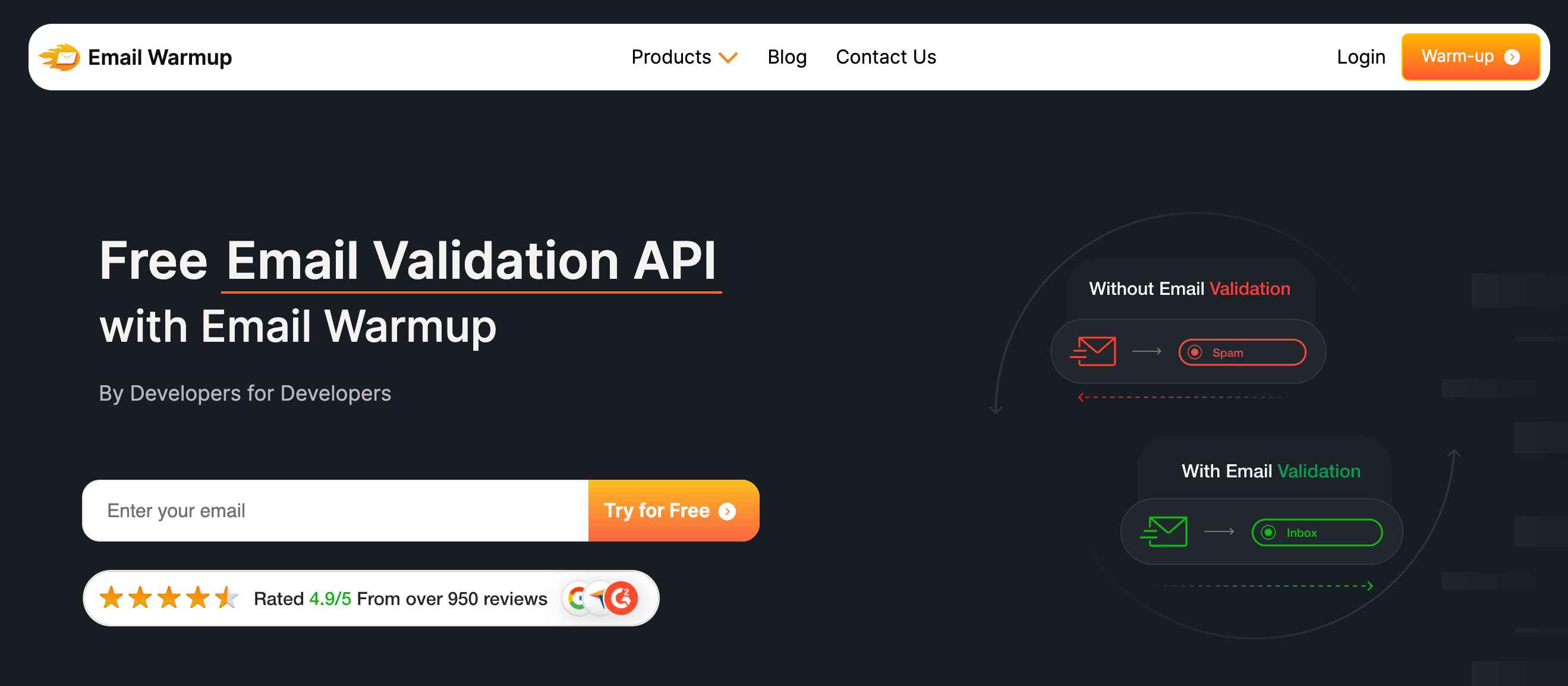
If you care about clean data at scale — without stacking extra tools or watching per-credit costs climb — this approach gives you tighter control over deliverability from the start.
You validate emails in real time, not after export
You test quickly with free credits before committing
You keep bad data out of your CRM instead of cleaning it later
You filter out risky contacts like spam traps and disposable emails
You integrate easily with REST/JSON API and multi-language SDKs
You catch format issues, invalid domains, and non-existent mailboxes early
Start validating at the point of entry — not after the damage is done.
Start your email validation with our API
Final verdict
ListKit is a solid B2B contact database with a genuinely useful verification engine. For outbound teams that need fresh, targeted lead lists — and already have warmup, authentication, and sending infrastructure covered — it does what it claims. The AI search is fast, the data quality is better than unverified alternatives, and onboarding is smooth.
The gap is everything after the list. No deliverability diagnostics. No domain monitoring. No inbox placement testing. For teams expecting the DFY service to generate booked meetings without a proven offer and a clean sending infrastructure already in place, results will disappoint.
Use it for data. Build the deliverability layer separately.
Frequently asked questions
Here are some commonly asked questions about ListKit:
Yes, meaningfully — but within limits. The triple-verification process catches invalid formats, non-existent domains, and unreachable mailboxes before export. Users consistently report lower hard bounce rates than with unverified lists. That said, no verification is permanent; B2B addresses age, and a list exported several months ago will need re-verification before reuse.
ListKit runs three sequential checks: syntax/format validation, domain and MX record verification, and SMTP-level mailbox confirmation. This process aims for ~98% deliverability on exported contacts. It does not check inbox placement, sender reputation, or authentication configuration — those require separate infrastructure.
For basic list-building use cases, yes — the built-in verification removes the need for a separate tool like ZeroBounce or Bouncer if you’re sourcing all contacts through ListKit. For teams bringing in contacts from multiple sources (forms, CRMs, inbound), a dedicated email validation API that validates at intake is still needed.
Domains provisioned during the DFY engagement are typically registered under your account, so you retain ownership. However, warmup activity — and the reputation built during it — depends on continued sending volume. If outbound stops after cancellation, domain reputation will decay without active maintenance. Always confirm domain ownership terms before committing to DFY services.