If you search for the best email subject lines to use in your email campaigns, you’ll quickly find articles that “guarantee opens.” Well, we can’t guarantee that. But we’re absolutely sure that, after reading this guide, you’ll understand:
- The human psychology behind every click,
- What approaches successful campaigns use,
- What strategies you can try to get more emails opened,
- And why your subject lines won’t matter if your email deliverability, domain health, or segmentation are off.
So, if you want to understand the mechanism behind the subject lines that get opened, instead of blindly copy-pasting generic templates, this one is for you.
The psychology behind catchy email subject lines
When it comes to psychology in marketing and sales, what you keep seeing is all the basics: FOMO, urgency, and so on. That’s why we get so many “BUY NOW, tomorrow will never come” and personalization that comes down to adding a person’s name.
Well, some of these could work.
But they are very far from the truly effective approaches.
So, let’s try to understand the actual psychology behind what triggers people. And discover how you can apply it to create good subject lines for marketing and sales emails, link building outreach, or any other type of email communication.
We’ll try not to get too nerdy here, but we will use some scientific terms.
The information gap (aka curiosity)
Every single guide on marketing and sales email subject lines mentions curiosity. But what is it really?
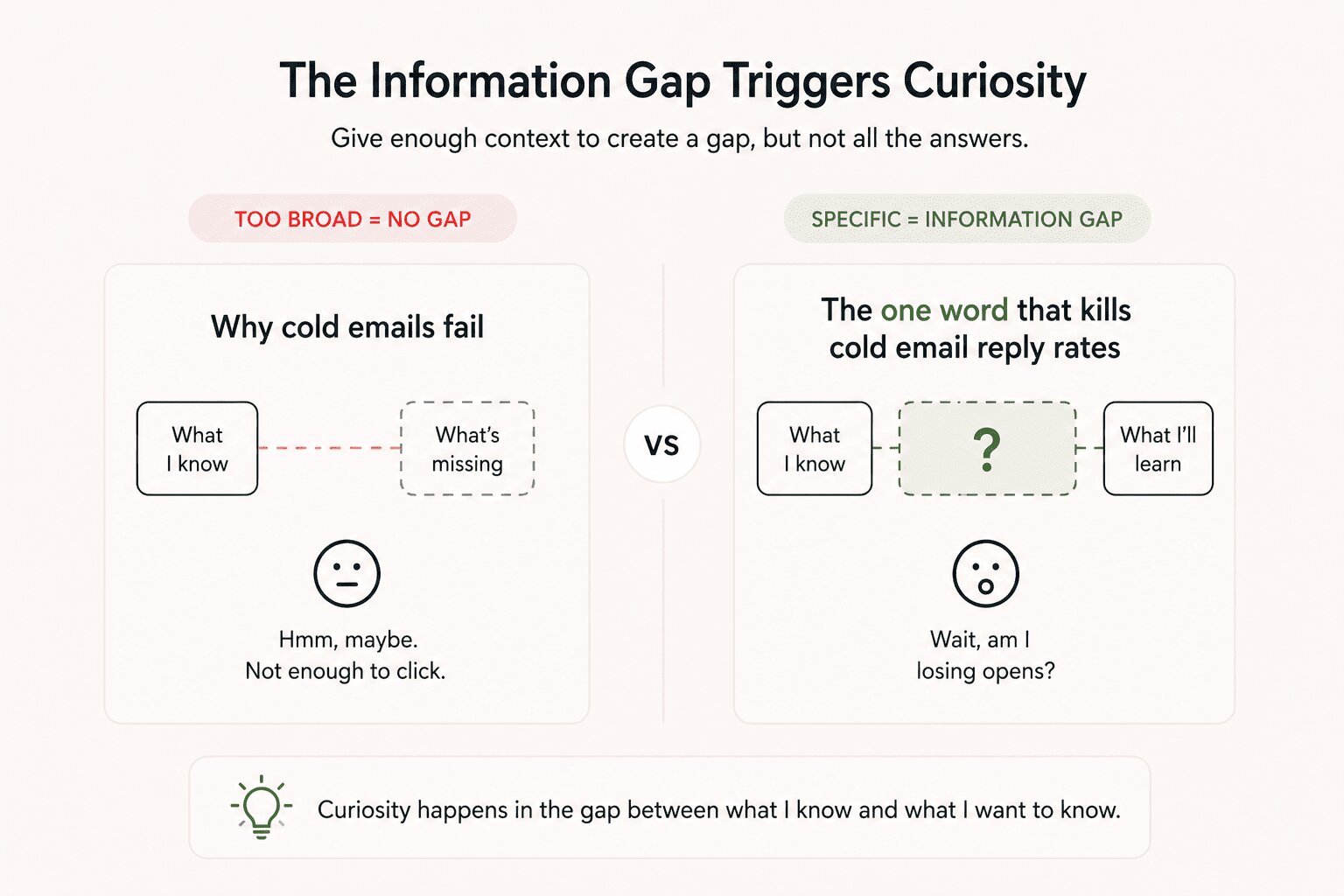
Essentially, it’s always about the information gap. The idea is to give enough context to create a gap while not giving away all the knowledge.
For example:
- A line like “It was the most surprising discovery…” doesn’t give any context. So there is no real curiosity.
- But something like “1,379 successful startups shared this one thing” is much more specific. It gives you a feeling of anticipation of finding out what that one thing is.
Loss aversion (aka FOMO)
FOMO seems like a buzzword by now. And badly executed FOMO is one of the fastest ways to get spam complaints in email marketing.
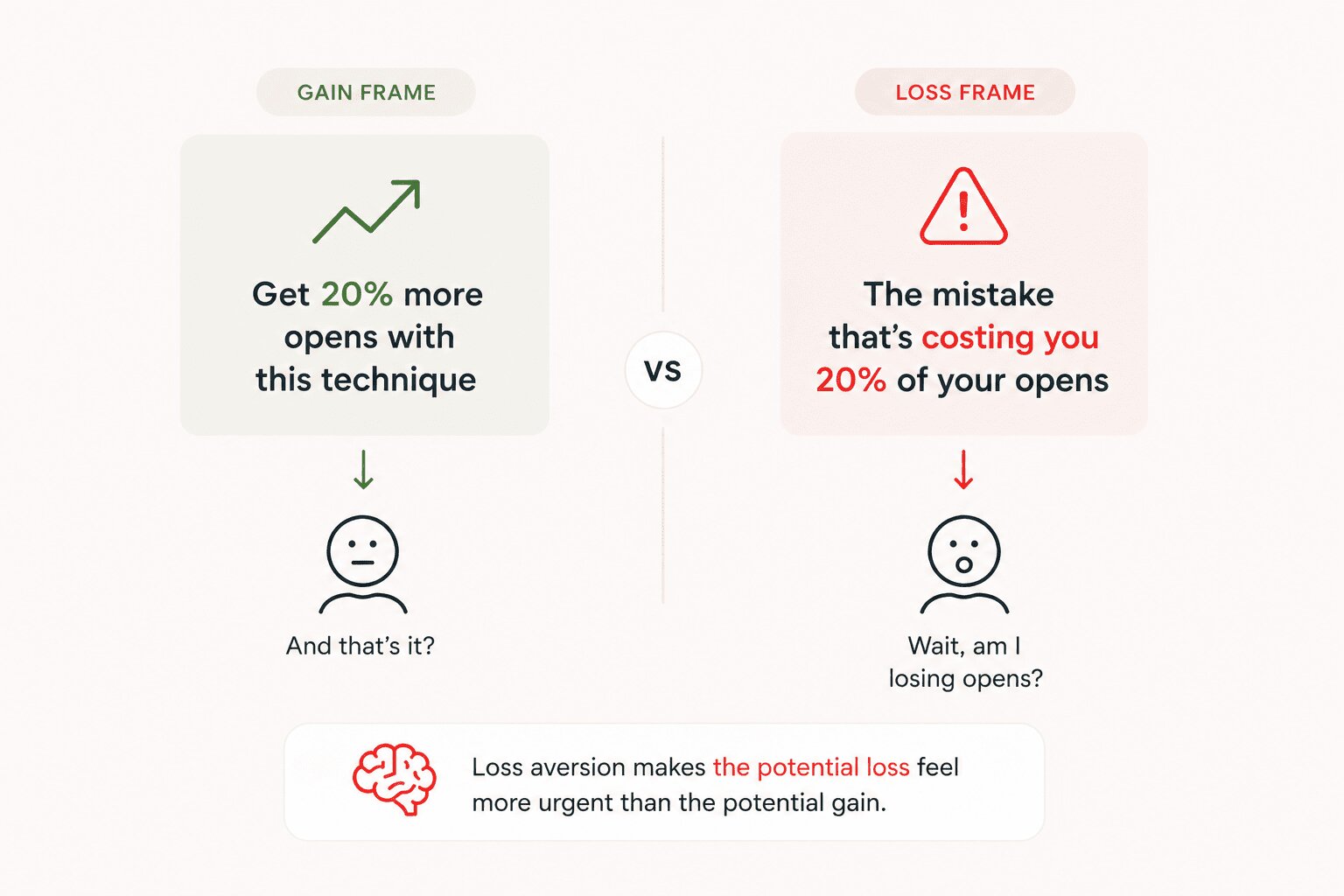
But in reality, it was once based on an effective psychological strategy called loss aversion (the theory that earned Daniel Kahneman the Nobel Prize in Economics).
The logic behind it is quite simple: avoiding a loss feels generally more important to humans than achieving a gain.
For example:
- A gain-focused line: “This simple tip can get you x2 prospects.”
- A loss-centered one: “You are missing 50% of prospects because of this.”
It’s essentially the same message. But the emotions they trigger are different.
The Cocktail Party Effect (aka Personalization)
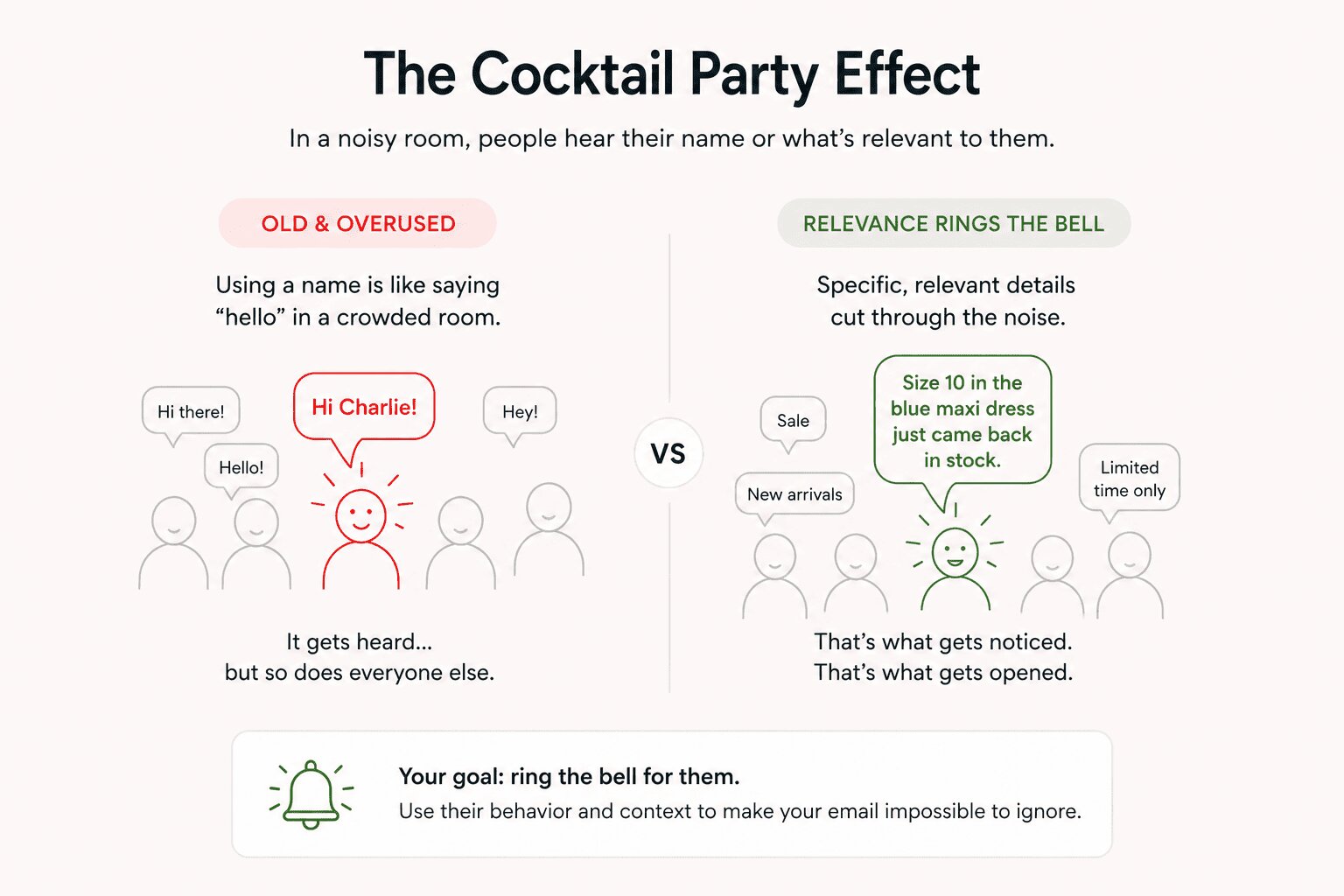
Everyone in marketing and sales often talks about the importance of addressing people by their name. It’s effective because of a so-called Cocktail Party Effect mechanism. The idea is that even in a loud room, people will hear their name and “block” all the other noise.
But here is an issue, though: this trick is old.
Your recipients are already getting so many emails with their names in the subject. And it won’t make you stand out.
So, your goal is to be creative and make users hear you in the crowded room (read as inbox). Ask yourself what you can do to “ring the bell” for them. The easiest thing to do is to use your recipients’ behavior.
For example:
- Instead of “Here’s a selection of dresses for you” or even “Charlie, here’s a selection of dresses for you.”
- Try something like “Size 10 in the blue maxi dress just came back in stock.”
Best email subject lines (with real-life examples)
Now, let’s take a look at the real-life examples of catchy email subject lines that can work for all types of outreach campaigns.
1. Test “the classics” first
We don’t want to dedicate a separate section for each of these. So, make sure you just try all the typical email subject line approaches. Some of them might actually work for your business and audience:
- Offer. If you have a good offer, people who are already close to the decision stage in your funnel will often convert. These are things like “Buy 1, get 1 free today” or “Complimentary delivery on all orders.”
- Scarcity and urgency. When you combine them with the behavior-based approach, it becomes even more effective. “Size 12 is almost sold out,” “5 hours left until our biggest sale of the year ends,” etc.
- How to. This format not only performs great for blog posts, but also for emails. Simply because people like structured, step-by-step information. Think of “How to fall asleep in under 5 minutes,” “How to fix snoring with a $10 tool,” etc.
- From X to Y. This is generally a story format between points A and B. And if those are interesting, you’ll hook your recipients. This would be something like, “From 0 clients to making $20,000/week in 6 months.”
- X vs. Y. This refers to any comparison: “Product A vs. Product B,” “Approach A vs. Approach B,” etc.
- Social proof. When others make the same decision, the risk seems much lower. So, a line like, “7,500 Americans sleep better because of this natural supplement” is much more powerful than “This natural supplement helps you sleep better.”
- Question-based. This works great if you apply any of the psychological tactics above. For example: “Are you posting on Instagram at the wrong time?” “Is coffee actually bad for you?” etc.
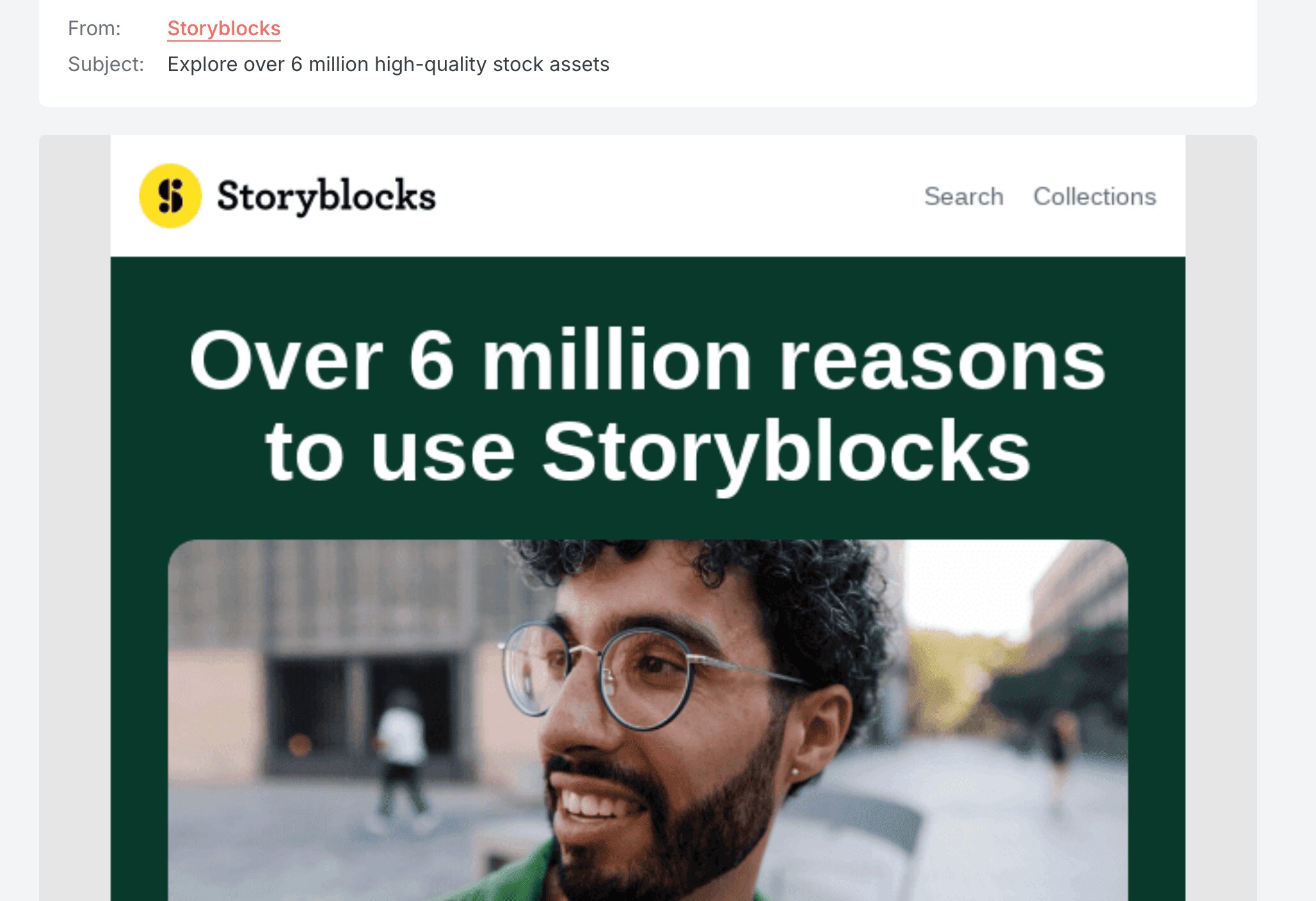
- Number-based. If you have any impressive numbers to share, lead with them. “Raised 12M thanks to LinkedIn,” “We analyzed 2,500+ viral videos. Here’s what they have in common,” and so on.
Source: Really Good Emails
We’ve mentioned all these briefly, not because they aren’t effective. But because, in general, recipients are more used to receiving these by now.
That’s also why most of the templates out there don’t work well. They’re overused. And the audience perceives them as white noise. So, yes, it’s worth testing these formats. But still, try to rely on your own audience insights, not someone else’s examples.
2. Personalize
This sounds like another typical piece of advice. But today, we want to talk about something more than just adding a person’s name or location to the subject line.
If you’re working in B2C, start with segmentation and behavior-based emails.
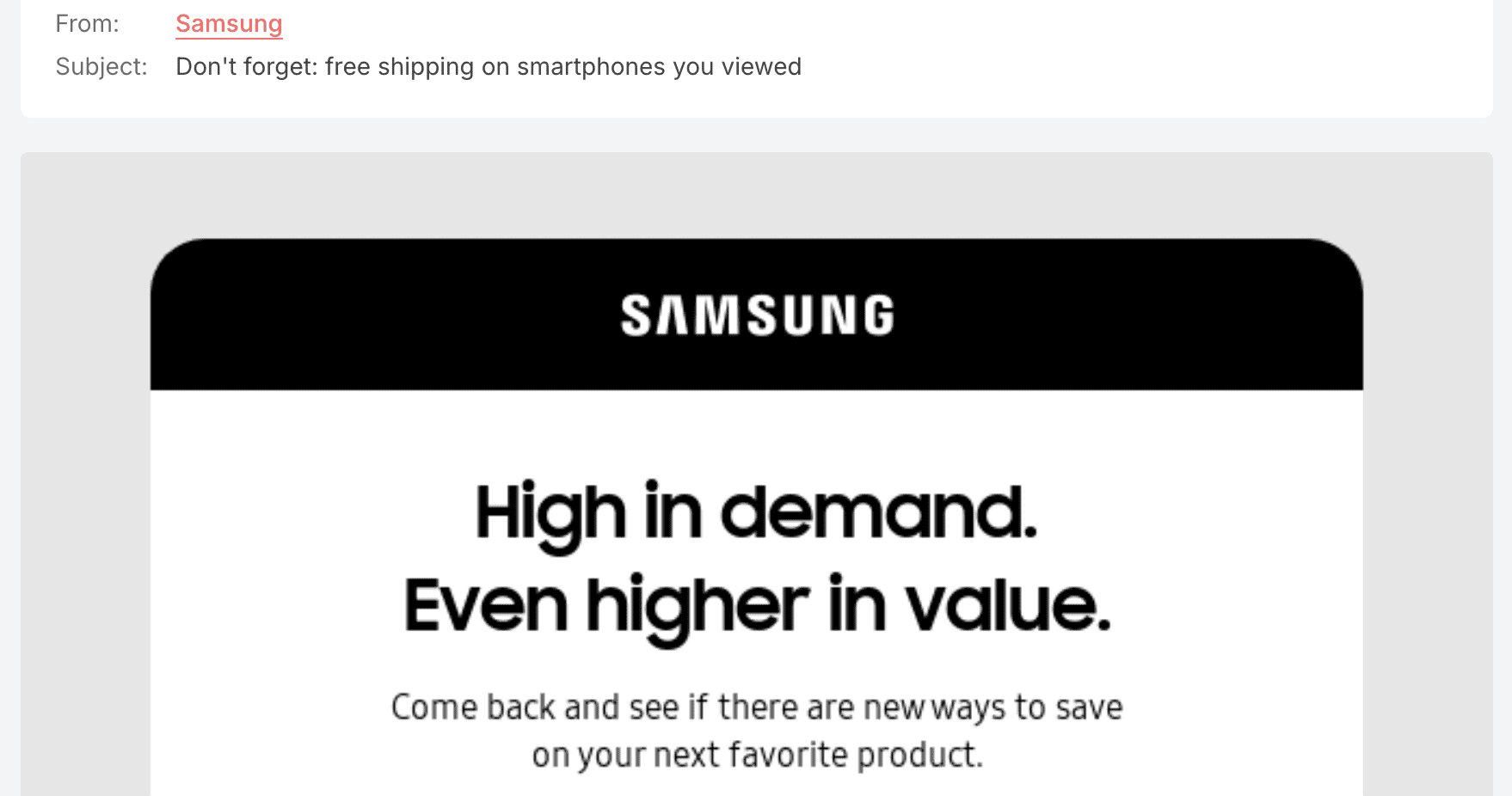
Even something simple like this generally works better than simply adding a first name:
Source: Really Good Emails
So, analyze what people have been doing on your website, and offer them something relevant in both your subject line and the message itself.
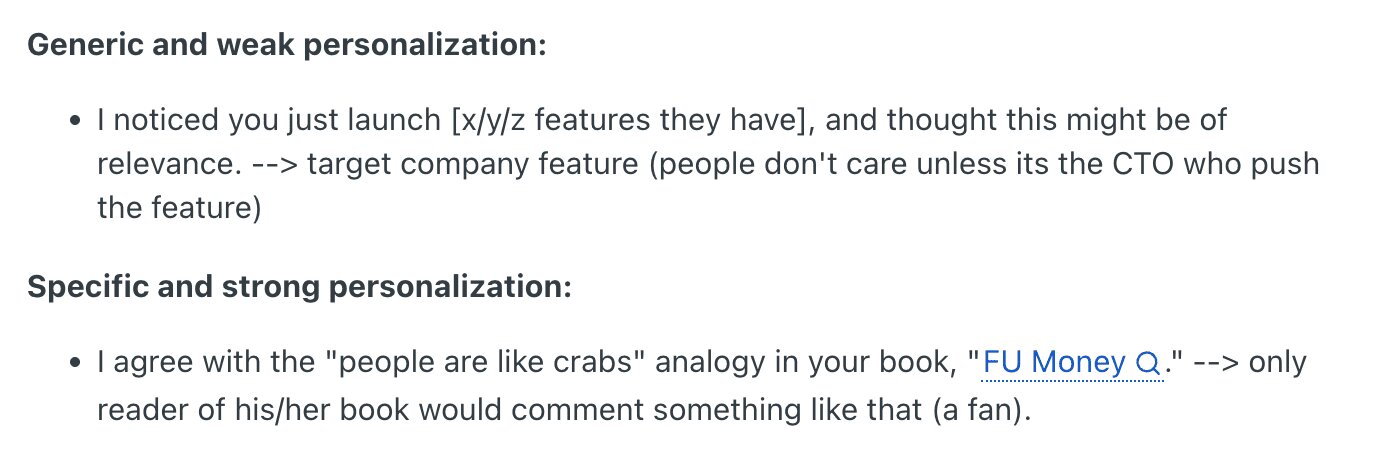
If you’re in B2B, do your research well:
Source: Reddit
Everyone can copy-paste a job title or a company name. But if you show that you’ve really spent your time diving into who that person is, you’ll differentiate right away.
3. Make it about the recipient
This is an approach you have to keep in mind in all your copy. No one wants to know about your features, your launches, and your news.
People care about solving their own problems. So, give them exactly that. Always ask yourself: what’s in it for them?
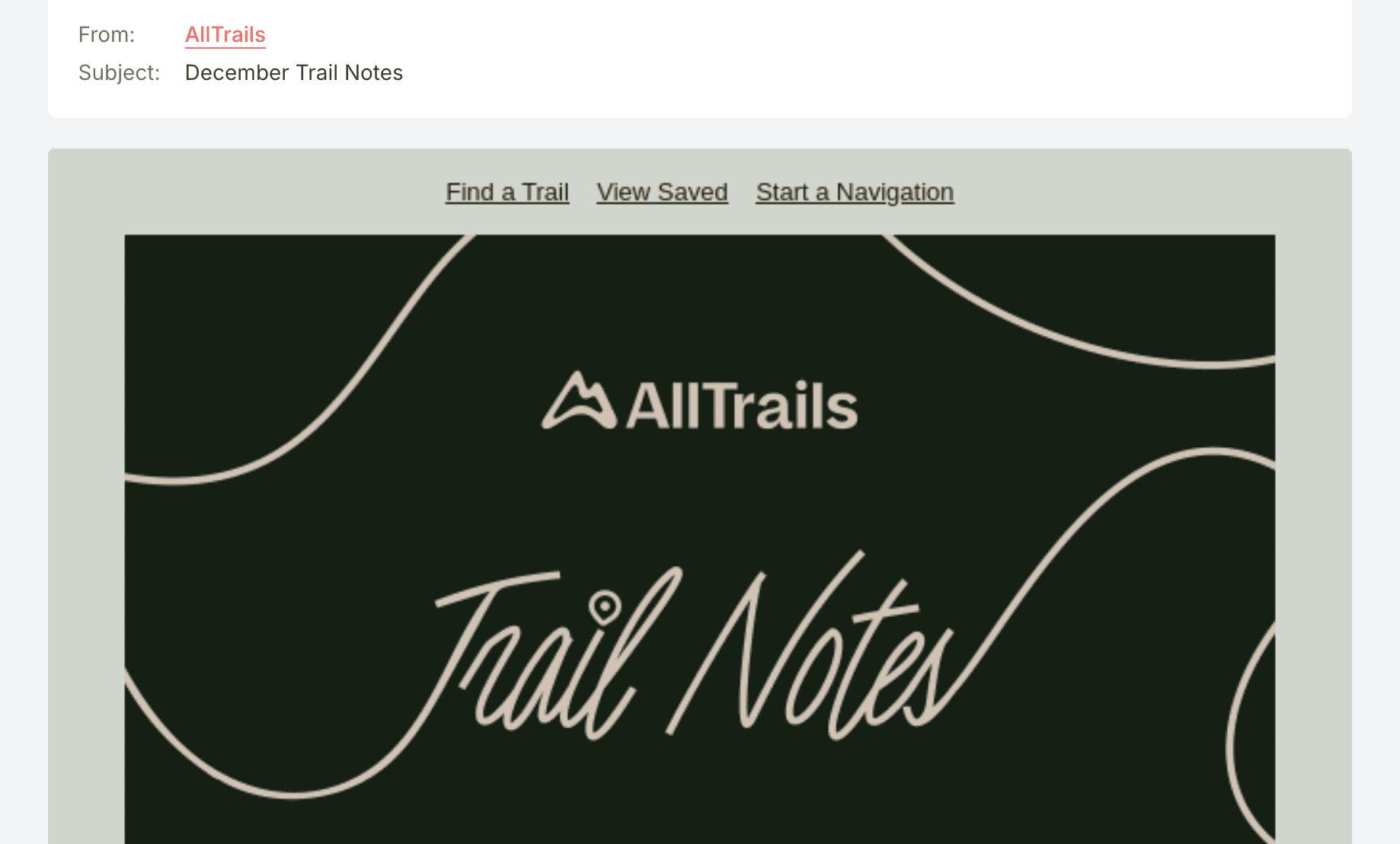
For example, “December Trail Notes” doesn’t say anything specific.
Source: Really Good Emails
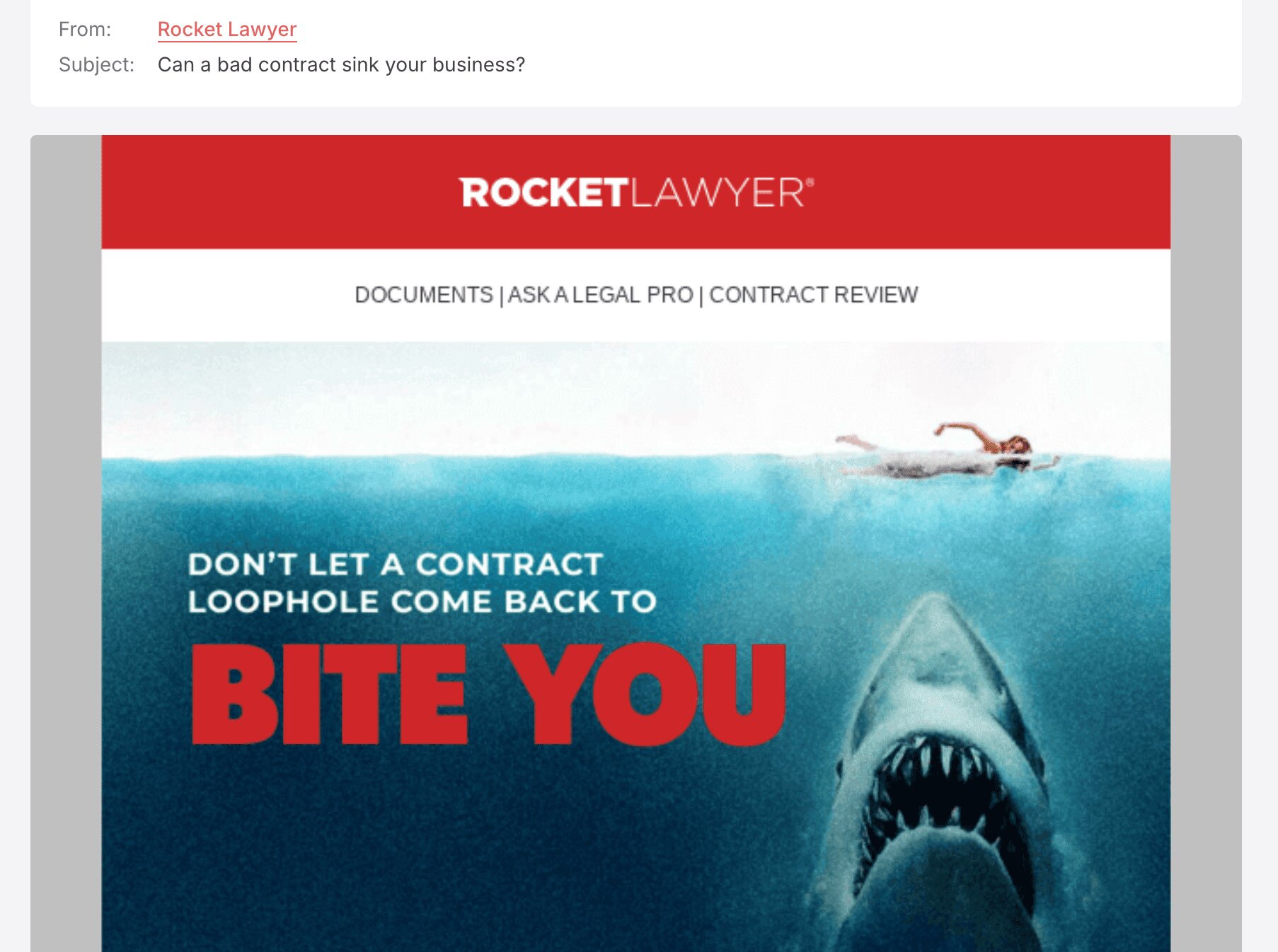
But something like this is already much better because no one wants their business to sink because of a bad contract:
Source: Really Good Emails
4. Sound human
When your email subject lines stop sounding like a “serious marketing email,” it could actually be a good thing. You see, most messages your audience gets are the same in terms of style.
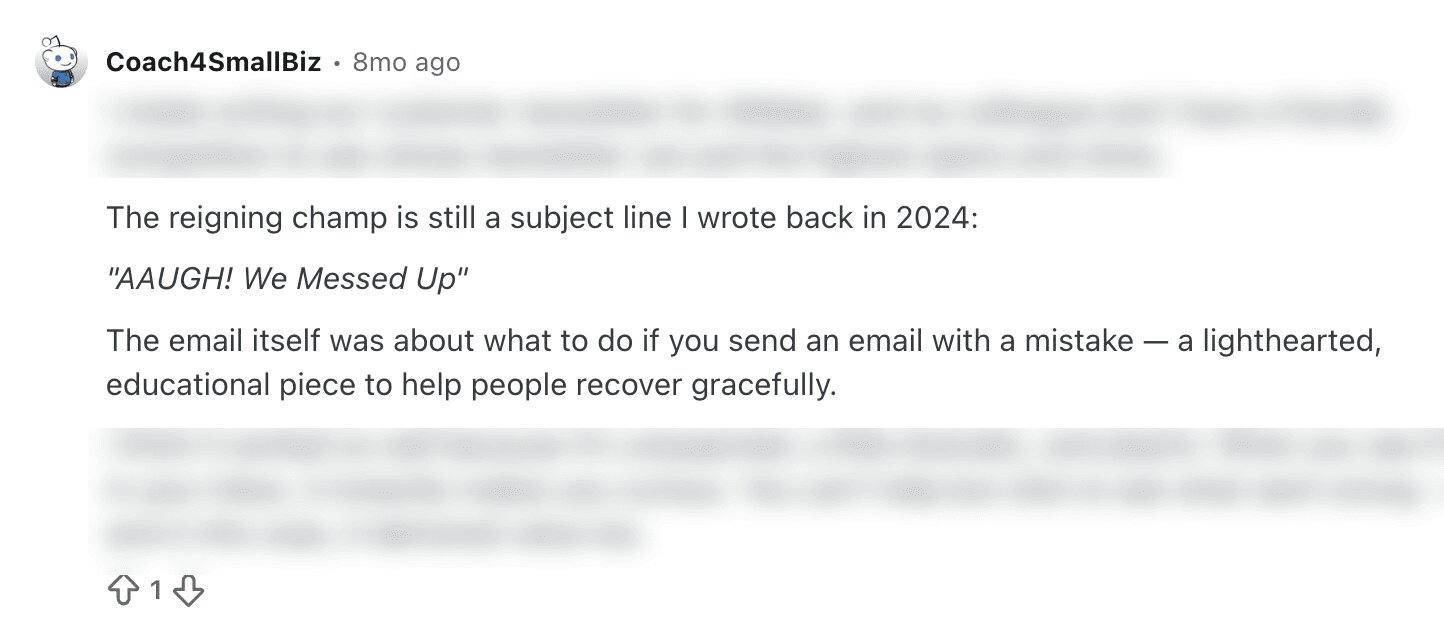
So, when you let your business sound more human, it could actually work:
Source: Reddit
Note: Avoid ALL CAPS.
Or simpler things like this, especially for B2C:

Source: Reddit
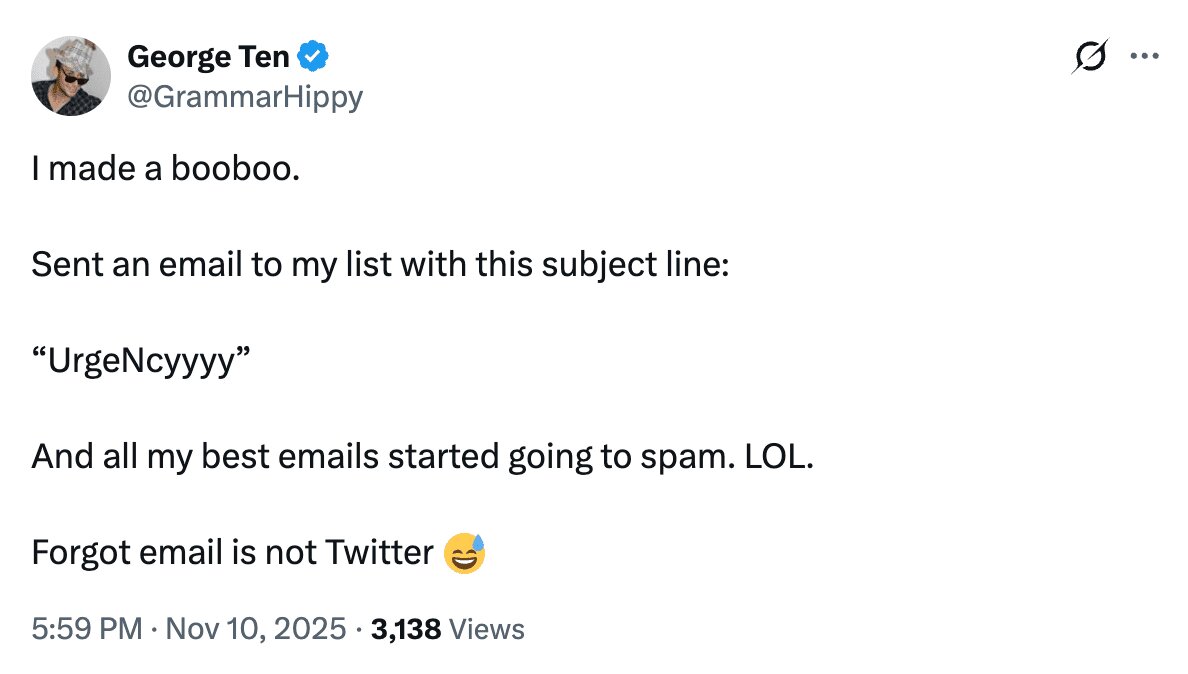
But don’t go overboard here. Your subject line still has to make sense and not look spammy:
Source: X
5. Create the information gap
If you remember the psychology section above, you understand that we talk about triggering curiosity. We already gave you some examples of how to give just enough information to create that gap. But there are other options, too.
For example, you could start with “What if…” and imagine some scenarios that your audience could find interesting.
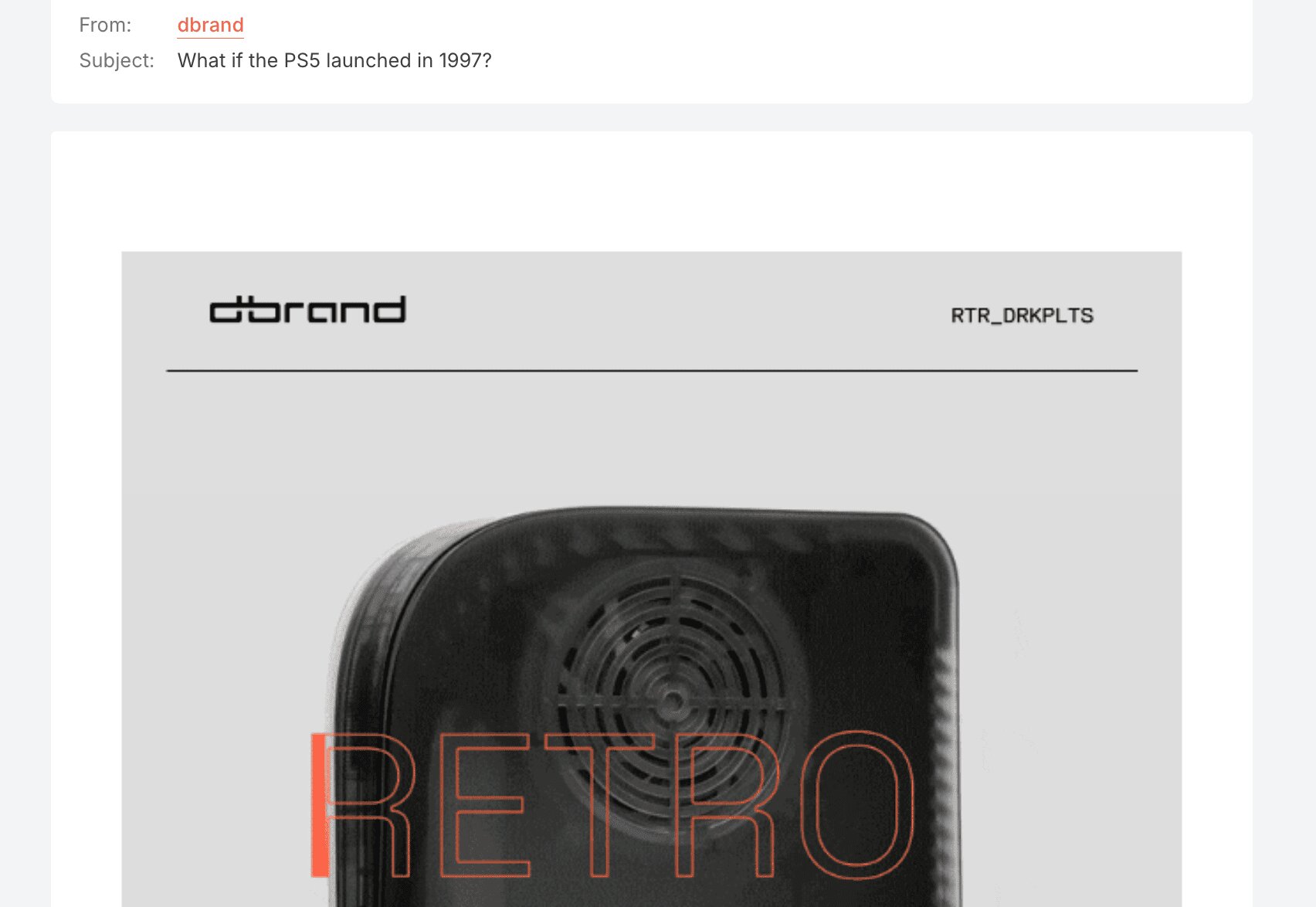
In the email below, dbrand asks, “What if the PS5 launched in 1997?”
When you see a question like this, your mind immediately starts imagining what it could be. But you don’t really know the answer. So, clicking that email seems like a logical thing to do to satisfy your curiosity.
Source: Really Good Emails
6. Go for simplicity
Sometimes, after reading lots of information on any topic, we tend to overcomplicate things. And this does no good, especially when it comes to something as short as a subject line.
So, make sure that at least some of the subjects you test are short, simple, and to the point.

Source: Reddit
But “to the point” doesn’t mean “not informative.”
That’s why, for example, when you’re writing newsletter subject lines, avoid things like “Newsletter March: topic.” You’re simply wasting the symbols for nothing.
Often, businesses tend to do this to add some “order” or start a recurring “theme.” But in reality, your subject line isn’t a place to do that.
Still, if you want to create a theme that people will identify you with, you can test something like this. A short identifier that’s a name or a concept you want people to recognize and associate with you. “Newsletter March” isn’t that. But the name of your podcast, section, etc. could be.

7. Get creative
We’ve intentionally placed this one at the end of the list. Many brands think that most (if not all) of their subject lines have to be witty, creative, unusual, like something that people haven’t seen before.
But for most businesses, it doesn’t work that way.
For sustainable email marketing, you need a solid foundation that mostly won’t consist of hyper creative lines. These are a great addition, but not the basis.
So, first, figure out everything we’ve mentioned already and test it a lot. And only after that, include some creative touches and test against your control.
Here is a good example:

Source: Reddit
These things ruin your open rates (beyond bad subject lines)
First things first, what is a good open rate?
Generally, a good email open rate falls between 17% and 28%. But of course, it’s never that black and white. So, focus on the data you already have and try to outperform your own best results.
Still, here is an important note.
Subject lines are just one part of the story here.
Often, the answer to declining open rates lies somewhere else. Let’s cover the most popular factors:
- Smarter AI systems. Spam filters from major email providers aren’t only evaluating spam-triggering words anymore. They look into the whole context. That’s why your reputation is so important.
- Email list hygiene. The most successful mailing lists are clean and relevant. Sending random emails to random people isn’t a strategy. It’s a death sentence for your email domain. Especially when you want to get newsletter subscribers, always make sure that users choose to receive those emails. This will be a game-changer in the long run.
- No segmentation. The more tailored your messages and email subject lines are, the better results you can expect. Because generic things just can’t cut through the noise. They only create more of it.
- Not checking your email deliverability and the overall domain health. Things like deliverability, domain warming, and inbox health should be your priorities, whether you’re doing email marketing or sales. If these are off, no one will even see your messages. So, what’s the point?
And also, let’s not forget that open rate isn’t the most reliable metric because preloading for privacy reasons might also count as an “open.” So, don’t focus on this KPI alone.
Instead, look at the bigger picture. And first, take good care of your deliverability. This is where EmailWarmup can help. Try it for free to see what difference it can actually make to your deliverability.
So, how do you make it all work?
The best email subject lines aren’t just about creativity or the top-performing structures you simply copy-paste. You have to approach them as a part of your bigger strategy:
- Make sure your technical setup is solid.
- Always do email warmup and check your deliverability.
- Make sure you understand your audience and segment it.
- Track behavior and respond with real personalization (not just the name).
- Always test different approaches, including the ones we’ve covered today.
- When you find something that works, try to double down and experiment within that format/style.
Frequently asked questions
These are some common questions about email subject lines.
A good email subject line is one that gets people curious enough to click on your email. There is no single rule for how you can get there. But generally speaking, the key is to use one of the psychological triggers people respond to (e.g., information gap, loss aversion, the Cocktail Party Effect, etc.).
The easiest way to do that is to A/B test different options and see which ones perform best. The most important detail here is to change one thing at a time to understand what really moves the needle. From there, take notes of the most successful elements and use them.
A typical example of a good subject is something personalized. So, for example, instead of writing things like “Our most read content on cold calling,” you could test something like “You watched our cold calling webinar. Here is what we didn’t say there.” This can be anything behavior-based, as it really stands out.