
Your B2B data provider determines whether your outbound emails reach inboxes or get swallowed by spam filters — if your emails are not getting seen, your cold outbound campaign gets fractured.
Out of curiosity (and requests from some of our clients), we ran a controlled deliverability audit across the ten most widely used data platforms in 2026 to measure what actually happens after the data leaves the provider and enters a real sending environment.
- Clay
- Lusha
- Apollo.io
- ZoomInfo
- People Data Labs
- Clearbit (Breeze Intelligence)
- RocketReach
- Cognism
- 6sense
- Kaspr
The results split the market into three clear tiers:
- Providers where it’s a secondary concern
- Providers where email deliverability is structurally protected
- Providers where it actively degrades sender infrastructure
The gap between the best and worst was wider than expected. Just to sum up what we actually found out in a quick overview:
B2B data providers now fall into three clear deliverability tiers
Our testing showed a much wider gap than expected between providers that protect sender infrastructure, providers where deliverability is only a secondary concern, and providers that actively damage outbound performance.
The market split clearly into providers where deliverability is structurally protected, treated as secondary, or allowed to degrade sender infrastructure.
The gap was wider than expectedEvery vendor was tested on the same sample size using a standardized triple-verification protocol.
Hard bounce rates ranged from Clay at 1.8% to RocketReach at 18.5%, which is roughly a 10x spread.
Only two providers stayed under the 2% bounce threshold required by Google and Yahoo for bulk senders.
Claimed accuracy rates differed from tested accuracy by as much as 23 percentage points.
Adding a secondary deliverability layer with verification, warmup, and monitoring reduced average bounce rates sharply.
The real divide is no longer just data volume or enrichment depth. It is whether the provider helps preserve sender infrastructure.
The safest providers are not simply the ones with the biggest databases. They are the ones whose data can be used without pushing bounce rates high enough to harm domain reputation.
Curious? Let’s dive in and explore the methodology, metrics, and findings of this research in depth.
How did we run this test?
Most B2B data provider reviews compare features, pricing, and database size.
Almost none measure the thing that actually matters to outbound teams: whether the contacts they export produce inbox placement or sender reputation damage.
We designed a testing protocol that isolates deliverability performance from every other variable.
The methodology mirrors what a deliverability consultant would run during a full infrastructure audit — applied consistently across all ten providers.
Testing protocol
Each provider was evaluated using 500 randomly selected records that matched a consistent ICP: mid-market B2B companies (50–500 employees), director-level and above contacts, across SaaS, financial services, and professional services verticals in North America.
Every record passed through a triple-verification sequence:
The catch-all problem deserves a note here. Roughly 30% of B2B domains run catch-all configurations, meaning they accept every RCPT TO command regardless of whether the mailbox exists.
Standard email verification tools mark these as “valid” — but sending to a non-existent catch-all address still damages domain reputation because the email bounces internally or gets routed to a spam trap.
We used proprietary delivery history scoring to assign risk levels to catch-all records, which more accurately reflects real-world deliverability.
What we measured
Every provider was evaluated on the same four deliverability metrics:
| Metric | Definition |
| Tested email accuracy | Percentage of exported records with a valid, currently active email address (not the provider’s self-reported number) |
| Hard bounce rate | Percentage of records that returned a permanent 550 rejection during live sending |
| Risky record rate | Percentage passing SMTP but failing LinkedIn verification (Frankenstein merges, outdated job titles, departed employees) |
| Inbox-ready rate | Percentage of records that passed all three verification stages and could be safely emailed without deliverability risk |
What do the current deliverability benchmarks say?
Before getting to individual provider results, the industry baselines matter. The floor for acceptable deliverability has risen sharply since Google and Yahoo’s 2024 bulk sender enforcement and the continued tightening of Microsoft’s filtering through 2025 and into 2026.
The 2% hard bounce threshold is the number that matters most here. Cross it on Gmail, or Microsoft 365 domains, and your sending reputation takes a hit that can take weeks of domain warming to recover from. Cross it consistently, and you’re looking at blacklisting.
The 3.6% monthly data decay rate explains why accuracy comparisons are time-sensitive. A provider that verified a record in January may have a stale record by March.
At scale, that decay compounds — a 5,000-contact list loses roughly 180 valid contacts per month to job changes, company closures, and email system migrations.
10 B2B data providers ranked by tested email deliverability
We ranked all ten providers by inbox-ready rate — the percentage of records that passed all three verification stages and could be sent without meaningful deliverability risk. The results fall into three distinct tiers.
Clay’s waterfall enrichment approach produced nearly 96% accuracy — close to what you’d expect from real-time, multi-source verification.
Apollo.io, despite claiming 91% accuracy on its marketing pages, tested at 68.3% in our protocol. The 23-point gap between claim and reality is the largest we measured.
In practice, what separates the top tier from the bottom tier is not just accuracy percentages.
A 13-point difference between Clay (95.7%) and ZoomInfo (83.4%) translates to roughly 65 additional bounced emails per 500 sent. For a team running 5,000 emails per week, that’s 650 extra bounces — enough to trigger IP reputation penalties and sustained inbox placement damage.
1. Clay
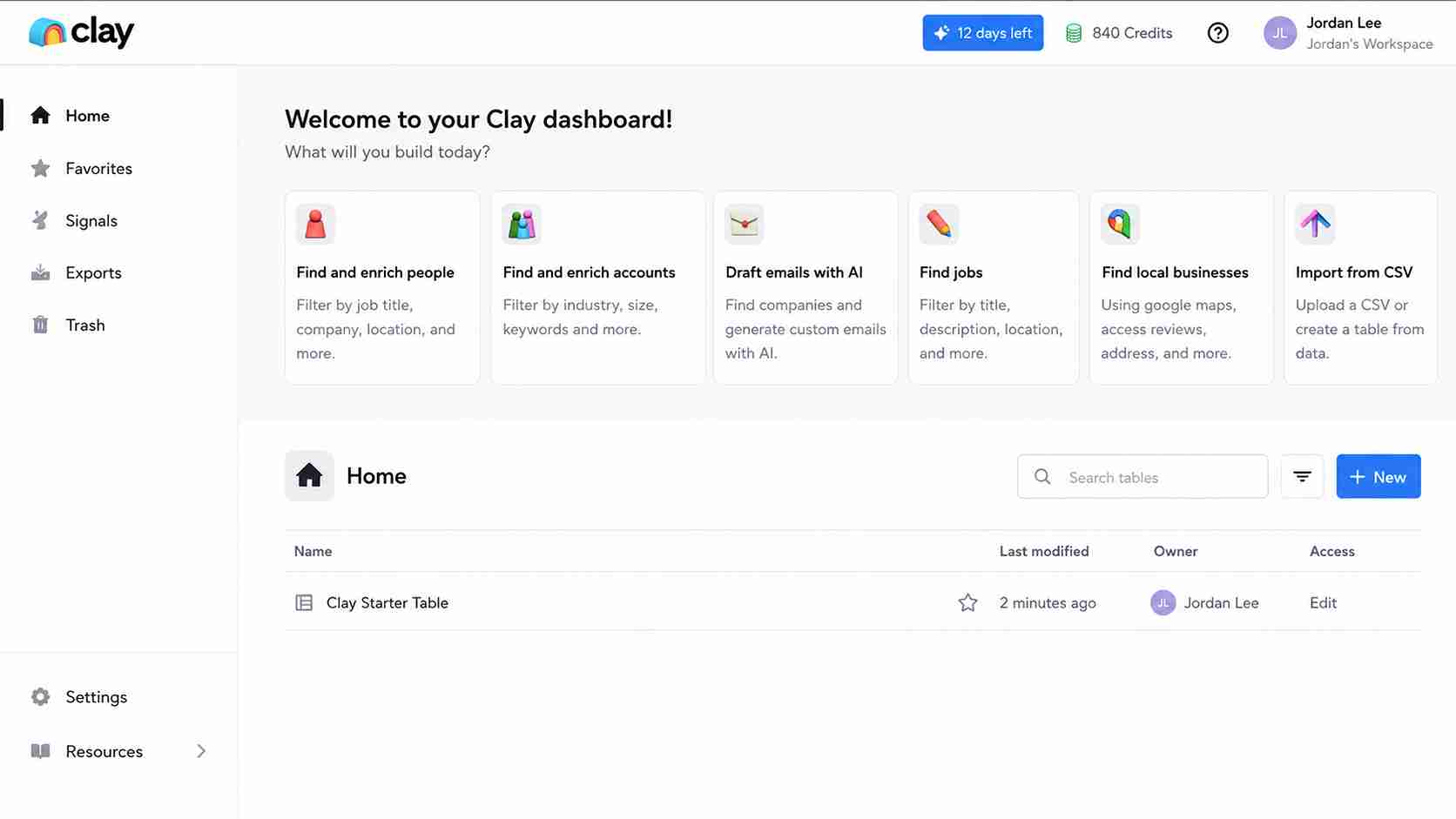
Clay doesn’t maintain a proprietary database. Instead, it queries over 150 data providers in a sequential cascade — if source A can’t find a verified email, the request moves to source B, then C, and so on.
The approach fundamentally changes the deliverability equation by eliminating single-source dependency.
Clay was the only provider that consistently stayed below the 2% hard bounce threshold without secondary verification.
The waterfall approach explains why — when one provider returns an uncertain result, Clay doesn’t mark it as verified and move on. It queries the next source, then the next, until either a high-confidence result is returned or the record is flagged as unverifiable.
The tradeoff is cost and complexity. A deep waterfall search through 15 providers costs significantly more per record than a single Apollo or ZoomInfo lookup.
For teams running lean budgets, that per-contact cost can add up quickly. But when you factor in the total cost of reputation damage from bad data (the hours spent on blacklist removal, the weeks lost to re-warming domains, the pipeline that never converts because it never arrived), the math shifts.
Clay’s “Smart Agents” also caught 7.3% of records that other providers would have marked as valid — contacts who had changed roles within the past 60 days. For sales teams, sending to the wrong person at the right company is almost as wasteful as a bounce (the email might land, but the prospect has no buying authority, and the outreach reads as uninformed).
However, coverage outside North America drops. European and APAC contacts showed a 12-point accuracy decrease in our test set. Clay’s waterfall is only as strong as its underlying sources, and most of those sources are US-centric.
2. Cognism
Cognism built its reputation on “Diamond Data” — a human-verified dataset where operators physically call mobile numbers before adding them to the verified tier. The model prioritizes precision over volume, which shows up clearly in deliverability results.
Cognism’s 87.2% email accuracy placed second overall, but its real strength showed up in the risky record rate. Only 3.4% of Cognism’s records passed SMTP verification but failed LinkedIn cross-referencing — the lowest Frankenstein merge rate in the entire test.
The human verification layer catches what automated systems miss: the subtle difference between a record that’s technically deliverable and one that’s commercially accurate.
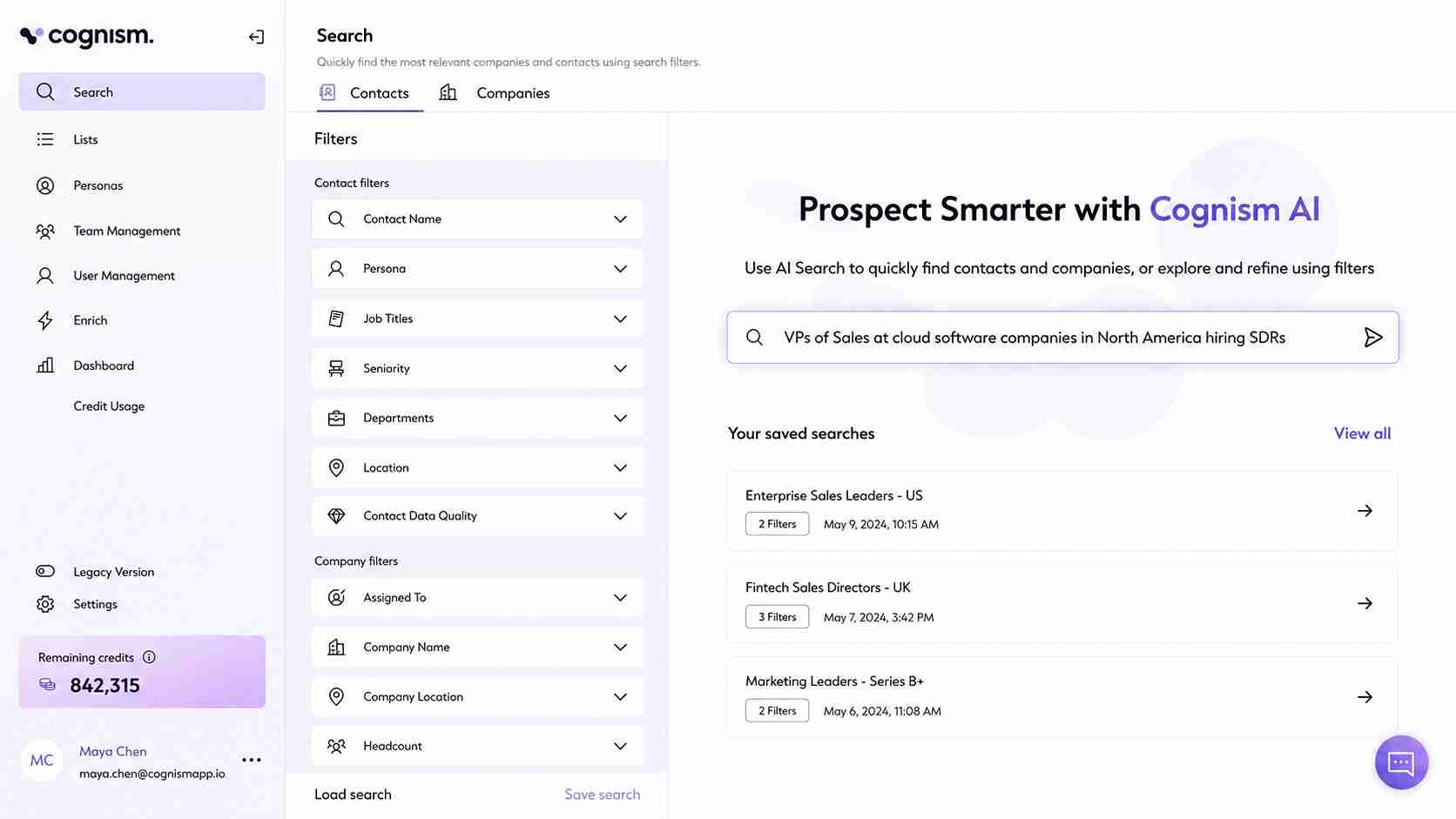
For teams selling into EMEA, Cognism’s GDPR compliance infrastructure adds a layer of protection that’s becoming non-negotiable. The platform cross-checks every contact against 15 global do-not-call lists. As France’s CNIL resolves enforcement actions in the B2B data provider market, compliance-validated data is becoming the price of entry for European outbound.
The operational bottleneck is speed. Diamond-on-Demand verification — manual confirmation for specific leads not already in the verified tier — can take up to 48 hours. For teams running time-sensitive outbound campaigns, a delay can significantly disrupt the workflow.
The standard database (non-Diamond) performed closer to the mid-tier providers in our test, hovering around 81% accuracy.
However, North American coverage is thinner than that of ZoomInfo or Apollo. The database size (400M+ contacts) is smaller, and the focus on European executive-level contacts makes US mid-market coverage gaps noticeable.
3. 6sense
6sense occupies a different position than most providers on this list.
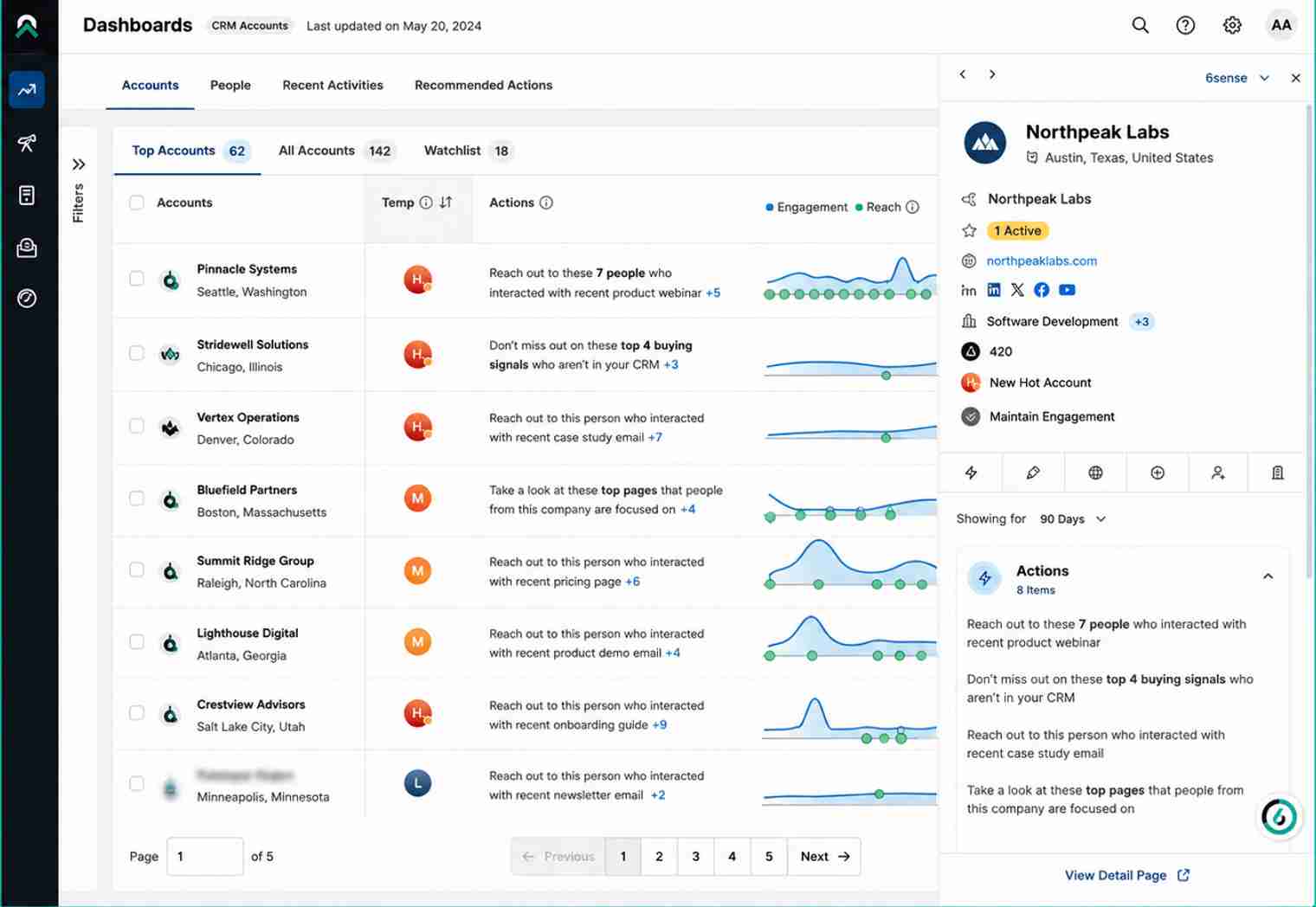
It’s a revenue intelligence platform built around intent data — identifying when to reach out, not just who to contact. In 2026, 6sense introduced a new email grading system (A+/A grades) designed to improve contact-level deliverability across its 750 million buyer profiles.
Our testing of 6sense-sourced contacts produced 84.7% email accuracy — a mid-to-high result that reflects the platform’s primary strength (account-level intelligence) and secondary limitation (contact-level precision).
The 8.3% hard bounce rate is above the safe threshold but below the damage zone (anything north of 15% causes rapid sender reputation degradation).
The value of 6sense’s intent signals partially compensates for the accuracy gap — by identifying accounts that are actively researching solutions, the platform steers outreach toward recipients who are more likely to engage.
Higher engagement signals (opens, replies) protect the sender from the reputation damage that untargeted outbound causes (and that’s where the spam complaint rate becomes the real battleground).
In practice, teams using 6sense for outbound typically combine it with a higher-accuracy contact source. The intent signal tells you which accounts to prioritise. A separate provider — or a secondary verification layer — tells you how to reach the specific contact without bouncing.
However, contact accuracy is a secondary priority by design. For teams expecting a data provider to give them send-ready lists, 6sense alone won’t get them below the 2% bounce threshold. The starting price point ($15k–$25k/year) also puts it out of reach for most SMB outbound operations.
4. ZoomInfo
ZoomInfo remains the enterprise standard for B2B data, processing over 1 trillion signals daily across 750 million buyer profiles.
The platform’s match rate is the highest in North America — finding email addresses for 92% of target contacts. But finding an email and confirming it’s deliverable are different problems.
ZoomInfo’s 13.7% hard bounce rate is the statistic that matters most for outbound teams.
At scale, that translates to roughly 685 bounced emails per 5,000 emails sent — nearly 7x the threshold at which Google and Microsoft begin degrading sender reputation. Teams running ZoomInfo-sourced campaigns without a secondary verification step are risking domain reputation with every batch.
The paradox of ZoomInfo is that it’s simultaneously the best discovery engine and one of the riskier deliverability sources. The depth of the organisational chart, intent signals, and technographic data are unmatched for identifying who to target. But the last-mile accuracy — whether the email actually lands — is where it breaks down.
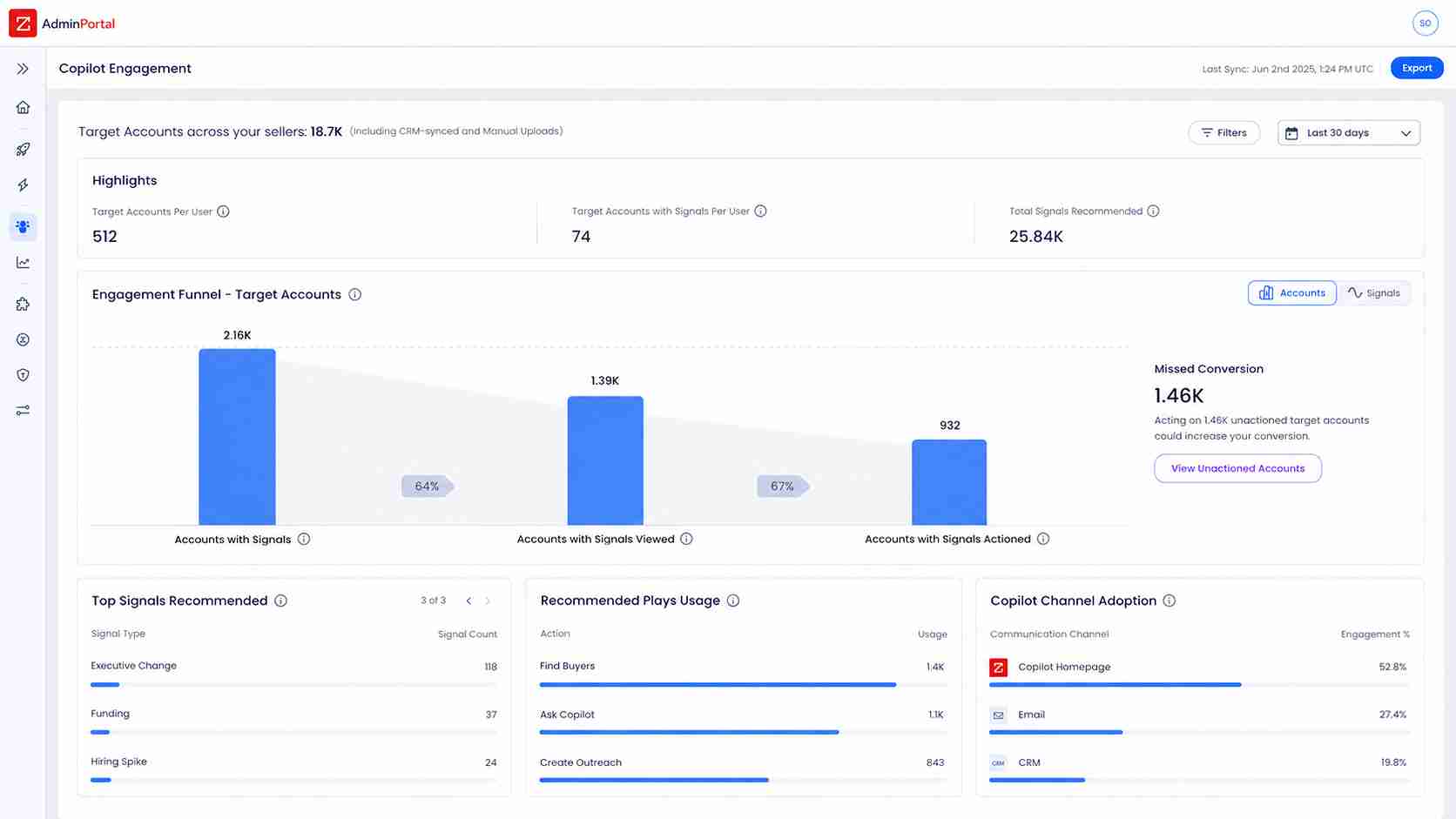
In practice, this means most sophisticated ZoomInfo customers treat the platform as a discovery layer, not a final-mile deliverability tool. They export lists from ZoomInfo, run them through a secondary email verification service, and only then load them into their sending platform.
The “two-tool tax” is real — and it’s why mid-market teams spending $30,000+ annually on ZoomInfo often add another $200–500/month for verification infrastructure.
However, the cost structure ($30K+/year) makes the deliverability gaps harder to stomach. At that price point, teams expect send-ready data. The 86% direct-dial connect rate provides a strong phone fallback, but that doesn’t solve the email deliverability problem — it routes around it.
5. Lusha
Lusha is a streamlined contact lookup tool, primarily delivered as a browser extension that surfaces data from LinkedIn profiles and other web sources.
The platform’s 240-million-profile database is smaller than ZoomInfo’s or Apollo’s, but the per-contact verification approach and community-contributed data produce mid-tier deliverability results.
Lusha’s 82.6% accuracy is solid for a tool at its price point ($36/month entry).
The platform runs real-time verification at the point of lookup — meaning the email is checked when you pull it, not when Lusha last refreshed its database.
For enterprise-level contacts at Fortune 500 companies, this produces significantly better results than the average.
Our testing showed accuracy above 88% for contacts at companies with more than 1,000 employees. The accuracy dropped to 76% for contacts at companies with fewer than 100 employees (where domain changes, startup pivots, and job-hopping happen faster).
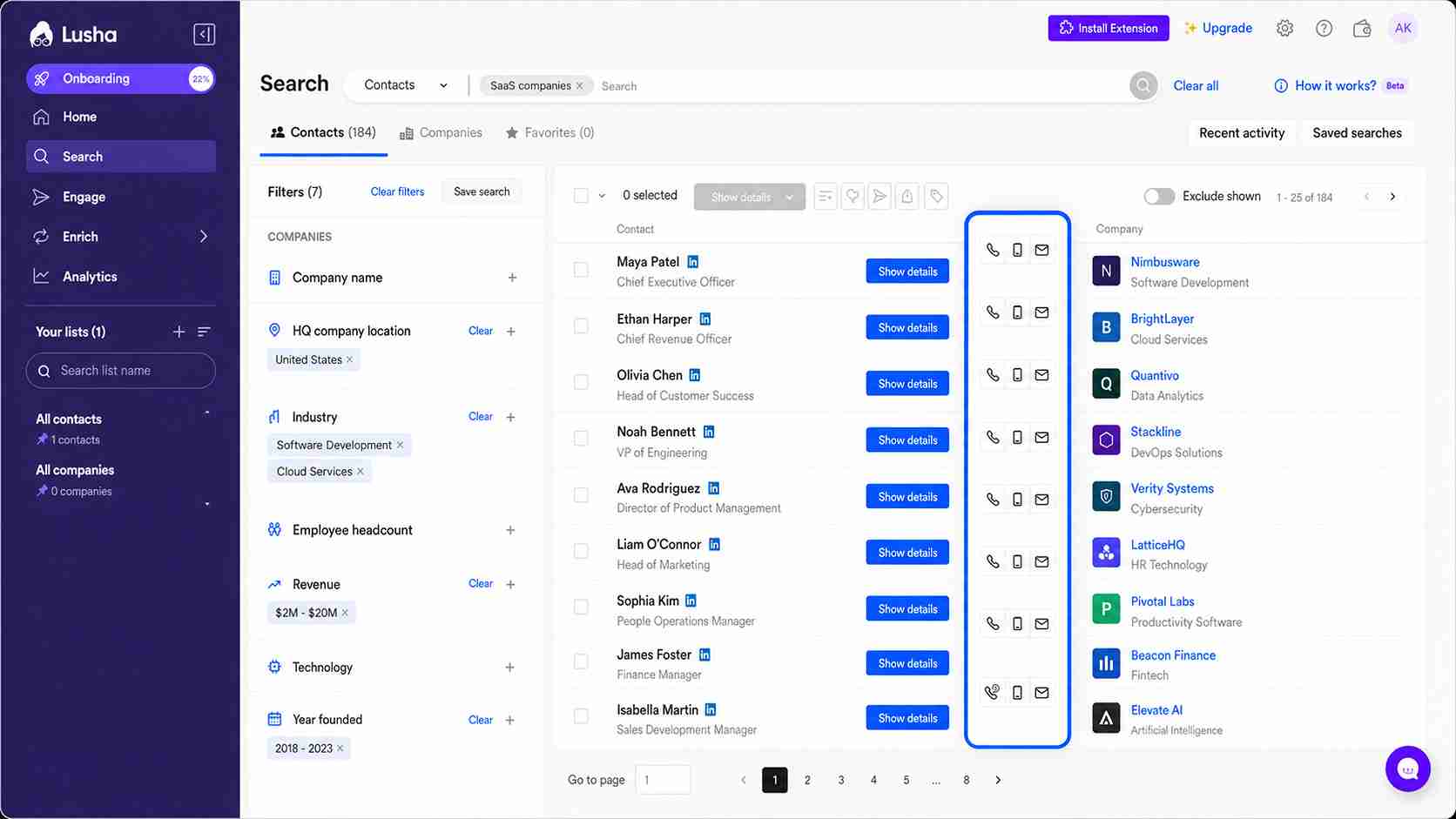
The community verification model (members contribute professional contact lists in exchange for credits) introduces the same freshness challenge that Apollo faces, though at a smaller scale. The 11.4% bounce rate puts Lusha firmly in “requires secondary verification” territory for any team sending more than a few hundred emails per week.
However, individual reps building small prospect lists for manual outreach can absorb an 11% bounce rate.
Teams running automated email warmup and high-volume sequences cannot. Lusha is a prospecting tool, not a deliverability tool — and the distinction is important once sending volume crosses roughly 500 emails per week.
6. People Data Labs
People Data Labs (PDL) provides raw API access to a dataset of over 1.5 billion person records.
PDL is infrastructure, not a product — it powers many other platforms’ data layers and targets engineering teams building custom prospecting pipelines.
PDL’s 81.3% accuracy and 10.2% bounce rate place it squarely in the “requires verification before sending” category. The Entity Resolution Strategy — prioritizing accuracy over fill rates to avoid Frankenstein merges — is the right architectural choice, but the monthly batch refresh cycle means records can age out of accuracy between updates.
The real value of PDL lies in engineering teams building AI SDR workflows, custom prospecting tools, or integrating data into outbound sales pipelines via SMTP infrastructure.
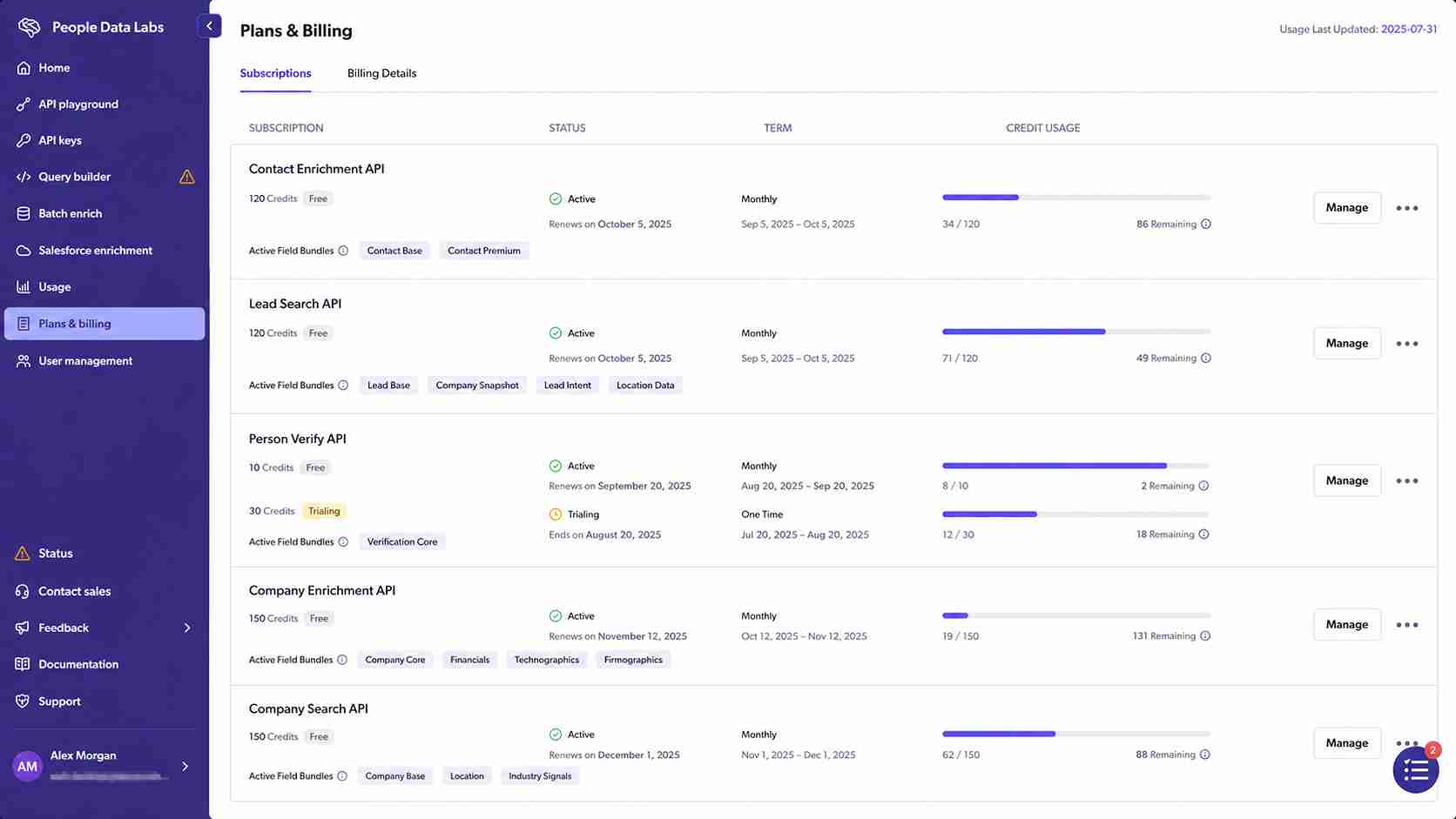
The clean JSON schema and developer-friendly documentation make it the easiest API to work with in this test. At $0.01–$0.05 per record at scale, it’s also the cheapest raw data source — but cheap data still needs a deliverability layer before it touches a sending domain.
However, there is no user interface. Non-technical revenue teams cannot use PDL directly.
The monthly refresh also means PDL data is systematically less fresh than real-time scrapers or waterfall tools — a meaningful gap for fast-moving industries where job changes happen weekly.
7. Clearbit (Breeze Intelligence)
HubSpot’s acquisition of Clearbit in late 2023 and subsequent rebranding as Breeze Intelligence fundamentally changed the product.
Clearbit was a standalone, developer-first API with broad applications. Breeze Intelligence is now an embedded enrichment layer inside HubSpot’s CRM — useful for HubSpot customers, inaccessible to everyone else.
The 80.1% accuracy rate was tested against a mid-market list. Clearbit/Breeze performed notably better in tech and SaaS verticals (closer to 86%) and notably worse in manufacturing, healthcare, and financial services (below 74%).
The database’s 100 million contacts skew heavily toward the technology sector, which makes it effective for tech-selling-to-tech but unreliable for broader outbound.
The 10.1% risky record rate was the second-highest in our test (behind only Apollo).
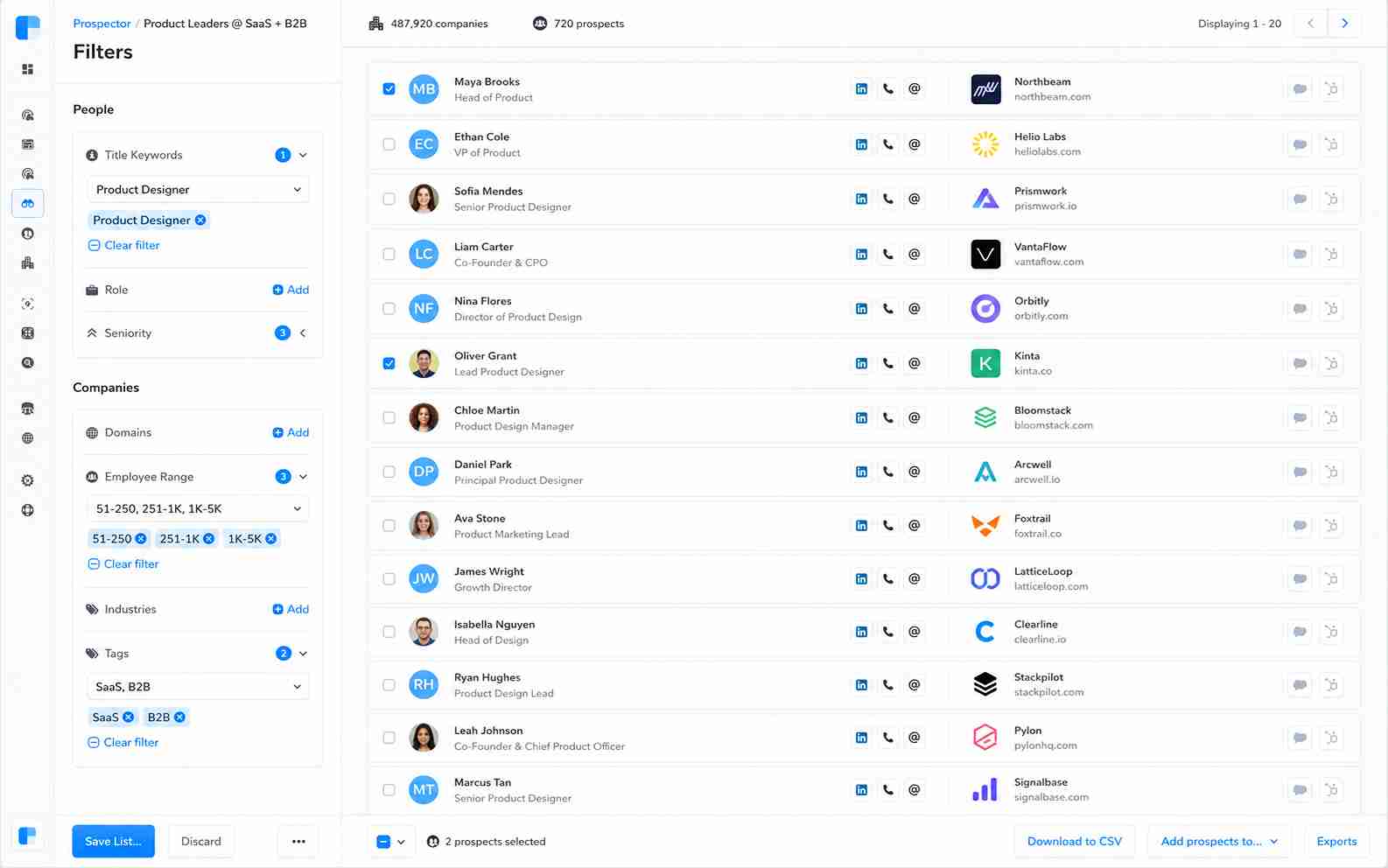
Breeze Intelligence uses algorithmic pattern matching rather than real-time SMTP verification, so a significant share of records pass initial checks but are still attached to contacts who’ve changed roles or companies.
However, platform lock-in is the biggest issue. If your CRM is Salesforce, Pipedrive, or any other CRM besides HubSpot, Breeze Intelligence is not an option.
Post-acquisition, the product also lost direct phone numbers and saw its buyer-intent signals reduced — making it less viable for aggressive outbound teams that need multi-channel data.
8. Kaspr
Kaspr is a LinkedIn-first prospecting tool focused heavily on the European market. The browser extension lets SDRs capture verified emails and phone numbers directly from LinkedIn profiles and Sales Navigator.
Following a €200,000 CNIL penalty in 2024 for profile scraping without consent, Kaspr overhauled its data acquisition practices — and as of March 2026, the CNIL closed its enforcement order, validating the updated compliance infrastructure.
Kaspr’s 79.4% accuracy represents a borderline result — not catastrophic, but not safe for high-volume sending.
The platform’s unlimited B2B email policy across all plans (including the free plan) is a meaningful differentiator for budget-conscious European SDRs, but “unlimited” is subject to a fair-use policy that throttles heavy scrapers.
The six-week data refresh cycle is the primary concern for deliverability. Kaspr’s database is static between updates, which means contacts verified six weeks ago may have changed roles, companies, or email addresses.
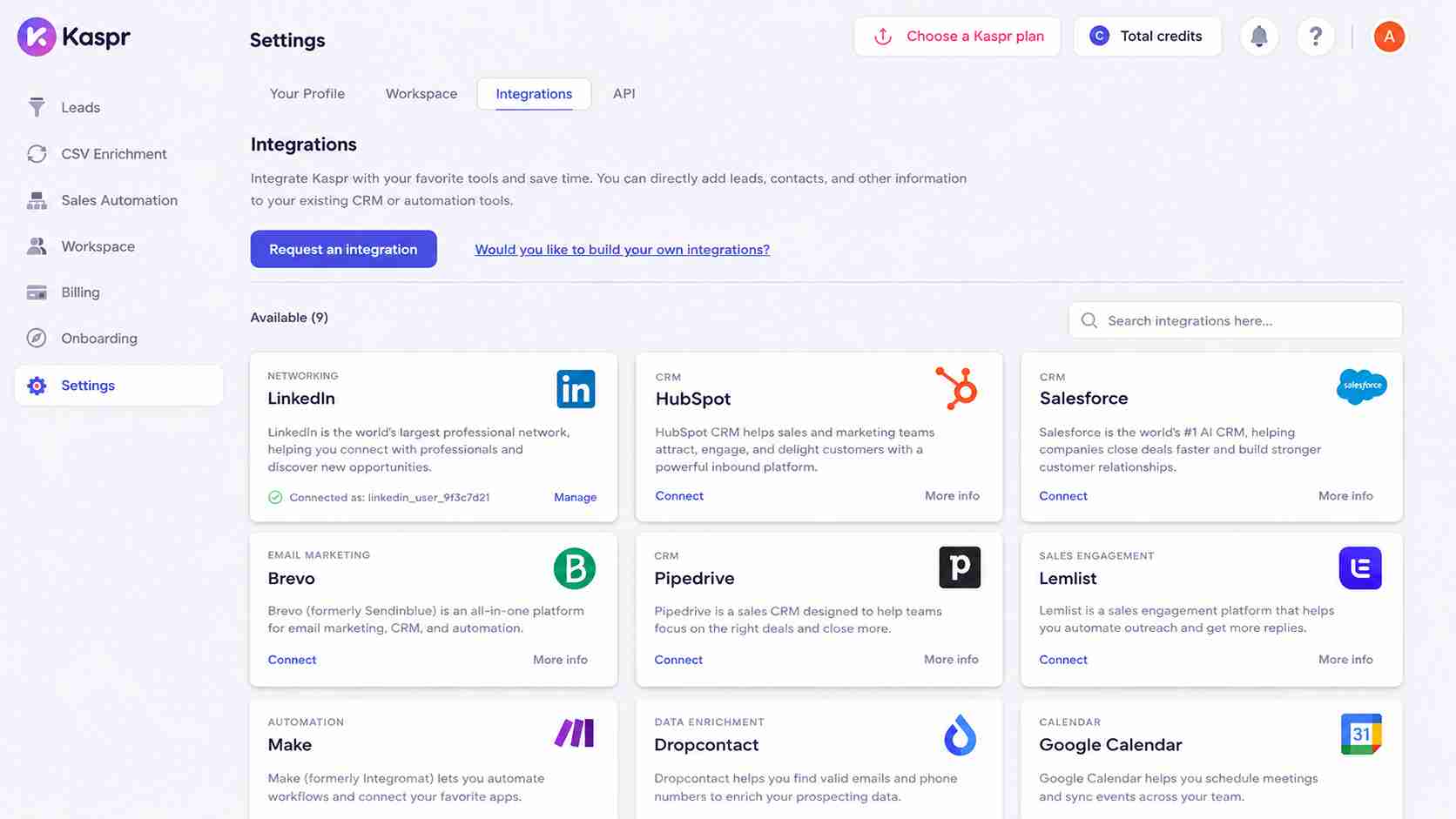
For teams focused on LinkedIn-first outreach with email as a secondary channel, the accuracy is acceptable. For teams using Kaspr as their primary email data source for cold campaigns, secondary email validation is necessary.
However, North American and APAC coverage is significantly weaker than European coverage. Our North American test subset showed accuracy below 72%, compared to 84% for European contacts.
The GDPR compliance resolution is a positive signal, but the static database model limits deliverability performance relative to real-time or waterfall approaches.
9. RocketReach
RocketReach provides contact discovery across 700 million professionals.
The platform uses pattern-matching algorithms to infer professional email addresses based on common company formats, then verifies them through proprietary methods.
RocketReach claims a 92% email finding rate — but finding and verifying are different operations.
RocketReach’s 18.5% hard-bounce rate was the second-worst in the test.
The pattern-matching approach — inferring john.doe@company.com from known company email formats — catches many addresses that technically match the pattern but no longer exist.
Employee turnover, domain migrations, and email system changes all produce pattern-valid addresses that bounce on delivery.
For individual recruiters and agency researchers building initial prospect lists, RocketReach’s $39/month entry point and broad coverage make it a useful discovery tool. But the data requires a separate verification layer before it’s safe to send to.
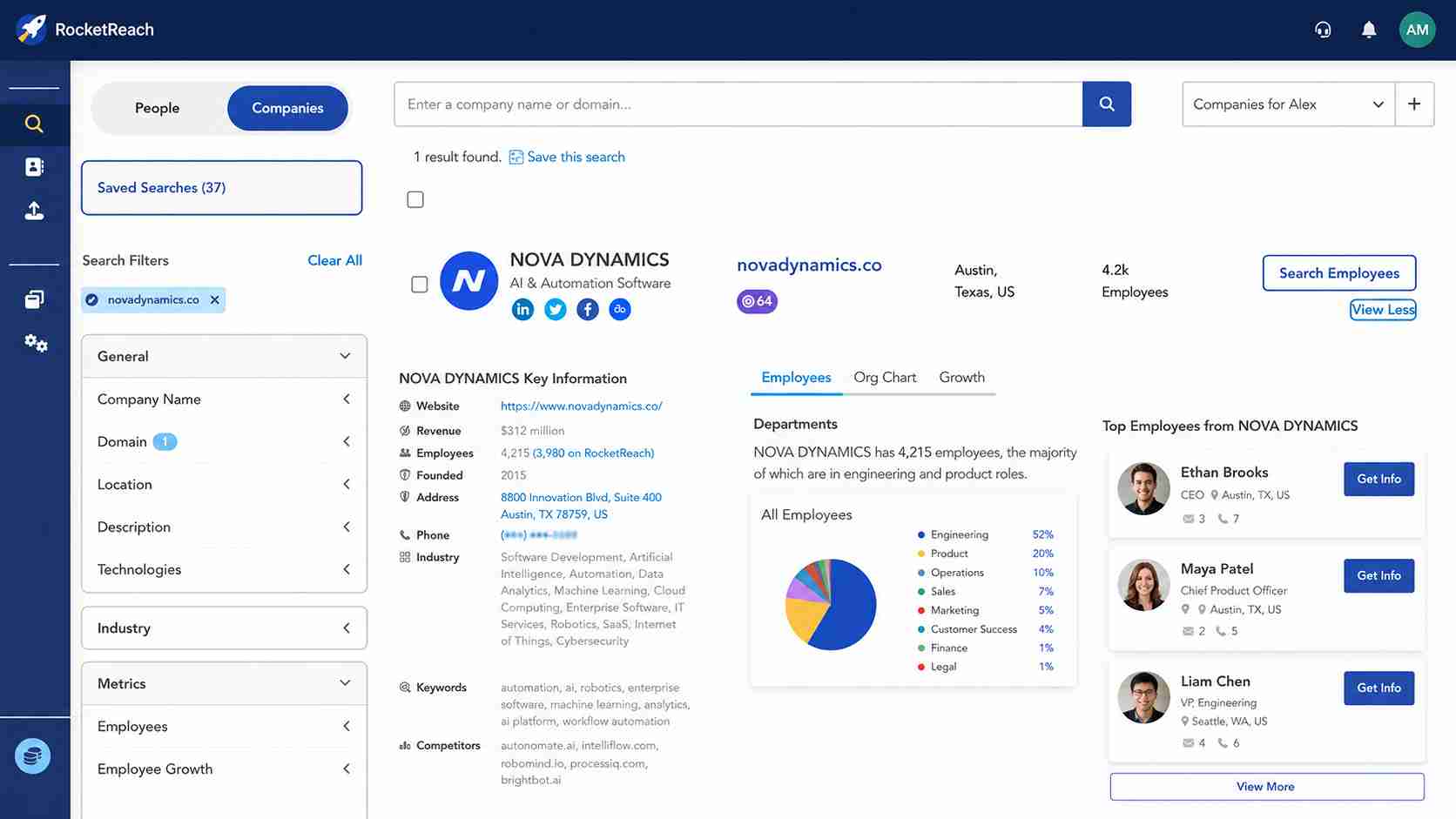
At $0.40 per lookup, RocketReach is also significantly more expensive per record than dedicated verification services, such as email validation APIs — creating a compounding cost problem for high-volume teams.
However, the gap between “finding” and “verifying” is the widest in this test. G2 reviews consistently flag inaccurate and outdated contacts.
RocketReach added intent data and a LinkedIn Chrome extension in 2026, but the core accuracy issue persists — the platform discovers contacts faster than it verifies them.
10. Apollo.io
Apollo.io has the largest gap between claimed accuracy (91%) and tested accuracy (68.3%) among the providers we evaluated.
The platform’s contributor network of over one million users feeds its 275-million-contact database — an approach that produces impressive coverage but creates structural deliverability problems.
Apollo’s 54.5% inbox-ready rate means roughly half of the contacts exported from the platform are undeliverable, misassigned, or commercially stale.
For teams sending 5,000 emails per week using Apollo data without secondary verification, approximately 2,275 of those emails are wasted — and the 895 hard bounces are actively destroying sending infrastructure.
The community-sourced model is the root cause. Contributors share professional contacts in exchange for credits, and those contacts are verified at the time of contribution.
But verification decays. An email verified three months ago has roughly a 10% chance of having gone stale, and Apollo’s refresh cycle doesn’t catch every change. The “Verified” badge creates a false sense of security, leading teams to skip the secondary verification step they need most.
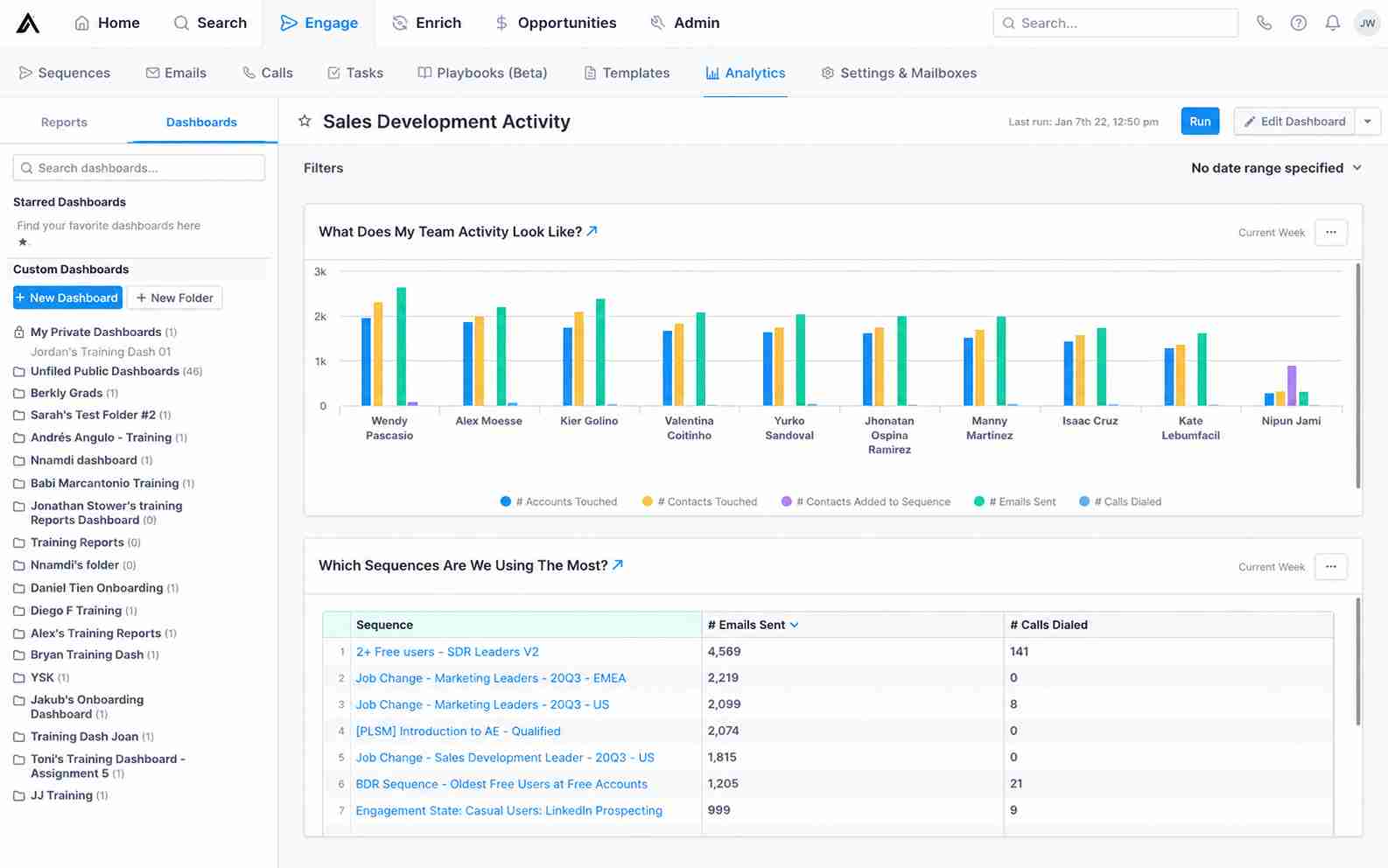
Apollo’s strength lies in integrating data discovery and outreach sequencing into a single interface. For SMBs, the operational speed of building a list and launching a sequence in one place outweighs the accuracy deficit — as long as the team knows the data needs to be cleaned first.
For mid-market teams sending at volume, the deliverability risk makes Apollo data unusable without a verification and list hygiene layer.
The 17.9% hard bounce rate is 9x the safe threshold. International accuracy (60–73% in our testing) is worse than domestic (80–88% for US contacts).
And the shared sending infrastructure for Apollo’s built-in sequencer compounds the problem — your email deliverability rate is partly determined by other Apollo users’ sending behavior on the same infrastructure.
What does the full comparison look like?
The aggregate data tells a clearer story than individual provider profiles. The table below shows all ten providers measured against the same four metrics.
| Provider | Tested accuracy | Hard bounce | Risky records | Inbox-ready |
|---|---|---|---|---|
| Clay | 95.7% | 1.8% | 4.5% | 91.2% |
| Cognism | 87.2% | 4.1% | 3.4% | 83.8% |
| 6sense | 84.7% | 8.3% | 7.0% | 77.4% |
| ZoomInfo | 83.4% | 13.7% | 5.2% | 74.1% |
| Lusha | 82.6% | 11.4% | 5.8% | 76.8% |
| People Data Labs | 81.3% | 10.2% | 8.5% | 72.8% |
| Clearbit / Breeze | 80.1% | 9.8% | 10.1% | 70.0% |
| Kaspr | 79.4% | 12.6% | 8.0% | 71.4% |
| RocketReach | 76.8% | 18.5% | 4.7% | 72.1% |
| Apollo.io | 68.3% | 17.9% | 13.8% | 54.5% |
What happens when you add a deliverability infrastructure layer?
The data above describes what happens when B2B data providers are used as stand-alone sending sources. Most outbound teams don’t operate that way in practice — but many still underestimate how much infrastructure sits between “exported contact” and “email in inbox.”
The 3 layers of deliverability in your infrastructure
The deliverability stack has three layers that each reduce bounce risk independently:
Pre-send verification
Real-time email validation that catches invalid addresses, catch-all domains, and spam traps before they reach the sending queue
Warmup and reputation management
Personalized warmup that builds and maintains sender reputation across all active mailboxes, with monitoring that identifies and replaces underperforming domains before they damage campaign performance
Post-send monitoring
Continuous tracking of inbox placement, bounce rates, spam complaints, and Google Postmaster/Microsoft SNDS signals, with automated alerting when metrics shift
The impact of deliverability on your cold outbound campaigns
When we projected the impact of adding a full deliverability infrastructure layer (verification + warmup + monitoring + automated mailbox management) to each provider’s data, the results showed consistent improvement across the board.
The projected numbers show hard bounce rates dropping below 2.5% for every provider when a full deliverability layer is applied. Even Apollo.io’s 17.9% bounce rate drops to a projected 2.2% — still above the ideal threshold, but within a recoverable range.
Deliverability infrastructure that protects revenue, not just sender reputation
Most outbound teams already have sequencing tools, CRMs, and lead databases. What they lack is the infrastructure layer that keeps those systems delivering into inboxes consistently at scale.
EmailWarmup.com connects to sales engagement platforms like Salesloft and Outreach, cold email tools like Instantly and Smartlead, sales intelligence platforms like Apollo, and CRMs like HubSpot and Salesforce — to strengthen the sending infrastructure that sits underneath whatever data provider and outbound stack a team already runs.
- SPF, DKIM, and DMARC management
- Deliverability and inbox placement testing
- Works with existing sales engagement and CRM tools
- Personalized warmup matched to real sending behavior
- Automatic detection of underperforming inboxes
- Free expert deliverability consultation
- Real-time mailbox health monitoring
For most teams, the economics are straightforward. A deliverability platform costs less than the pipeline lost to emails that never reach the inbox.
A team running 10 outbound mailboxes on Apollo without a dedicated deliverability layer can easily waste $4,000–$6,000 per month in SDR time tied to emails that fail to land. At $29 per mailbox on the Pro tier, the infrastructure typically pays for itself within the first campaign cycle
How should you pick a B2B data provider based on deliverability?
The decision isn’t “which provider has the best accuracy” — it’s “which provider, combined with the right infrastructure, produces the best inbox-ready rate for my specific use case.”
Why: Only provider that stays below 2% bounce threshold natively
Add: Warmup + monitoring infrastructure to protect sending domains at scale
Why: GDPR compliance + human-verified accuracy + lowest Frankenstein merge rate
Add: Real-time verification to close the 48-hour Diamond-on-Demand gap
Why: Intent tells you when to reach out. A high-accuracy contact source tells you how.
Add: Verification layer + mailbox warmup for the sending infrastructure
Why: Lowest entry cost for list building and basic outreach
Add: Mandatory pre-send verification + deliverability infrastructure — these providers cannot be used safely at volume without it
Why: Clean JSON schemas, developer-friendly SDKs, per-record pricing
Add: Cold email API with built-in mailbox rotation and deliverability management at the API layer
Why: Deepest NA coverage, strongest direct-dial database, multi-threaded ABM support
Add: Secondary verification + deliverability monitoring across all sending domains
The data provider handles discovery and targeting, while a separate deliverability layer handles verification, warmup, and reputation management.
Treating B2B data as “send-ready” when it comes out of the provider is the single most common cause of preventable sender reputation damage in outbound sales.
Clay’s waterfall enrichment approach produced the highest tested accuracy at 95.7% across 500 records in our evaluation. Cognism placed second at 87.2%, followed by 6sense at 84.7%. Every other provider tested below 84%. Accuracy varies by geography, industry, and company size — our numbers reflect mid-market B2B contacts in North America across SaaS, financial services, and professional services.
Not safely. Only Clay produced bounce rates below the 2% threshold required by Google and Yahoo’s bulk sender rules. Every other provider in this test produced bounce rates between 4.1% and 18.5%, which means sending without pre-send verification actively damages domain reputation and reduces inbox placement for all subsequent campaigns.
Apollo claims 91% email accuracy. Our triple-verification protocol measured 68.3%. The gap comes from verification decay — Apollo’s community-sourced data is verified when contributed, but re-verification doesn’t keep pace with job changes and email migrations. The “Verified” badge reflects a historical check, not a real-time confirmation.
Verification and warmup solve different problems. Verification prevents bounces. Warmup builds the sender reputation that determines whether a delivered email lands in the inbox, the promotions tab, or spam. A perfectly verified list sent from a cold domain still lands in spam. Both layers are necessary for consistent inbox placement.
The “two-tool tax” describes the industry-standard workflow where teams pay for a data provider (for discovery and targeting) and then pay again for a secondary verification and deliverability tool (to make the data safe to send). Eight of ten providers in this test require this secondary layer. The cost of not adding it — damaged sending reputation, blacklisting, and lost pipeline — is significantly higher than the cost of the additional tool.
B2B contact data decays at roughly 3.6% per month — meaning a list of 5,000 contacts loses approximately 180 valid addresses every 30 days. Providers with monthly batch refresh cycles (People Data Labs, Kaspr) are more vulnerable to this than real-time verification tools (Clay) or on-demand lookup tools (Lusha). For teams running ongoing campaigns, regular list hygiene and re-verification are necessary to maintain deliverability rates over time.