
ZeroBounce is one of the most established email verification platforms in the market, with 400,000+ customers and a feature set that extends well beyond basic list cleaning.
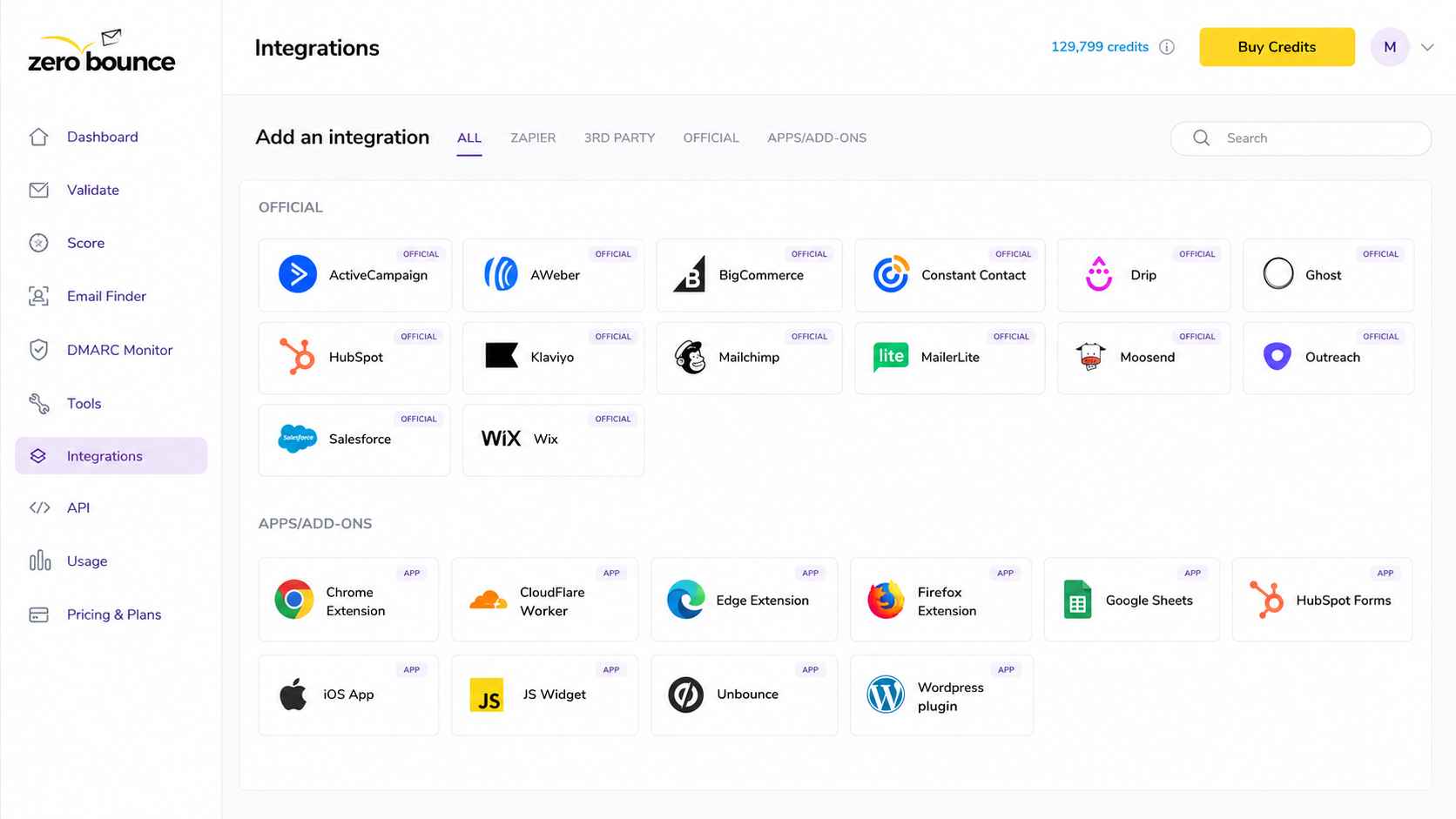
It offers bulk and real-time validation, email scoring, activity data, DMARC monitoring, inbox placement testing, and blacklist checks — a wider toolkit than most competitors in its category.
From a deliverability consultant’s perspective, ZeroBounce gets the fundamentals right. The platform claims 99% accuracy on standard domains (backed by a written guarantee with financial penalties), the API is well-documented, and the integrations cover common CRMs and marketing platforms. For straightforward verification work, the tool is reliable and well-regarded.
Where things get more complicated is catch-all domain handling — a problem that affects B2B senders heavily. Independent testing (published by Allegrow in February 2026) showed ZeroBounce producing an 8.1% false positive rate on catch-all domains while missing 30% of real contacts.
The premium catch-all scoring feature and the newer Verify+ option improved detection but introduced new problems (higher costs, processing delays, and, in the case of Verify+, a 33.1% false positive rate). For B2B teams where catch-all domains make up 30-50% of a typical list, those gaps have real consequences.
ZeroBounce also carries a premium price point. Credits start at $0.01 each (2,000-credit bundle), and the subscription tier (ZeroBounce ONE) begins at $99/month. At high volumes, costs accumulate quickly — especially if catch-all scoring doubles your credit usage on uncertain results.
This review evaluates:
- Pricing logic across volume tiers
- Standard and catch-all verification accuracy
- Who benefits most, and who should consider alternatives
- Where ZeroBounce’s extras add value and where they fall short
TLDR: ZeroBounce at a glance
Here is a quick summary of where ZeroBounce sits in the verification and deliverability category.
| Category | Detail |
| Primary function | Email verification + scoring + deliverability tools |
| Pricing model | Pay-as-you-go credits or monthly subscription |
| Starting price | $0.01/credit (2K bundle) or $99/month (ZeroBounce ONE) |
| Free tier | 100 free monthly verifications |
| Standout feature | 99% accuracy guarantee with financial penalty |
| Biggest weakness | Catch-all verification produces high false positives |
| Best alternative | EmailWarmup.com’s email validation API |
| Overall rating | 3.8 / 5 |
Is ZeroBounce worth the premium price?
ZeroBounce positions itself at the premium end of the verification market, and the pricing reflects that.
Pay-as-you-go credits start at $0.01 per verification (2,000-credit minimum purchase). The subscription product (ZeroBounce ONE) starts at $99/month and bundles verification, scoring, DMARC monitoring, and deliverability tools into one plan.
That price point drew complaints from users in early 2026 — one Trustpilot reviewer noted their costs doubled when ZeroBounce transitioned everyone to the subscription model, bundling features they did not need.
The credit math gets tricky on catch-all domains. Standard verification costs one credit per address. Catch-all scoring costs an additional credit per catch-all address.
On a typical B2B list where 30-50% of contacts sit on catch-all domains, that premium feature can increase your total spend by 15-25% — for results that (based on independent testing) only marginally improve detection while raising the false positive rate.
ZeroBounce delivers strong value for teams that primarily verify B2C or standard-domain lists at moderate volumes. The cost-to-value ratio erodes when:
- Catch-all domains make up a large share of your contacts
- You hit high volumes where per-credit costs accumulate
- You need deliverability guidance alongside verification (not included)
What ZeroBounce’s accuracy data reveals about real-world verification
ZeroBounce’s accuracy picture has two distinct sides — strong performance on standard domains, and meaningful gaps on enterprise catch-all infrastructure.
Standard domains
On non-catch-all addresses, ZeroBounce performs well. The platform claims 99% accuracy on most domains and 96%+ on AOL, Yahoo, and Office 365 accounts.
User reviews on G2 (4.7/5, 1,366 reviews) and Trustpilot (4.8/5, 2,108 reviews) consistently confirm that bounce rates drop significantly after cleaning.
The accuracy guarantee (with 5x refund per percentage point below threshold) adds a financial backstop that most competitors do not offer.
Catch-all verification
Independent testing by Allegrow (February 2026, 1,222 email dataset) revealed a different picture for catch-all domains.
ZeroBounce’s standard verification returned an 8.1% false positive rate — marking 80 fictional character emails as “valid” because the catch-all server accepted everything. It also missed 30% of real contacts (7 out of 23 known people).
The premium catch-all scoring feature (extra credit per address) improved real contact detection by only 4% while slightly increasing the false positive rate.
And ZeroBounce’s Verify+ feature (which sends test emails to catch-all addresses) found 96% of real contacts but inflated false positives to 33.1% — because enterprise email systems often accept and silently quarantine messages rather than bouncing them.
Practical impact
For B2C senders and teams with clean, standard-domain lists, ZeroBounce’s accuracy is solid.
For B2B outbound teams targeting enterprise companies (the very segment where verification accuracy matters most), catch-all gaps create real deliverability risk — either through missed contacts or false positives that waste budget and damage sender reputation.
Pros and cons of ZeroBounce
ZeroBounce pairs strong standard verification with a feature set wider than most competitors. The tradeoffs show up in pricing, catch-all handling, and the gap between verification depth and full deliverability support.
Who should and shouldn’t use ZeroBounce
ZeroBounce fits teams that want verification bundled with scoring, monitoring, and deliverability extras — as long as catch-all domains are not a dominant part of their list profile.
Who should use ZeroBounce
- Marketing teams cleaning B2C or mixed lists before campaigns
- Mid-size companies that want verification plus basic deliverability monitoring
- Senders who value the 99% accuracy guarantee on standard domains
- Teams using CRM platforms with built-in ZeroBounce integrations
Who shouldn’t use ZeroBounce
- B2B outbound teams where catch-all domains represent 30%+ of contacts
- Budget-conscious senders who hit high volumes (credits add up fast)
- Teams needing verification results tied to deliverability consultation
- Senders who expect catch-all scoring to resolve the catch-all problem
ZeroBounce scorecard for email operations teams
| Category | Score (out of 10) | Notes |
| Standard accuracy | 8 | Guaranteed 99% on most domains |
| Catch-all handling | 4 | 8% false positives, premium options add cost without resolving |
| Feature breadth | 8 | Scoring, activity data, DMARC, deliverability tests |
| API quality | 8 | Clean documentation, broad integrations |
| Pricing value | 5 | Premium — costs compound on catch-all and high volume |
| Reporting depth | 6 | Clear results, limited diagnostic insight |
| Deliverability tie-in | 4 | Has monitoring tools, but no consultation or audit layer |
| Support quality | 8 | Fast and helpful, per consistent review feedback |
| Overall value | 6.5 | Strong fundamentals, gaps at the enterprise B2B edge |
How ZeroBounce fits into an email verification workflow
ZeroBounce covers verification and adds layers (scoring, monitoring, DMARC) that most verifiers skip. It does not, however, extend into the audit, remediation, and consultation work that deliverability problems often require. Here is how it fits in practice.

List upload and verification
Upload CSVs or connect via API. Processing is fast — the Allegrow test processed 1,222 emails in 4 minutes. Verification results return categorized statuses (valid, invalid, catch-all, spam trap, abuse, do-not-mail, unknown), giving you clear guidance on what to keep and what to remove.
Scoring and activity data
ZeroBounce’s email scoring and activity data features go beyond binary valid/invalid.
Activity data identifies subscribers who have had email activity in the past year (useful for re-engagement targeting), and scoring adds quality signals to help prioritize contacts.
Deliverability monitoring
The platform includes inbox placement testing, blacklist monitoring, and DMARC monitoring. For teams that want verification and light monitoring in one tool, this bundle adds genuine value.
Where it stops
ZeroBounce does not offer warmup, authentication remediation, email infrastructure guidance, or consultation support. When verification surfaces problems (high bounce segments, catch-all uncertainty, blacklist hits), you are on your own to diagnose and fix them.
What happens after you stop using ZeroBounce?
Verification data has a shelf life. ZeroBounce recommends sending within 72 hours of cleaning — after that, list decay begins, and results lose reliability.
- Re-verification on the same list costs new credits
- DMARC monitoring and blacklist alerts stop immediately
- Credit balances may persist depending on your plan, but monitoring does not
- Activity data and scoring snapshots do not update after your subscription ends
- Cleaned data remains usable short-term, but email validity degrades within weeks
For teams that verified once and moved on, the risk is sending to a decaying list months later. Ongoing email list hygiene requires repeated verification — a recurring cost, not a one-time purchase.
A better alternative to ZeroBounce | EmailWarmup.com
ZeroBounce combines strong standard verification with useful extras, but it lacks the diagnostic and consultation layer that ties verification results to deliverability outcomes.
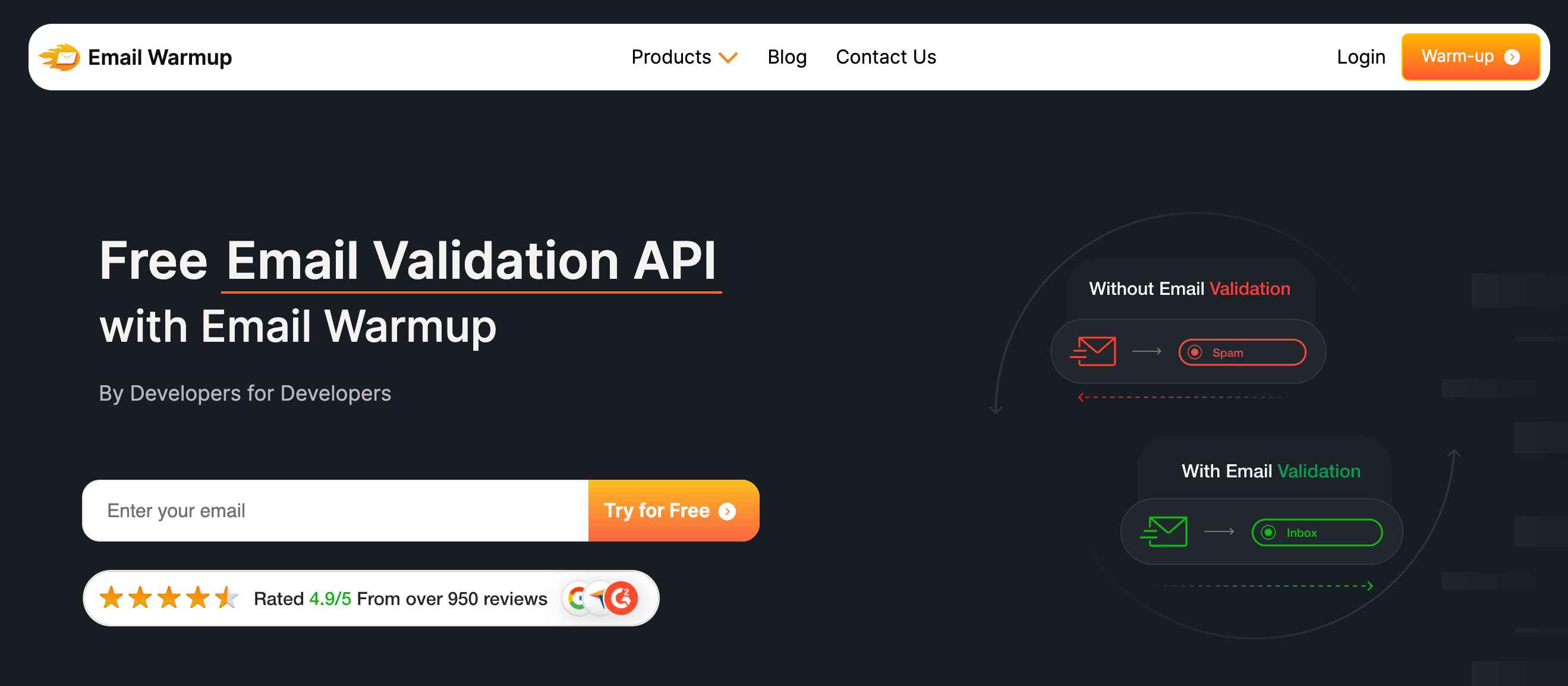
When your list surfaces problems — blacklist hits, catch-all uncertainty, reputation decline — ZeroBounce gives you data but not guidance. EmailWarmup.com’s email validation API closes that gap.
EmailWarmup.com’s validation approach extends beyond standard verification:
- SOC 2 Type II and GDPR compliance
- REST/JSON API with SDKs in 8 languages for developer integration
- API verification that blocks disposable addresses, spam traps, and malformed entries
- Connection to the full EmailWarmup.com platform — including warmup, deliverability testing across 50+ providers, SPF/DKIM/DMARC tools, and unlimited consultation
For teams that need verification and the ability to act on what verification reveals — with expert guidance at every step — EmailWarmup.com replaces the gap between seeing problems and fixing them.
The unlimited consultation means a real deliverability expert walks you through remediation, not just a dashboard showing what went wrong.
Final verdict on ZeroBounce
ZeroBounce is a mature, feature-rich verification platform that performs well on standard domains and offers genuine extras (scoring, DMARC, blacklist monitoring) that most competitors lack.
For B2C senders and teams with clean list profiles, it delivers reliable results backed by a real accuracy guarantee.
- Feature breadth that goes well beyond basic list cleaning
- Catch-all verification is a persistent weakness (8%+ false positives)
- 99% accuracy guarantee on standard domains with financial penalty
- No consultation, audit, or remediation support when problems surface
- Premium pricing compounds on high-volume and catch-all-heavy lists
If your lists are mostly standard domains and your volume stays moderate, ZeroBounce earns its premium price through accuracy and extras.
If catch-all domains represent a significant chunk of your contacts, or if you need a platform that connects verification to full deliverability support, the gaps become hard to ignore.
Frequently asked questions about ZeroBounce
Here are the most common questions senders ask before choosing ZeroBounce.
For standard domain verification, ZeroBounce’s accuracy guarantee and broader feature set justify the price difference over budget tools. The premium becomes harder to justify when catch-all domains are a large part of your list, since the extra spend on catch-all scoring returns marginal improvement.
ZeroBounce labels catch-all addresses as “valid” with an “accept_all” sub-status — meaning it cannot confirm whether the specific mailbox exists. The premium catch-all scoring feature adds a quality score (0-10), but testing showed it only slightly improved detection while adding cost. Verify+ (which sends test emails) improved real contact detection to 96% but inflated false positives to 33%.
On standard B2B domains, yes. On enterprise domains configured as catch-all (which includes many large companies), ZeroBounce’s accuracy drops meaningfully. B2B outbound teams should factor catch-all handling into their evaluation — it is one of the most common list composition challenges in enterprise outreach.
ZeroBounce ONE is the subscription tier (starting at $99/month) that bundles verification credits, DMARC monitoring, deliverability tools, email finder, and scoring into one plan. Some users have reported cost increases during the transition from the previous à-la-carte model to the subscription structure.
Verification removes bad addresses, which reduces bounces and protects reputation — but deliverability depends on authentication configuration, sending patterns, content quality, engagement signals, and domain reputation. Cleaning a list is one step in a system with many interconnected factors.